
………
This only grant me : that my means may lie
Too low for envy, for contempt too high.
Some honour I would have,
Not from great deeds, but good alone ;
Th’ ignote are better than ill-known,
Rumor can ope the grave.
Acquaintance I would hug, but when ‘t depends
Not from the number, but the choice of friends.
Books should, not business, entertain the light,
And sleep, as undisturbed as death, the night.
My house a cottage more
Than palace, and should fitting be
For all my use, no luxury.
My garden painted o’er
With nature’s hand, not art’s, and pleasures yield
Horace might envy in his Sabine field.
Thus would I double my life’s fading space,
For he that runs it well twice runs his race.
And in this true delight,
These unbought sports and happy state
I would not fear, nor wish my fate,
But boldly say each night,
To-morrow let my sun his beams display,
Or in clouds hide them ; I have lived to-day.

A few random poems:
- The Defunct Drugstore by Robert Lloyd Jaffe
- Владимир Костров – Я стою, как дерево в лесу
- Шекспир – Но не боюсь и смерть – Сонет 80
- Fragments
- Pathos Is The Skyward Tanka
- Николай Заболоцкий – Рубрук в Монголии
- Love Sonnet XLII poem – Zora Bernice May Cross poems
- The Conditional
- Mystic by Sylvia Plath
- The Watchman
- Private Property
- Song—Anna, thy Charms by Robert Burns
- Reverie Of Ormuz The Persian
- Илья Эренбург – Я не трубач, труба
- In The Month When Sings The Cuckoo poem – Alfred Austin
External links
Bat’s Poetry Page – more poetry by Fledermaus
Talking Writing Monster’s Page –
Batty Writing – the bat’s idle chatter, thoughts, ideas and observations, all original, all fresh
Poems in English
- Владимир Маяковский – Нынче бар в России нет… (Главполитпросвет №37)
- Владимир Маяковский – Новый враг
- Владимир Маяковский – Новые силы в III Интернационале!.. (РОСТА №891)
- Владимир Маяковский – Новогодние поздравления (РОСТА №704)
- Владимир Маяковский – Notre-Dame
- Владимир Маяковский – Нормализованная гайка (РОСТА № 171)
- Владимир Маяковский – Номер 17
- Владимир Маяковский – Никчемное самоутешение
- Владимир Маяковский – Ни знахарство, ни благодать бога в болезни не подмога
- Владимир Маяковский – Ни на Европу не надейся, ни на прокукиш, надейся только на свои руки (Главполитпросвет №343)
- Владимир Маяковский – Нетрудно, ландышами дыша
- Владимир Маяковский – Неразбериха
- Владимир Маяковский – Непобедимое оружие
- Владимир Маяковский – Ненавистью древней… (РОСТА № 198)
- Владимир Маяковский – Негритоска Петрова
- Владимир Маяковский – Неделя охраны труда (РОСТА № 317)
- Владимир Маяковский – Неделя фронта (РОСТА)
- Владимир Маяковский – Нечеловеческой силы требовала война… (Главполитпросвет №285)
- Владимир Маяковский – Небылицы в лицах
- Владимир Маяковский – Небесный чердак
More external links (open in a new tab):
Doska or the Board – write anything
Search engines:
Yandex – the best search engine for searches in Russian (and the best overall image search engine, in any language, anywhere)
Qwant – the best search engine for searches in French, German as well as Romance and Germanic languages.
Ecosia – a search engine that supposedly… plants trees
Duckduckgo – the real alternative and a search engine that actually works. Without much censorship or partisan politics.
Yahoo– yes, it’s still around, amazingly, miraculously, incredibly, but now it seems to be powered by Bing.
Parallel Translations of Poetry
The Poetry Repository – an online library of poems, poetry, verse and poetic works
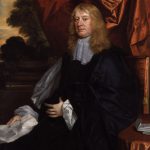
Abraham Cowley (1618 – 1667), the Royalist Poet.Poet and essayist Abraham Cowley was born in London, England, in 1618. He displayed early talent as a poet, publishing his first collection of poetry, Poetical Blossoms (1633), at the age of 15. Cowley studied at Cambridge University but was stripped of his Cambridge fellowship during the English Civil War and expelled for refusing to sign the Solemn League and Covenant of 1644. In turn, he accompanied Queen Henrietta Maria to France, where he spent 12 years in exile, serving as her secretary. During this time, Cowley completed The Mistress (1647). Arguably his most famous work, the collection exemplifies Cowley’s metaphysical style of love poetry. After the Restoration, Cowley returned to England, where he was reinstated as a Cambridge fellow and earned his MD before finally retiring to the English countryside. He is buried at Westminster Abbey alongside Geoffrey Chaucer and Edmund Spenser. Cowley is a wonderful poet and an outstanding representative of the English baroque.