
Well then; I now do plainly see
This busy world and I shall ne’er agree.
The very honey of all earthly joy
Does of all meats the soonest cloy;
And they (methinks) deserve my pity
Who for it can endure the stings,
The crowd, and buzz, and murmurings
Of this great hive, the city.
Ah, yet, ere I descend to th’ grave
May I a small house and large garden have!
And a few friends, and many books, both true,
Both wise, and both delightful too!
And since love ne’er will from me flee,
A mistress moderately fair,
And good as guardian angels are,
Only belov’d, and loving me.
O fountains! when in you shall I
Myself eas’d of unpeaceful thoughts espy?
O fields! O woods! when shall I be made
The happy tenant of your shade?
Here’s the spring-head of Pleasure’s flood:
Here’s wealthy Nature’s treasury,
Where all the riches lie that she
Has coin’d and stamp’d for good.
Pride and ambition here
Only in far-fetch’d metaphors appear;
Here nought but winds can hurtful murmurs scatter,
And nought but Echo flatter.
The gods, when they descended, hither
From heaven did always choose their way:
And therefore we may boldly say
That ’tis the way too thither.
How happy here should I
And one dear she live, and embracing die!
She who is all the world, and can exclude
In deserts solitude.
I should have then this only fear:
Lest men, when they my pleasures see,
Should hither throng to live like me,
And so make a city here.

A few random poems:
- The Last Whisper by Nizar Sartawi
- The Fancy Feäir At Maïden Newton by William Barnes
- Memory Of My Father by Patrick Kavanagh
- A Tippling Ballad—When Princes and Prelates, etc. by Robert Burns
- Ode for General Washington’s Birthday by Robert Burns
- Farewell To Spring poem – Alfred Austin
- The Curse Upon Edward by Thomas Gray
- Autumn by Walter Savage Landor
- In Tempore Senectutis poem – Ezra Pound poems
- TURNING GRAY by Satish Verma
- Shelley’s Death poem – Alfred Austin
- Вера Павлова – Слово держу осторожно
- “Young England–What Is Then Become Of Old” by William Wordsworth
- Юрий Левитанский – Что я знаю про стороны света
- The Dunciad: Book IV poem – Alexander Pope
External links
Bat’s Poetry Page – more poetry by Fledermaus
Talking Writing Monster’s Page –
Batty Writing – the bat’s idle chatter, thoughts, ideas and observations, all original, all fresh
Poems in English
- A Poet by Thomas Hardy
- A Meeting With Despair by Thomas Hardy
- A Man (In Memory of H. of M.) by Thomas Hardy
- A King’s Soliloquy [On the Night of His Funeral] by Thomas Hardy
- In A Wood by Thomas Hardy
- “I Sometimes Think” by Thomas Hardy
- A Death-Day Recalled by Thomas Hardy
- A Conversation At Dawn by Thomas Hardy
- A Confession To A Friend In Trouble by Thomas Hardy
- A Commonplace Day by Thomas Hardy
- A Circular by Thomas Hardy
- A Christmas Ghost Story by Thomas Hardy
- Amabel by Thomas Hardy
- Ah, Are You Digging On My Grave? by Thomas Hardy
- After The Visit by Thomas Hardy
- After Schiller by Thomas Hardy
- After A Journey by Thomas Hardy
- Additions: The Fire at Tranter Sweatley’s by Thomas Hardy
- “According to the Mighty Working” by Thomas Hardy
- A Wife In London by Thomas Hardy
More external links (open in a new tab):
Doska or the Board – write anything
Search engines:
Yandex – the best search engine for searches in Russian (and the best overall image search engine, in any language, anywhere)
Qwant – the best search engine for searches in French, German as well as Romance and Germanic languages.
Ecosia – a search engine that supposedly… plants trees
Duckduckgo – the real alternative and a search engine that actually works. Without much censorship or partisan politics.
Yahoo– yes, it’s still around, amazingly, miraculously, incredibly, but now it seems to be powered by Bing.
Parallel Translations of Poetry
The Poetry Repository – an online library of poems, poetry, verse and poetic works
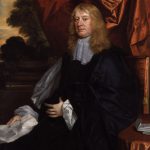
Abraham Cowley (1618 – 1667), the Royalist Poet.Poet and essayist Abraham Cowley was born in London, England, in 1618. He displayed early talent as a poet, publishing his first collection of poetry, Poetical Blossoms (1633), at the age of 15. Cowley studied at Cambridge University but was stripped of his Cambridge fellowship during the English Civil War and expelled for refusing to sign the Solemn League and Covenant of 1644. In turn, he accompanied Queen Henrietta Maria to France, where he spent 12 years in exile, serving as her secretary. During this time, Cowley completed The Mistress (1647). Arguably his most famous work, the collection exemplifies Cowley’s metaphysical style of love poetry. After the Restoration, Cowley returned to England, where he was reinstated as a Cambridge fellow and earned his MD before finally retiring to the English countryside. He is buried at Westminster Abbey alongside Geoffrey Chaucer and Edmund Spenser. Cowley is a wonderful poet and an outstanding representative of the English baroque.