
Come, love, why stay’st thou? The night
Will vanish ere wee taste delight.
The moone obscures her selfe from sight,
Thou absent, whose eyes give her light.
Come quickly deare, be briefe as time,
Or we by morne shall be o’retane,
Love’s Joy’s thing owne as well as mine,
Spend not therefore, time in vaine.

A few random poems:
- On Going Unnoticed by Robert Frost
- Ольга Берггольц – Кирову
- The Curse Upon Edward by Thomas Gray
- Against All Streams by Walter William Safar
- Mark Twain and Joan of Arc by Vachel Lindsay
- The Captive by Rudyard Kipling
- As if by Sara Herlihy
- If I Got You by Miraj Patel
- Woodcom’ Feast by William Barnes
- Fields and Gardens by the River Qi by Wang Wei
- How Solemn as One by One. by Walt Whitman
- Олег Григорьев – Вкусно от меда во рте
- Villanelle: Oscar Victorius by T. Wignesan
- The First Part: Sonnet 12 – Ah! burning thoughts, now let me take some rest, by William Drummond
- Ольга Берггольц – Я все оставляю тебе при уходе
External links
Bat’s Poetry Page – more poetry by Fledermaus
Talking Writing Monster’s Page –
Batty Writing – the bat’s idle chatter, thoughts, ideas and observations, all original, all fresh
Poems in English
- The Seven Sisters by William Wordsworth
- The Sailor’s Mother by William Wordsworth
- The Russian Fugitive by William Wordsworth
- The Reverie of Poor Susan by William Wordsworth
- The Redbreast Chasing The Butterfly by William Wordsworth
- The Prioress’s Tale [from Chaucer] by William Wordsworth
- The Primrose of the Rock by William Wordsworth
- The Power of Armies is a Visible Thing by William Wordsworth
- The Pet-Lamb by William Wordsworth
- The Passing of the Elder Bards by William Wordsworth
- The Old Cumberland Beggar by William Wordsworth
- The Oak Of Guernica Supposed Address To The Same by William Wordsworth
- The Morning Of The Day Appointed For A General Thanksgiving. January 18, 1816 by William Wordsworth
- The King Of Sweden by William Wordsworth
- The Idle Shepherd Boys by William Wordsworth
- The Horn Of Egremont Castle by William Wordsworth
- The Highland Broach by William Wordsworth
- The Happy Warrior by William Wordsworth
- The Green Linnet by William Wordsworth
- The Germans On The Heighs Of Hochheim by William Wordsworth
More external links (open in a new tab):
Doska or the Board – write anything
Search engines:
Yandex – the best search engine for searches in Russian (and the best overall image search engine, in any language, anywhere)
Qwant – the best search engine for searches in French, German as well as Romance and Germanic languages.
Ecosia – a search engine that supposedly… plants trees
Duckduckgo – the real alternative and a search engine that actually works. Without much censorship or partisan politics.
Yahoo– yes, it’s still around, amazingly, miraculously, incredibly, but now it seems to be powered by Bing.
Parallel Translations of Poetry
The Poetry Repository – an online library of poems, poetry, verse and poetic works
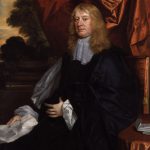
Abraham Cowley (1618 – 1667), the Royalist Poet.Poet and essayist Abraham Cowley was born in London, England, in 1618. He displayed early talent as a poet, publishing his first collection of poetry, Poetical Blossoms (1633), at the age of 15. Cowley studied at Cambridge University but was stripped of his Cambridge fellowship during the English Civil War and expelled for refusing to sign the Solemn League and Covenant of 1644. In turn, he accompanied Queen Henrietta Maria to France, where he spent 12 years in exile, serving as her secretary. During this time, Cowley completed The Mistress (1647). Arguably his most famous work, the collection exemplifies Cowley’s metaphysical style of love poetry. After the Restoration, Cowley returned to England, where he was reinstated as a Cambridge fellow and earned his MD before finally retiring to the English countryside. He is buried at Westminster Abbey alongside Geoffrey Chaucer and Edmund Spenser. Cowley is a wonderful poet and an outstanding representative of the English baroque.