
Come, love, why stay’st thou? The night
Will vanish ere wee taste delight.
The moone obscures her selfe from sight,
Thou absent, whose eyes give her light.
Come quickly deare, be briefe as time,
Or we by morne shall be o’retane,
Love’s Joy’s thing owne as well as mine,
Spend not therefore, time in vaine.

A few random poems:
- Гавриил Державин – Ключ
- Online Lover by Rainbow Reed
- Reply to an Announcement by J. Rankine by Robert Burns
- Robert Burns: Address Of Beelzebub: To the Right Honourable the Earl of Breadalbane, President of the Right Honourable and Honourable the Highland Society, which met on the 23rd of May last at the Shakespeare, Covent Garden, to concert ways and means to frustrate the designs of five hundred Highlanders, who, as the Society were informed by Mr. M’Kenzie of Applecross, were so audacious as to attempt an escape from their lawful lords and masters whose property they were, by emigrating from the lands of Mr. Macdonald of Glengary to the wilds of Canada, in search of that fantastic thing-Liberty.
- dear_bhikkhu_a_eulogy.html
- Robert Burns: She’s Fair And Fause:
- English Poetry. Thomas Moore. From “Irish Melodies”. 103. The Mountain Spite. Томас Мур.
- Fragments
- Низами Гянджеви – Лейли и Меджнун
- Владимир Британишский – Есть добрая, есть и дурная слава
- Agonizing picture of human existence(Rural Life) by Seema Gupta
- Robert Burns: My Peggy’s Charms:
- Sparrow singing by Yosa Buson
- In torque by Muralidharan Mudaliar
- I Sing the Body Electric. by Walt Whitman
External links
Bat’s Poetry Page – more poetry by Fledermaus
Talking Writing Monster’s Page –
Batty Writing – the bat’s idle chatter, thoughts, ideas and observations, all original, all fresh
Poems in English
- Владимир Высоцкий – О знаках Зодиака
- Владимир Высоцкий – О нашей встрече
- Владимир Высоцкий – О конце войны
- Владимир Высоцкий – Нынче он закончил вехи
- Владимир Высоцкий – Нынче мне не до улыбок
- Владимир Высоцкий – Ну почему
- Владимир Высоцкий – Ну что, Кузьма
- Владимир Высоцкий – Новые левые, мальчики бравые
- Владимир Высоцкий – Невидимка
- Владимир Высоцкий – Неужто здесь сошёлся клином свет
- Владимир Высоцкий – Нет рядом никого, как ни дыши
- Владимир Высоцкий – Нет меня, я покинул Расею
- Владимир Высоцкий – Не заманишь меня на эстрадный концерт
- Владимир Высоцкий – Не возьмут и невзгоды в крутой оборот…
- Владимир Высоцкий – Не писать стихов мне и романов
- Владимир Высоцкий – Не отдавайте в физики детей
- Владимир Высоцкий – Не могу ни выпить, ни забыться
- Владимир Высоцкий – Не дыми, голова трещит
- Владимир Высоцкий – Не бывает кораблей без названия
- Владимир Высоцкий – Наводчица
More external links (open in a new tab):
Doska or the Board – write anything
Search engines:
Yandex – the best search engine for searches in Russian (and the best overall image search engine, in any language, anywhere)
Qwant – the best search engine for searches in French, German as well as Romance and Germanic languages.
Ecosia – a search engine that supposedly… plants trees
Duckduckgo – the real alternative and a search engine that actually works. Without much censorship or partisan politics.
Yahoo– yes, it’s still around, amazingly, miraculously, incredibly, but now it seems to be powered by Bing.
Parallel Translations of Poetry
The Poetry Repository – an online library of poems, poetry, verse and poetic works
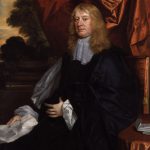
Abraham Cowley (1618 – 1667), the Royalist Poet.Poet and essayist Abraham Cowley was born in London, England, in 1618. He displayed early talent as a poet, publishing his first collection of poetry, Poetical Blossoms (1633), at the age of 15. Cowley studied at Cambridge University but was stripped of his Cambridge fellowship during the English Civil War and expelled for refusing to sign the Solemn League and Covenant of 1644. In turn, he accompanied Queen Henrietta Maria to France, where he spent 12 years in exile, serving as her secretary. During this time, Cowley completed The Mistress (1647). Arguably his most famous work, the collection exemplifies Cowley’s metaphysical style of love poetry. After the Restoration, Cowley returned to England, where he was reinstated as a Cambridge fellow and earned his MD before finally retiring to the English countryside. He is buried at Westminster Abbey alongside Geoffrey Chaucer and Edmund Spenser. Cowley is a wonderful poet and an outstanding representative of the English baroque.