
Come, love, why stay’st thou? The night
Will vanish ere wee taste delight.
The moone obscures her selfe from sight,
Thou absent, whose eyes give her light.
Come quickly deare, be briefe as time,
Or we by morne shall be o’retane,
Love’s Joy’s thing owne as well as mine,
Spend not therefore, time in vaine.

A few random poems:
- Christmas Trees by Robert Frost
- Friend by Rabindranath Tagore
- On The New Forcers Of Conscience Under The Long Parliament poem – John Milton poems
- Яков Полонский – Памяти С. Я. Надсона
- Bare Tongue by Satish Verma
- Владимир Высоцкий – Новые левые, мальчики бравые
- Lune de Miel by T. S. Eliot
- Landscapes poem – Andree Chedid poems | Poems and Poetry
- Mora Jobana (My Youth) poem – Amir Khusro poems | Poems and Poetry
- Ribbons & Pearls by Timothy Cole
- Владимир Маяковский – Что сделать, чтоб Всероссийский съезд Советов… (РОСТА №662)
- Ghazal by Agha Shahid Ali
- Robert Burns: Birthday Ode For 31st December, 1787:
- Myself and Mine. by Walt Whitman
- Владимир Маяковский – Дела вузные, хорошие и конфузные
External links
Bat’s Poetry Page – more poetry by Fledermaus
Talking Writing Monster’s Page –
Batty Writing – the bat’s idle chatter, thoughts, ideas and observations, all original, all fresh
Poems in English
- Владимир Маяковский – Дела вузные, хорошие и конфузные
- Владимир Маяковский – Декрет о взаимопомощи инвентарем (Главполитпросвет № 101)
- Владимир Маяковский – Декрет о натуральном налоге на хлеб, картофель и масличные семена
- Владимир Маяковский – Давайте и получите (РОСТА №495)
- Владимир Маяковский – Даешь тухлые яйца
- Владимир Маяковский – Даешь материальную базу
- Владимир Маяковский – Даешь автомобиль
- Владимир Маяковский – Дачный случай
- Владимир Маяковский – Да здравствуют недели помощи по всей республике (Главполитпросвет №353)
- Владимир Маяковский – Да здравствует неделя ремонта! (РОСТА № 294)
- Владимир Маяковский – Да здравствует III интернационал! (РОСТА № 140)
- Владимир Маяковский – Да здравствует 5-й год советской власти, утвердившейся в октябре! (Главполитпросвет №397)
- Владимир Маяковский – Да или нет
- Владимир Маяковский – Чугунные штаны
- Владимир Маяковский – Чудеса
- Владимир Маяковский – Чтоб жизнь трудовую наладить заново
- Владимир Маяковский – Чтоб с голодом справиться и с разрухой-дурой (Главполитпросвет)
- Владимир Маяковский – Чтоб нас не заела разруха зубами голодных годов… (Главполитпросвет №7)
- Владимир Маяковский – Чтоб из недели “Заботы о достоянии” толку выйти, вот так, товарищи, агитацию ведите (Главполитпросвет №374)
- Владимир Маяковский – Чтоб голод нас не передушил к лету… (Главполитпросвет №160)
More external links (open in a new tab):
Doska or the Board – write anything
Search engines:
Yandex – the best search engine for searches in Russian (and the best overall image search engine, in any language, anywhere)
Qwant – the best search engine for searches in French, German as well as Romance and Germanic languages.
Ecosia – a search engine that supposedly… plants trees
Duckduckgo – the real alternative and a search engine that actually works. Without much censorship or partisan politics.
Yahoo– yes, it’s still around, amazingly, miraculously, incredibly, but now it seems to be powered by Bing.
Parallel Translations of Poetry
The Poetry Repository – an online library of poems, poetry, verse and poetic works
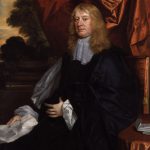
Abraham Cowley (1618 – 1667), the Royalist Poet.Poet and essayist Abraham Cowley was born in London, England, in 1618. He displayed early talent as a poet, publishing his first collection of poetry, Poetical Blossoms (1633), at the age of 15. Cowley studied at Cambridge University but was stripped of his Cambridge fellowship during the English Civil War and expelled for refusing to sign the Solemn League and Covenant of 1644. In turn, he accompanied Queen Henrietta Maria to France, where he spent 12 years in exile, serving as her secretary. During this time, Cowley completed The Mistress (1647). Arguably his most famous work, the collection exemplifies Cowley’s metaphysical style of love poetry. After the Restoration, Cowley returned to England, where he was reinstated as a Cambridge fellow and earned his MD before finally retiring to the English countryside. He is buried at Westminster Abbey alongside Geoffrey Chaucer and Edmund Spenser. Cowley is a wonderful poet and an outstanding representative of the English baroque.