
………
This only grant me : that my means may lie
Too low for envy, for contempt too high.
Some honour I would have,
Not from great deeds, but good alone ;
Th’ ignote are better than ill-known,
Rumor can ope the grave.
Acquaintance I would hug, but when ‘t depends
Not from the number, but the choice of friends.
Books should, not business, entertain the light,
And sleep, as undisturbed as death, the night.
My house a cottage more
Than palace, and should fitting be
For all my use, no luxury.
My garden painted o’er
With nature’s hand, not art’s, and pleasures yield
Horace might envy in his Sabine field.
Thus would I double my life’s fading space,
For he that runs it well twice runs his race.
And in this true delight,
These unbought sports and happy state
I would not fear, nor wish my fate,
But boldly say each night,
To-morrow let my sun his beams display,
Or in clouds hide them ; I have lived to-day.

A few random poems:
- Robert Burns: Bonie Jean-A Ballad:
- The Recall by Rabindranath Tagore
- Essay On The Personal by Stephen Dunn
- If By Chance Your Eye Offend You poem – A. E. Housman
- Алишер Навои – Не в камфарной ли одежде этот кипарис прямой
- Counter-Attack by Siegfried Sassoon
- The Fairies Break Their Dances by A. E. Housman
- Владимир Высоцкий – Песня о планах
- Meditation With Feet
- On Late Acquired Wealth (From The Greek) by William Cowper
- Ольга Седакова – То в теплом золоте, в широких переплетах
- Robert Burns: Tho’ Cruel Fate Should Bid Us Part:
- At The Wedding March poem – Gerard Manley Hopkins poems
- Robert Burns: O For Ane An’ Twenty, Tam :
- Robert Burns: On Capt. Lascelles:
External links
Bat’s Poetry Page – more poetry by Fledermaus
Talking Writing Monster’s Page –
Batty Writing – the bat’s idle chatter, thoughts, ideas and observations, all original, all fresh
Poems in English
- Sonet 42 by William Alexander
- Sonet 41 by William Alexander
- Sonet 4 by William Alexander
- Sonet 39 by William Alexander
- Sonet 38 by William Alexander
- Sonet 36 by William Alexander
- Sonet 35 by William Alexander
- Sonet 34 by William Alexander
- Sonet 33 by William Alexander
- Sonet 32 by William Alexander
- Jonathan: The First Booke by William Alexander
- IX: Some Verses: This Day Design’d To Spoil The World of Peace by William Alexander
- IV: Some Verses: To The Author by William Alexander
- III: Some Verses: To M. Michaell Drayton by William Alexander
- Elegie IV: On The Death of Prince Henrie by William Alexander
- Doomes-Day: The Twelfth Houre by William Alexander
- Doomes-Day: The Third Houre by William Alexander
- Doomes-Day: The Tenth Houre by William Alexander
- Doomes-Day: The Sixth Houre by William Alexander
- Doomes-Day: The Ninth Houre by William Alexander
More external links (open in a new tab):
Doska or the Board – write anything
Search engines:
Yandex – the best search engine for searches in Russian (and the best overall image search engine, in any language, anywhere)
Qwant – the best search engine for searches in French, German as well as Romance and Germanic languages.
Ecosia – a search engine that supposedly… plants trees
Duckduckgo – the real alternative and a search engine that actually works. Without much censorship or partisan politics.
Yahoo– yes, it’s still around, amazingly, miraculously, incredibly, but now it seems to be powered by Bing.
Parallel Translations of Poetry
The Poetry Repository – an online library of poems, poetry, verse and poetic works
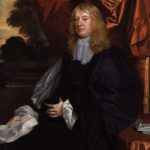
Abraham Cowley (1618 – 1667), the Royalist Poet.Poet and essayist Abraham Cowley was born in London, England, in 1618. He displayed early talent as a poet, publishing his first collection of poetry, Poetical Blossoms (1633), at the age of 15. Cowley studied at Cambridge University but was stripped of his Cambridge fellowship during the English Civil War and expelled for refusing to sign the Solemn League and Covenant of 1644. In turn, he accompanied Queen Henrietta Maria to France, where he spent 12 years in exile, serving as her secretary. During this time, Cowley completed The Mistress (1647). Arguably his most famous work, the collection exemplifies Cowley’s metaphysical style of love poetry. After the Restoration, Cowley returned to England, where he was reinstated as a Cambridge fellow and earned his MD before finally retiring to the English countryside. He is buried at Westminster Abbey alongside Geoffrey Chaucer and Edmund Spenser. Cowley is a wonderful poet and an outstanding representative of the English baroque.