
Awake, awake, my Lyre!
And tell thy silent master’s humble tale
In sounds that may prevail;
Sounds that gentle thoughts inspire:
Though so exalted she
And I so lowly be
Tell her, such different notes make all thy harmony.
Hark, how the strings awake!
And, though the moving hand approach not near,
Themselves with awful fear
A kind of numerous trembling make.
Now all thy forces try;
Now all thy charms apply;
Revenge upon her ear the conquests of her eye.
Weak Lyre! thy virtue sure
Is useless here, since thou art only found
To cure, but not to wound,
And she to wound, but not to cure,
Too weak too wilt thou prove
My passion to remove;
Physic to other ills, thou’rt nourishment to love.
Sleep, sleep again, my Lyre!
For thou canst never tell my humble tale
In sounds that will prevail,
Nor gentle thoughts in her inspire;
All thy vain mirth lay by,
Bid thy strings silent lie,
Sleep, sleep again, my Lyre, and let thy master die.

A few random poems:
- The Rape of the Lock poem – Alexander Pope
- Dawn by Yosa Buson
- Reveille poem – A. E. Housman
- Astrophel and Stella: XCII by Sir Philip Sidney
- Poetry by Marianne Moore
- Sonnet 77: Thy glass will show thee how thy beauties wear by William Shakespeare
- The Silver Moon by Sappho
- Above the Battle’s Front by Vachel Lindsay
- Red Slippers poem – Amy Lowell poems | Poems and Poetry
- Ок Мельникова – Блюз-16
- Rain by Shel Silverstein
- A man toiled on a burning road by Stephen Crane
- Shepherd And Goatherd by William Butler Yeats
- Mother Earth; Her Beauty And Her Destruction by TMBedell
- Вероника Тушнова – Я одна тебя любить умею
External links
Bat’s Poetry Page – more poetry by Fledermaus
Talking Writing Monster’s Page –
Batty Writing – the bat’s idle chatter, thoughts, ideas and observations, all original, all fresh
Poems in English
- The Stwonèn Pworch by William Barnes
- The Stage Coach by William Barnes
- The Sparrow Club by William Barnes
- The Slantèn Light O’ Fall by William Barnes
- The Sky A-Clearen by William Barnes
- The Shy Man by William Barnes
- The Shepherd O’ The Farm by William Barnes
- The Settle An’ The Girt Wood Vire by William Barnes
- The Scud by William Barnes
- The Rwose In The Dark by William Barnes
- The Railroad by William Barnes
- The Poplars by William Barnes
- The Pleäce Our Own Ageän by William Barnes
- The Pleäce A Teäle’s A-Twold O’ by William Barnes
- The Pillar’d Geäte by William Barnes
- The Peasant’s Return by William Barnes
- The New House A-Gettèn’ Wold by William Barnes
- The Neäme Letters by William Barnes
- The Music O’ The Dead by William Barnes
- The Motherless Child by William Barnes
More external links (open in a new tab):
Doska or the Board – write anything
Search engines:
Yandex – the best search engine for searches in Russian (and the best overall image search engine, in any language, anywhere)
Qwant – the best search engine for searches in French, German as well as Romance and Germanic languages.
Ecosia – a search engine that supposedly… plants trees
Duckduckgo – the real alternative and a search engine that actually works. Without much censorship or partisan politics.
Yahoo– yes, it’s still around, amazingly, miraculously, incredibly, but now it seems to be powered by Bing.
Parallel Translations of Poetry
The Poetry Repository – an online library of poems, poetry, verse and poetic works
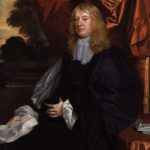
Abraham Cowley (1618 – 1667), the Royalist Poet.Poet and essayist Abraham Cowley was born in London, England, in 1618. He displayed early talent as a poet, publishing his first collection of poetry, Poetical Blossoms (1633), at the age of 15. Cowley studied at Cambridge University but was stripped of his Cambridge fellowship during the English Civil War and expelled for refusing to sign the Solemn League and Covenant of 1644. In turn, he accompanied Queen Henrietta Maria to France, where he spent 12 years in exile, serving as her secretary. During this time, Cowley completed The Mistress (1647). Arguably his most famous work, the collection exemplifies Cowley’s metaphysical style of love poetry. After the Restoration, Cowley returned to England, where he was reinstated as a Cambridge fellow and earned his MD before finally retiring to the English countryside. He is buried at Westminster Abbey alongside Geoffrey Chaucer and Edmund Spenser. Cowley is a wonderful poet and an outstanding representative of the English baroque.