
No; thou’rt a fool, I’ll swear, if e’er thou grant;
Much of my veneration thou must want,
When once thy kindness puts my ignorance out,
For a learn’d age is always least devout.
Keep still thy distance; for at once to me
Goddess and woman too thou canst not be;
Thou’rt queen of all that sees thee, and as such
Must neither tyrannize nor yield too much;
Such freedom give as may admit command,
But keep the forts and magazines in thine hand.
Thou’rt yet a whole world to me, and dost fill
My large ambition; but ’tis dang’rous still,
Lest I like the Pellæan prince* should be,
And weep for other worlds, having conquered thee.
When Love has taken all thou hast away,
His strength by too much riches will decay.
Thou in my fancy dost much higher stand
Than women can be placed by Nature’s hand;
And I must needs, I’m sure, a loser be,
To change thee, as thou’rt there, for very thee.
Thy sweetness is so much within me placed,
That shouldst thou nectar give, ‘twould spoil the taste.
Beauty at first moves wonder and delight;
‘Tis Nature’s juggling trick to cheat the sight;
We admire it, whilst unknown, but after more
Admire ourselves for liking it before.
Love, like a greedy hawk, if we give way,
Does overgorge himself with his own prey;
Of very hopes a surfeit he’ll sustain
Unless by fears he cast them up again:
His spirit and sweetness dangers keep alone;
If once he lose his sting, he grows a drone.

A few random poems:
- Sonet 56 by William Alexander
- Альфред Теннисон – В долине
- Олег Бундур – Босиком
- Михаил Лермонтов – Я не для ангелов и рая
- Низами Гянджеви – Лишь с луной сравниться
- Swallows by Richard Schiffman
- Владимир Набоков – Еще безмолвствую и крепну я в тиши
- Paradise Lost: Book 07 poem – John Milton poems
- They Feed They Lion by Philip Levine
- On A Celebrated Event In Ancient History by William Wordsworth
- Firesong by Sylvia Plath
- New York’s Bad Dream by Matthew Abuelo
- On The Death Of Dr. Samuel Marshall by Phillis Wheatley
- The Road To Ruin by Siegfried Sassoon
- Commerce by Satish Verma
External links
Bat’s Poetry Page – more poetry by Fledermaus
Talking Writing Monster’s Page –
Batty Writing – the bat’s idle chatter, thoughts, ideas and observations, all original, all fresh
Poems in English
- A Drinking Song by William Butler Yeats
- A Dream Of Death by William Butler Yeats
- A Dialogue Of Self And Soul by William Butler Yeats
- A Deep Sworn Vow by William Butler Yeats
- A Crazed Girl by William Butler Yeats
- A Cradle Song by William Butler Yeats
- A Coat by William Butler Yeats
- A Bronze Head by William Butler Yeats
- He Reproves The Curlew by William Butler Yeats
- He Remembers Forgotten Beauty by William Butler Yeats
- He Hears The Cry Of The Sedge by William Butler Yeats
- He Gives His Beloved Certain Rhymes by William Butler Yeats
- He Bids His Beloved Be At Peace by William Butler Yeats
- Gratitude To The Unknown Instructors by William Butler Yeats
- Girl’s Song by William Butler Yeats
- From The ‘Antigone’ by William Butler Yeats
- Fragments by William Butler Yeats
- For Anne Gregory by William Butler Yeats
- Fergus And The Druid by William Butler Yeats
- Father And Child by William Butler Yeats
More external links (open in a new tab):
Doska or the Board – write anything
Search engines:
Yandex – the best search engine for searches in Russian (and the best overall image search engine, in any language, anywhere)
Qwant – the best search engine for searches in French, German as well as Romance and Germanic languages.
Ecosia – a search engine that supposedly… plants trees
Duckduckgo – the real alternative and a search engine that actually works. Without much censorship or partisan politics.
Yahoo– yes, it’s still around, amazingly, miraculously, incredibly, but now it seems to be powered by Bing.
Parallel Translations of Poetry
The Poetry Repository – an online library of poems, poetry, verse and poetic works
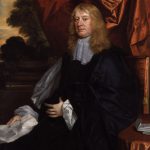
Abraham Cowley (1618 – 1667), the Royalist Poet.Poet and essayist Abraham Cowley was born in London, England, in 1618. He displayed early talent as a poet, publishing his first collection of poetry, Poetical Blossoms (1633), at the age of 15. Cowley studied at Cambridge University but was stripped of his Cambridge fellowship during the English Civil War and expelled for refusing to sign the Solemn League and Covenant of 1644. In turn, he accompanied Queen Henrietta Maria to France, where he spent 12 years in exile, serving as her secretary. During this time, Cowley completed The Mistress (1647). Arguably his most famous work, the collection exemplifies Cowley’s metaphysical style of love poetry. After the Restoration, Cowley returned to England, where he was reinstated as a Cambridge fellow and earned his MD before finally retiring to the English countryside. He is buried at Westminster Abbey alongside Geoffrey Chaucer and Edmund Spenser. Cowley is a wonderful poet and an outstanding representative of the English baroque.