
O! for this dark terrestrial ball
Forsakes his azure-paved hall
A prince of heav’nly birth!
Divine Humanity behold,
What wonders rise, what charms unfold
At his descent to earth!
II.
The bosoms of the great and good
With wonder and delight he view’d,
And fix’d his empire there:
Him, close compressing to his breast,
The sire of gods and men address’d,
“My son, my heav’nly fair!
III.
“Descend to earth, there place thy throne;
“To succour man’s afflicted son
“Each human heart inspire:
“To act in bounties unconfin’d
“Enlarge the close contracted mind,
“And fill it with thy fire.”
IV.
Quick as the word, with swift career
He wings his course from star to star,
And leaves the bright abode.
The Virtue did his charms impart;
Their G——! then thy raptur’d heart
Perceiv’d the rushing God:
V.
For when thy pitying eye did see
The languid muse in low degree,
Then, then at thy desire
Descended the celestial nine;
O’er me methought they deign’d to shine,
And deign’d to string my lyre.
VI.
Can Afric’s muse forgetful prove?
Or can such friendship fail to move
A tender human heart?
Immortal Friendship laurel-crown’d
The smiling Graces all surround
With ev’ry heav’nly Art.
End of the poem
15 random poems
- Epitaph on John Dove, Innkeeper by Robert Burns
- Tom O’Roughley by William Butler Yeats
- Ольга Берггольц – Озерный край
- [Greek Title] by Thomas Hardy
- This Month The Almonds Bloom At Kandahar
- The Candle Indoors poem – Gerard Manley Hopkins poems
- The Night
- The Fraser River by Mike Yuan
- Twas’ the Night Before Christmas and Santa got Drunk by Margaret Marie Hubbard
- Robert Burns: Saw Ye Bonie Lesley:
- Fox
- Владимир Маяковский – В РСФСР 130 миллионов населения (Агитплакаты)
- The Jingo and the Minstrel by Vachel Lindsay
- Sonnet: Before He Went poem – John Keats poems
- Atmosphere by Robert Frost
Some external links:
Duckduckgo.com – the alternative in the US
Quant.com – a search engine from France, and also an alternative, at least for Europe
Yandex – the Russian search engine (it’s probably the best search engine for image searches).
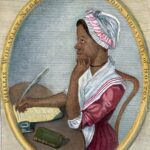
Phillis Wheatley (1753-84), a negro poetess, also an American poet or Afro-American poet, and an English Colonial poet, . She was born in Africa (in Gambia or Senegal) and was aptured by slave traders at the age of eight, she was sold to a family living in Boston, Mass., whose name she bears. While serving as a maid-servant to her proprietor’s wife, she showed an unusual facility with languages. She began writing poetry at the age of thirteen, using as models British poets of the time, especially Alexander Pope and Thomas Gray). In 1773 she accompanied a member of the Wheatley family to England, where she gained widespread attention in literary circles. She subsequently returned to Boston. Her best-known poems are “To the University of Cambridge in New England” (1767), In all honestly Phillis Wheatley should rather be considered English than an Afro-American poet but the exact classification of who she was would depend on the political and cultural views, and biases, of the “classifier.