
A poem by Aldous Huxley (1894 – 1963)
Once more the windless days are here,
Quiet of autumn, when the year
Halts and looks backward and draws breath
Before it plunges into death.
Silver of mist and gossamers,
Through-shine of noonday’s glassy gold,
Pale blue of skies, where nothing stirs
Save one blanched leaf, weary and old,
That over and over slowly falls
From the mute elm-trees, hanging on air
Like tattered flags along the walls
Of chapels deep in sunlit prayer.
Once more … Within its flawless glass
To-day reflects that other day,
When, under the bracken, on the grass,
We who were lovers happily lay
And hardly spoke, or framed a thought
That was not one with the calm hills
And crystal sky. Ourselves were nought,
Our gusty passions, our burning wills
Dissolved in boundlessness, and we
Were almost bodiless, almost free.
The wind has shattered silver and gold.
Night after night of sparkling cold,
Orion lifts his tangled feet
From where the tossing branches beat
In a fine surf against the sky.
So the trance ended, and we grew
Restless, we knew not how or why;
And there were sudden gusts that blew
Our dreaming banners into storm;
We wore the uncertain crumbling form
Of a brown swirl of windy leaves,
A phantom shape that stirs and heaves
Shuddering from earth, to fall again
With a dry whisper of withered rain.
Last, from the dead and shrunken days
We conjured spring, lighting the blaze
Of burnished tulips in the dark;
And from black frost we struck a spark
Of blue delight and fragrance new,
A little world of flowers and dew.
Winter for us was over and done:
The drought of fluttering leaves had grown
Emerald shining in the sun,
As light as glass, as firm as stone.
Real once more: for we had passed
Through passion into thought again;
Shaped our desires and made that fast
Which was before a cloudy pain;
Moulded the dimness, fixed, defined
In a fair statue, strong and free,
Twin bodies flaming into mind,
Poised on the brink of ecstasy.

A few random poems:
- Mirage poem – Amy Lowell poems | Poems and Poetry
- Happiness poem – Amy Lowell poems | Poems and Poetry
- DOWNHILL JOURNEY by Satish Verma
- The Beacon Fires
- The Meäd In June by William Barnes
- The Goldsmith by Siegfried Sassoon
- For The Dead
- Lines on Curll poem – Alexander Pope poems | Poetry Monster
- Children’s Games by William Carlos Williams
- Teach Us To Number Our Days by Rita Dove
- Love in Twilight by Stephen Vincent Benet
- A Complaint by William Wordsworth
- A February Night poem – Amy Cavanaugh poems | Poems and Poetry
- Владимир Маяковский – Бродвей
- Владимир Бенедиктов – На гулянье
External links
Bat’s Poetry Page – more poetry by Fledermaus
Talking Writing Monster’s Page –
Batty Writing – the bat’s idle chatter, thoughts, ideas and observations, all original, all fresh
Poems in English
- Sonnet 48: How careful was I, when I took my way by William Shakespeare
- Sonnet 47: Betwixt mine eye and heart a league is took by William Shakespeare
- Sonnet 46: Mine eye and heart are at a mortal war by William Shakespeare
- Sonnet 45: The other two, slight air and purging fire by William Shakespeare
- Sonnet 44: If the dull substance of my flesh were thought by William Shakespeare
- Sonnet 43: When most I wink, then do mine eyes best see by William Shakespeare
- Sonnet 42: That thou hast her, it is not all my grief by William Shakespeare
- Sonnet 41: Those pretty wrongs that liberty commits by William Shakespeare
- Sonnet 40: Take all my loves, my love, yea, take them all by William Shakespeare
- Sonnet 3: Look in thy glass, and tell the face thou viewest by William Shakespeare
- Sonnet 39: O, how thy worth with manners may I sing by William Shakespeare
- Sonnet 38: How can my Muse want subject to invent by William Shakespeare
- Sonnet 37: As a decrepit father takes delight by William Shakespeare
- Sonnet 36: Let me confess that we two must be twain by William Shakespeare
- Sonnet 35: No more be grieved at that which thou hast done by William Shakespeare
- Sonnet 34: Why didst thou promise such a beauteous day by William Shakespeare
- Sonnet 33: Full many a glorious morning have I seen by William Shakespeare
- Sonnet 74: But be contented when that fell arrest by William Shakespeare
- Sonnet 73: That time of year thou mayst in me behold by William Shakespeare
- Sonnet 72: O, lest the world should task you to recite by William Shakespeare
More external links (open in a new tab):
Doska or the Board – write anything
Search engines:
Yandex – the best search engine for searches in Russian (and the best overall image search engine, in any language, anywhere)
Qwant – the best search engine for searches in French, German as well as Romance and Germanic languages.
Ecosia – a search engine that supposedly… plants trees
Duckduckgo – the real alternative and a search engine that actually works. Without much censorship or partisan politics.
Yahoo– yes, it’s still around, amazingly, miraculously, incredibly, but now it seems to be powered by Bing.
Parallel Translations of Poetry
The Poetry Repository – an online library of poems, poetry, verse and poetic works
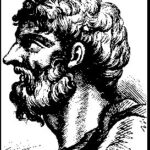
Alcaeus of Mytilene ( c. 625/620 – c. 580 Before Christ) ] was a lyric poet from the Greek island of Lesbos who is credited with inventing the Alcaic stanza. He was included in the canonical list of nine lyric poets by the scholars of Hellenistic Alexandria.