
LIBERAL Nature did dispence
To all things Arms for their defence;
And some she arms with sin’ewy force,
And some with swiftness in the course;
Some with hard Hoofs, or forked claws,
And some with Horns, or tusked jaws.
And some with Scales, and some with Wings,
And some with Teeth, and some with Stings.
Wisdom to Man she did afford,
Wisdom for Shield, and Wit for Sword.
What to beauteous Woman-kind,
What Arms, what Armour has she’assigne’d?
Beauty is both; for with the Faire
What Arms, what Armour can compare?
What Steel, what Gold, or Diamond,
More Impassible is found?
And yet what Flame, what Lightning ere
So great an Active force did bear?
They are all weapon, and they dart
Like Porcupines from every part.
Who can, alas, their strength express,
Arm’d when they themselves undress,
Cap a pe* with Nakedness?

A few random poems:
- Sleep by Rabindranath Tagore
- Hugh Selwyn Mauberly (Part I) poem – Ezra Pound poems
- A Meeting poem – Alfred Austin
- Нина Воронель – Папоротник II
- Le Verbe Etre poem – Andre Breton poems
- Наум Коржавин – Грустная самопародия
- Death In The Lounge Bar by Vernon Scannell
- Владимир Высоцкий – Я сказал врачу: “Я за все плачу!”
- East Idioms (1): A Fable by Mike Yuan
- The Night poem – Alexander Pushkin
- Love Sonnet XLII poem – Zora Bernice May Cross poems
- Владимир Маяковский – Сердитый дядя
- Mauve Mittens by Vaishnavi Prakash
- Владимир Маяковский – Реклама Мосполиграф
- Arcady Unheeding by Siegfried Sassoon
External links
Bat’s Poetry Page – more poetry by Fledermaus
Talking Writing Monster’s Page –
Batty Writing – the bat’s idle chatter, thoughts, ideas and observations, all original, all fresh
Poems in English
- To Delia by William Cowper
- To A Young Friend, On His Arriving At Cambridge Wet, When No Rain Had Fallen There by William Cowper
- The Symptoms of Love by William Cowper
- The Silkworm by William Cowper
- The Secrets Of Divine Love Are To Be Kept by William Cowper
- The Rose by William Cowper
- The Perfect Sacrifice by William Cowper
- The Parrot by William Cowper
- The Lily And The Rose by William Cowper
- The Ice Palace by William Cowper
- The Distress’d Travellers; or, Labour in Vain by William Cowper
- Sunset And Sunrise (Translated From Owen) by William Cowper
- Strada’s Nightingale by William Cowper
- Sonnet To Henry Cowper, Esq. by William Cowper
- Sonnet To A Young Lady On Her Birth-Day by William Cowper
- Repose In God by William Cowper
- Pity For Poor Africans by William Cowper
- On The Queen’s Visit To London, The Night Of The 17th March 1789 by William Cowper
- On The Loss Of The “Royal George” by William Cowper
- On The Ice Islands Seen Floating In The German Ocean by William Cowper
More external links (open in a new tab):
Doska or the Board – write anything
Search engines:
Yandex – the best search engine for searches in Russian (and the best overall image search engine, in any language, anywhere)
Qwant – the best search engine for searches in French, German as well as Romance and Germanic languages.
Ecosia – a search engine that supposedly… plants trees
Duckduckgo – the real alternative and a search engine that actually works. Without much censorship or partisan politics.
Yahoo– yes, it’s still around, amazingly, miraculously, incredibly, but now it seems to be powered by Bing.
Parallel Translations of Poetry
The Poetry Repository – an online library of poems, poetry, verse and poetic works
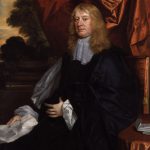
Abraham Cowley (1618 – 1667), the Royalist Poet.Poet and essayist Abraham Cowley was born in London, England, in 1618. He displayed early talent as a poet, publishing his first collection of poetry, Poetical Blossoms (1633), at the age of 15. Cowley studied at Cambridge University but was stripped of his Cambridge fellowship during the English Civil War and expelled for refusing to sign the Solemn League and Covenant of 1644. In turn, he accompanied Queen Henrietta Maria to France, where he spent 12 years in exile, serving as her secretary. During this time, Cowley completed The Mistress (1647). Arguably his most famous work, the collection exemplifies Cowley’s metaphysical style of love poetry. After the Restoration, Cowley returned to England, where he was reinstated as a Cambridge fellow and earned his MD before finally retiring to the English countryside. He is buried at Westminster Abbey alongside Geoffrey Chaucer and Edmund Spenser. Cowley is a wonderful poet and an outstanding representative of the English baroque.