
What shall we say, since silent now is he
Who when he spoke, all things would silent be?
Who had so many languages in store,
That only fame shall speak of him in more;
Whom England now no more return’d must see;
He’s gone to heaven on his fourth embassy.
On earth he travell’d often; not to say
H’ had been abroad, or pass loose time away.
In whatsoever land he chanc’d to come,
He read the men and manners, bringing home
Their wisdom, learning, and their piety,
As if he went to conquer, not to see.
So well he understood the most and best
Of tongues, that Babel sent into the West;
Spoke them so truly, that he had (you’d swear)
Not only liv’d, but been born every-where.
Justly each nation’s speech to him was known,
Who for the world was made, not us alone;
Nor ought the language of that man be less,
Who in his breast had all things to express.
We say that learning’s endless, and blame Fate
For not allowing life a longer date:
He did the utmost bounds of knowledge find,
He found them not so large as was his mind;
But, like the brave Pellæan youth, did moan
Because that art had no more worlds than one;
And, when he saw that he through all had past,
He dy’d, lest he should idle grow at last.

A few random poems:
- Василий Казин – Ну, тебя ль, далекая
- София Парнок – Белой ночью
- Степан Щипачев – Ладонь
- Robert Burns: Address Of Beelzebub: To the Right Honourable the Earl of Breadalbane, President of the Right Honourable and Honourable the Highland Society, which met on the 23rd of May last at the Shakespeare, Covent Garden, to concert ways and means to frustrate the designs of five hundred Highlanders, who, as the Society were informed by Mr. M’Kenzie of Applecross, were so audacious as to attempt an escape from their lawful lords and masters whose property they were, by emigrating from the lands of Mr. Macdonald of Glengary to the wilds of Canada, in search of that fantastic thing-Liberty.
- The Easter Decorations
- The Incurious Bencher by William Somervile
- Morale by Sunil Sharma
- Creation poem – Ambrose Bierce poems | Poems and Poetry
- Mother o’ Mine by Rudyard Kipling
- Halloween by Mac Hammond
- gesture_theory_a_villanelle.html
- Barnfloor and Winepress poem – Gerard Manley Hopkins poems
- Must Work by Steve Downes
- Note to Reality by Tony Hoagland
- Владислав Ходасевич – Окна во двор
External links
Bat’s Poetry Page – more poetry by Fledermaus
Talking Writing Monster’s Page –
Batty Writing – the bat’s idle chatter, thoughts, ideas and observations, all original, all fresh
Poems in English
- The Illusion of Love by Sarojini Naidu
- The Bangle Sellers by Sarojini Naidu
- The Snake Charmer by Sarojini Naidu
- The Queen’s Rival by Sarojini Naidu
- In The Bazaars of Hyderabad by Sarojini Naidu
- Wandering Singers by Sarojini Naidu
- Village Song by Sarojini Naidu
- Transcience by Sarojini Naidu
- Suttee by Sarojini Naidu
- Street Cries by Sarojini Naidu
- Song Of A Dream by Sarojini Naidu
- Past and Future by Sarojini Naidu
- Palanquin Bearers by Sarojini Naidu
- Ode to H.H. The Nizam Of Hyderabad by Sarojini Naidu
- Nightfall In The City Of Hyderabad by Sarojini Naidu
- My Dead Dream by Sarojini Naidu
- Life by Sarojini Naidu
- Leili by Sarojini Naidu
- Indian Weavers by Sarojini Naidu
- Indian Love Song by Sarojini Naidu
More external links (open in a new tab):
Doska or the Board – write anything
Search engines:
Yandex – the best search engine for searches in Russian (and the best overall image search engine, in any language, anywhere)
Qwant – the best search engine for searches in French, German as well as Romance and Germanic languages.
Ecosia – a search engine that supposedly… plants trees
Duckduckgo – the real alternative and a search engine that actually works. Without much censorship or partisan politics.
Yahoo– yes, it’s still around, amazingly, miraculously, incredibly, but now it seems to be powered by Bing.
Parallel Translations of Poetry
The Poetry Repository – an online library of poems, poetry, verse and poetic works
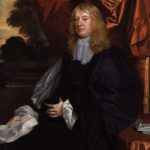
Abraham Cowley (1618 – 1667), the Royalist Poet.Poet and essayist Abraham Cowley was born in London, England, in 1618. He displayed early talent as a poet, publishing his first collection of poetry, Poetical Blossoms (1633), at the age of 15. Cowley studied at Cambridge University but was stripped of his Cambridge fellowship during the English Civil War and expelled for refusing to sign the Solemn League and Covenant of 1644. In turn, he accompanied Queen Henrietta Maria to France, where he spent 12 years in exile, serving as her secretary. During this time, Cowley completed The Mistress (1647). Arguably his most famous work, the collection exemplifies Cowley’s metaphysical style of love poetry. After the Restoration, Cowley returned to England, where he was reinstated as a Cambridge fellow and earned his MD before finally retiring to the English countryside. He is buried at Westminster Abbey alongside Geoffrey Chaucer and Edmund Spenser. Cowley is a wonderful poet and an outstanding representative of the English baroque.