
‘Tis true, I’have lov’d already three or four,
And shall three or four hundred more;
I’ll love each fair one that I see,
Till I find one at last that shall love me.
That shall my Canaan be, the fatal soil,
That ends my wandrings, and my toil.
I’ll settle there and happy grow;
The Country does with Milk and Honey flow.
The Needle trembles so, and turns about,
Till it the Northern Point find out:
But constant then and fixt does prove,
Fixt, that his dearest Pole as soon may move.
Then may my Vessel torn and shipwrackt be,
If it put forth again to Sea:
It never more abroad shall rome,
Though’t could next voyage bring the Indies home.
But I must sweat in Love, and labour yet,
Till I a Competency get.
They’re slothful fools who leave a Trade,
Till they a moderate fortune by’t have made.
Variety I ask not; give me One
To live perpetually upon.
The person Love does to us fit,
Like Manna, has the Tast of all in it.

A few random poems:
- Владимир Маяковский – Письмо к любимой Молчанова, брошенной им
- Владимир Маяковский – Наше воскресенье
- Sonnet 88: When thou shalt be disposed to set me light by William Shakespeare
- Robert Burns: How Lang And Dreary Is The Night:
- Николай Тихонов – Длинный путь
- Heat Wave by Norma Martiri
- Golden Eyes
- Forever Closed by Margaret Marie Hubbard
- A Late Lark Twitters From The Quiet Skies by William Ernest Henley
- Paraphrase of the First Psalm by Robert Burns
- On The Civil War On The East Coast Of The United States Of North America 1860 64
- Song—A Health to ane I loe dear by Robert Burns
- Elemental Drifts. by Walt Whitman
- TIRELESSLY by Satish Verma
- Juan In Middle Age by Vernon Scannell
External links
Bat’s Poetry Page – more poetry by Fledermaus
Talking Writing Monster’s Page –
Batty Writing – the bat’s idle chatter, thoughts, ideas and observations, all original, all fresh
Poems in English
- Post coitum omne animal triste est sive gallus et mulier by T. Wignesan.
- Plaidoirie for a “Prince” of Jaffna by T. Wignesan
- Petrarchan Sonnet: If no one else breathed in this wide, wide world by T. Wignesan
- Paris, Translation of Paul Verlaine’s poem: Paris by T. Wignesan.
- Nevermore, Translation of Paul Verlaine’s sonnet: Nevermore by T. Wignesan
- Master Valluvan, the long-misunderstood Tamil Mentor by T. Wignesan
- Limerick: Once a Great Leader with empty pockets by T. Wignesan
- Criss-Cross Acrostic*: Ai My Eye ! by T. Wignesan
- Copla Suelta: The One and the Same Dream by T. Wignesan
- Ballade: In favour of those called Decadents and Symbolists, Translation of Paul Verlaine’s Ballade: En faveur des dénommés Déca by T Wignesan
- Am I the Assassin or the Undertaker by T. Wignesan
- Whispers of Immortality by T. S. Eliot
- The Song Of The Jellicles by T. S. Eliot
- The Rum Tum Tugger by T. S. Eliot
- The Old Gumbie Cat by T. S. Eliot
- The Naming Of Cats by T. S. Eliot
- The Hollow Men by T. S. Eliot
- The Boston Evening Transcript by T. S. Eliot
- The Ad-Dressing Of Cats by T. S. Eliot
- Sweeney Erect by T. S. Eliot
More external links (open in a new tab):
Doska or the Board – write anything
Search engines:
Yandex – the best search engine for searches in Russian (and the best overall image search engine, in any language, anywhere)
Qwant – the best search engine for searches in French, German as well as Romance and Germanic languages.
Ecosia – a search engine that supposedly… plants trees
Duckduckgo – the real alternative and a search engine that actually works. Without much censorship or partisan politics.
Yahoo– yes, it’s still around, amazingly, miraculously, incredibly, but now it seems to be powered by Bing.
Parallel Translations of Poetry
The Poetry Repository – an online library of poems, poetry, verse and poetic works
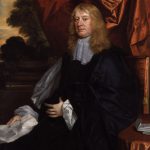
Abraham Cowley (1618 – 1667), the Royalist Poet.Poet and essayist Abraham Cowley was born in London, England, in 1618. He displayed early talent as a poet, publishing his first collection of poetry, Poetical Blossoms (1633), at the age of 15. Cowley studied at Cambridge University but was stripped of his Cambridge fellowship during the English Civil War and expelled for refusing to sign the Solemn League and Covenant of 1644. In turn, he accompanied Queen Henrietta Maria to France, where he spent 12 years in exile, serving as her secretary. During this time, Cowley completed The Mistress (1647). Arguably his most famous work, the collection exemplifies Cowley’s metaphysical style of love poetry. After the Restoration, Cowley returned to England, where he was reinstated as a Cambridge fellow and earned his MD before finally retiring to the English countryside. He is buried at Westminster Abbey alongside Geoffrey Chaucer and Edmund Spenser. Cowley is a wonderful poet and an outstanding representative of the English baroque.