
A poem by Aldous Huxley (1894 – 1963)
I have run where festival was loud
With drum and brass among the crowd
Of panic revellers, whose cries
Affront the quiet of the skies;
Whose dancing lights contract the deep
Infinity of night and sleep
To a narrow turmoil of troubled fire.
And I have found my heart’s desire
In beechen caverns that autumn fills
With the blue shadowiness of distant hills;
Whose luminous grey pillars bear
The stooping sky: calm is the air,
Nor any sound is heard to mar
That crystal silence–as from far,
Far off a man may see
The busy world all utterly
Hushed as an old memorial scene.
Long evenings I have sat and been
Strangely content, while in my hands
I held a wealth of coloured strands,
Shimmering plaits of silk and skeins
Of soft bright wool. Each colour drains
New life at the lamp’s round pool of gold;
Each sinks again when I withhold
The quickening radiance, to a wan
And shadowy oblivion
Of what it was. And in my mind
Beauty or sudden love has shined
And wakened colour in what was dead
And turned to gold the sullen lead
Of mean desires and everyday’s
Poor thoughts and customary ways.
Sometimes in lands where mountains throw
Their silent spell on all below,
Drawing a magic circle wide
About their feet on every side,
Robbed of all speech and thought and act,
I have seen God in the cataract.
In falling water and in flame,
Never at rest, yet still the same,
God shows himself. And I have known
The swift fire frozen into stone,
And water frozen changelessly
Into the death of gems. And I
Long sitting by the thunderous mill
Have seen the headlong wheel made still,
And in the silence that ensued
Have known the endless solitude
Of being dead and utterly nought.
Inhabitant of mine own thought,
I look abroad, and all I see
Is my creation, made for me:
Along my thread of life are pearled
The moments that make up the world.

A few random poems:
- Константин Бальмонт – Мост
- Song Of The Master And Boatswain by W H Auden
- Омар Хайям – Если жизнь все равно неизбежно пройдет
- Ольга Берггольц – Беатриче (строгая любовь)
- The Progress of Poesy by Thomas Gray
- Владимир Высоцкий – Утренняя гимнастика
- long_i_waited_in_vain.html
- A Serenade At The Villa by Robert Browning
- A Sonnet Occasioned by the Bad Weather Which Hindered the Sports at New-Market in January, 1616 by William Drummond
- Incident Characteristic Of A Favorite Dog by William Wordsworth
- A Winter Night by Sara Teasdale
- Юнна Мориц – На Трафальгарской площади ночной
- Half-waking by William Allingham
- Miracles by Paul Hostovsky
- Follow Me ‘ome by Rudyard Kipling
External links
Bat’s Poetry Page – more poetry by Fledermaus
Talking Writing Monster’s Page –
Batty Writing – the bat’s idle chatter, thoughts, ideas and observations, all original, all fresh
Poems in English
- Sonnet 94: They that have power to hurt and will do none by William Shakespeare
- Sonnet 93: So shall I live, supposing thou art true by William Shakespeare
- Sonnet 92: But do thy worst to steal thy self away by William Shakespeare
- Sonnet 91: Some glory in their birth, some in their skill by William Shakespeare
- Sonnet 90: Then hate me when thou wilt; if ever, now by William Shakespeare
- Sonnet 8: Music to hear, why hear’st thou music sadly? by William Shakespeare
- Sonnet 89: Say that thou didst forsake me for some fault by William Shakespeare
- Sonnet 88: When thou shalt be disposed to set me light by William Shakespeare
- Sonnet 87: Farewell! Thou art too dear for my possessing by William Shakespeare
- Sonnet 86: Was it the proud full sail of his great verse by William Shakespeare
- Sonnet 85: My tongue-tied Muse in manners holds her still by William Shakespeare
- Sonnet 84: Who is it that says most, which can say more by William Shakespeare
- Sonnet 83: I never saw that you did painting need by William Shakespeare
- Sonnet 82: I grant thou wert not married to my Muse by William Shakespeare
- Sonnet 81: Or I shall live your epitaph to make by William Shakespeare
- Sonnet 80: O, how I faint when I of you do write by William Shakespeare
- Sonnet 7: Lo, in the orient when the gracious light by William Shakespeare
- Sonnet 79: Whilst I alone did call upon thy aid by William Shakespeare
- Sonnet 78: So oft have I invoked thee for my Muse by William Shakespeare
- Sonnet 77: Thy glass will show thee how thy beauties wear by William Shakespeare
More external links (open in a new tab):
Doska or the Board – write anything
Search engines:
Yandex – the best search engine for searches in Russian (and the best overall image search engine, in any language, anywhere)
Qwant – the best search engine for searches in French, German as well as Romance and Germanic languages.
Ecosia – a search engine that supposedly… plants trees
Duckduckgo – the real alternative and a search engine that actually works. Without much censorship or partisan politics.
Yahoo– yes, it’s still around, amazingly, miraculously, incredibly, but now it seems to be powered by Bing.
Parallel Translations of Poetry
The Poetry Repository – an online library of poems, poetry, verse and poetic works
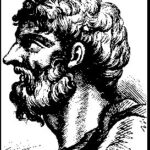
Alcaeus of Mytilene ( c. 625/620 – c. 580 Before Christ) ] was a lyric poet from the Greek island of Lesbos who is credited with inventing the Alcaic stanza. He was included in the canonical list of nine lyric poets by the scholars of Hellenistic Alexandria.