
The merry waves dance up and down, and play,
Sport is granted to the sea;
Birds are the choristers of the empty air,
Sport is never wanting there.
The ground doth smile at the spring’s flowery birth,
Sport is granted to the earth;
The fire its cheering flame on high doth rear,
Sport is never wanting there,
If all the elements, the earth, the sea,
Air, and fire, so merry be,
Why is man’s mirth so seldom and so small,
Who is compounded of them all?

A few random poems:
- Evenèn, An’ Maidens Out At Door by William Barnes
- What is Creativity Anyway and How Come the Human Mind is So Good at It?
- Planetarium
- Какой чудесный, маленький комочек
- From the heart of your heart by Mukeshkumar Raval
- Darkness
- Lying Down by Robert Desnos
- OPTIONS by Satish Verma
- Омар Хайям – Люблю вино, ловлю веселья миг
- Владимир Маяковский – Буржуй, прощайся с приятными деньками
- Вера Павлова – Плачу, потому что не можешь со мной жить
- A Poet! He Hath Put His Heart To School by William Wordsworth
- Song by William Browne
- Fierce Mooning by Satish Verma
- These Little Songs by William Allingham
External links
Bat’s Poetry Page – more poetry by Fledermaus
Talking Writing Monster’s Page –
Batty Writing – the bat’s idle chatter, thoughts, ideas and observations, all original, all fresh
Poems in English
- The Messiah : A Sacred Eclogue poem – Alexander Pope poems | Poetry Monster
- The Looking-Glass. : on Mrs. Pulteney poem – Alexander Pope poems | Poetry Monster
- The Iliad: Book VI (excerpt) poem – Alexander Pope poems | Poetry Monster
- The Fable of Dryope – Ovid’s Metamorphoses Book 9, [v. 324-393] poem – Alexander Pope poems | Poetry Monster
- The Dying Christian to His Soul poem – Alexander Pope poems | Poetry Monster
- The Dunciad: Book IV poem – Alexander Pope poems | Poetry Monster
- The Dunciad: Book III. poem – Alexander Pope poems | Poetry Monster
- The Dunciad: Book II. poem – Alexander Pope poems | Poetry Monster
- The Dunciad: Book I. poem – Alexander Pope poems | Poetry Monster
- The Challenge: A Court Ballad poem – Alexander Pope poems | Poetry Monster
- The Basset-Table : An Eclogue poem – Alexander Pope poems | Poetry Monster
- Summer poem – Alexander Pope poems | Poetry Monster
- Summer – The Second Pastoral; or Alexis poem – Alexander Pope poems | Poetry Monster
- Summer – The Second Pastoral; or Alexis poem – Alexander Pope poems | Poetry Monster
- Spring – The First Pastoral ; or Damon poem – Alexander Pope poems | Poetry Monster
- Sound And Sense poem – Alexander Pope poems | Poetry Monster
- Song, by a Person of Quality poem – Alexander Pope poems | Poetry Monster
- Solitude: An Ode poem – Alexander Pope poems | Poetry Monster
- Solitude poem – Alexander Pope poems | Poetry Monster
- Sappho to Phaon (Ovid Heroid XV) poem – Alexander Pope poems | Poetry Monster
More external links (open in a new tab):
Doska or the Board – write anything
Search engines:
Yandex – the best search engine for searches in Russian (and the best overall image search engine, in any language, anywhere)
Qwant – the best search engine for searches in French, German as well as Romance and Germanic languages.
Ecosia – a search engine that supposedly… plants trees
Duckduckgo – the real alternative and a search engine that actually works. Without much censorship or partisan politics.
Yahoo– yes, it’s still around, amazingly, miraculously, incredibly, but now it seems to be powered by Bing.
Parallel Translations of Poetry
The Poetry Repository – an online library of poems, poetry, verse and poetic works
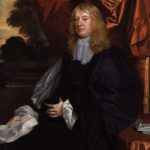
Abraham Cowley (1618 – 1667), the Royalist Poet.Poet and essayist Abraham Cowley was born in London, England, in 1618. He displayed early talent as a poet, publishing his first collection of poetry, Poetical Blossoms (1633), at the age of 15. Cowley studied at Cambridge University but was stripped of his Cambridge fellowship during the English Civil War and expelled for refusing to sign the Solemn League and Covenant of 1644. In turn, he accompanied Queen Henrietta Maria to France, where he spent 12 years in exile, serving as her secretary. During this time, Cowley completed The Mistress (1647). Arguably his most famous work, the collection exemplifies Cowley’s metaphysical style of love poetry. After the Restoration, Cowley returned to England, where he was reinstated as a Cambridge fellow and earned his MD before finally retiring to the English countryside. He is buried at Westminster Abbey alongside Geoffrey Chaucer and Edmund Spenser. Cowley is a wonderful poet and an outstanding representative of the English baroque.