
The merry waves dance up and down, and play,
Sport is granted to the sea;
Birds are the choristers of the empty air,
Sport is never wanting there.
The ground doth smile at the spring’s flowery birth,
Sport is granted to the earth;
The fire its cheering flame on high doth rear,
Sport is never wanting there,
If all the elements, the earth, the sea,
Air, and fire, so merry be,
Why is man’s mirth so seldom and so small,
Who is compounded of them all?

A few random poems:
- [ I think I’m there? ] poem – Ygor Noblott poems | Poetry Monster
- Robert Burns: Third Epistle To J. Lapraik:
- Apology poem – Amy Lowell poems | Poems and Poetry
- Николай Глазков – Поэтоград
- Song at Sunset. by Walt Whitman
- Владимир Высоцкий – Запись в книге почётных гостей ВНИИФТРИ
- Song—A Lass wi’ a Tocher by Robert Burns
- Огюст Барбье – Рафаэль
- Юрий Коринец – О счастье
- The Fable of Dryope – Ovid’s Metamorphoses Book 9, [v. 324-393] poem – Alexander Pope poems | Poetry Monster
- What the Captain Said at the Point-to-Point by Siegfried Sassoon
- A Little Te Deum Of The Commonplace by John Oxenham
- 12 Surefire Brainstorming Techniques
- This Living Hand poem – John Keats poems
- Broken wings of a Heart by Saajida Gora
External links
Bat’s Poetry Page – more poetry by Fledermaus
Talking Writing Monster’s Page –
Batty Writing – the bat’s idle chatter, thoughts, ideas and observations, all original, all fresh
Poems in English
- Song—A Fiddler in the North by Robert Burns
- Song—A Bottle and Friend by Robert Burns
- Sketch—New Year’s Day, 1790 by Robert Burns
- Sketch in Verse, inscribed to the Right Hon. C. J. Fox by Robert Burns
- Second Epistle to Robert Graham, Esq., of Fintry by Robert Burns
- Second Epistle to J. Lapraik by Robert Burns
- Second Epistle to Davie by Robert Burns
- Scots, Wha Hae Wi’ Wallace Bled by Robert Burns
- Scots Prologue for Mr. Sutherland by Robert Burns
- Sappho Redivivus: A Fragment by Robert Burns
- Robert Bruce’s March to Bannockburn (Song) by Robert Burns
- Rhyming Reply to a Note from Captain Riddell by Robert Burns
- Reply to the Threat of a Censorious Critic by Robert Burns
- Reply to an Announcement by J. Rankine by Robert Burns
- Reply to a Trimming Epistle, received from a Tailor by Robert Burns
- Remorseful Apology by Robert Burns
- Remorse: A Fragment by Robert Burns
- Prologue, spoken by Mr. Woods at Edinburgh by Robert Burns
- Prologue spoken at the Theatre of Dumfries by Robert Burns
- Prayer—O Thou Dread Power by Robert Burns
More external links (open in a new tab):
Doska or the Board – write anything
Search engines:
Yandex – the best search engine for searches in Russian (and the best overall image search engine, in any language, anywhere)
Qwant – the best search engine for searches in French, German as well as Romance and Germanic languages.
Ecosia – a search engine that supposedly… plants trees
Duckduckgo – the real alternative and a search engine that actually works. Without much censorship or partisan politics.
Yahoo– yes, it’s still around, amazingly, miraculously, incredibly, but now it seems to be powered by Bing.
Parallel Translations of Poetry
The Poetry Repository – an online library of poems, poetry, verse and poetic works
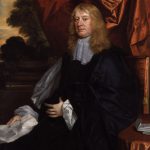
Abraham Cowley (1618 – 1667), the Royalist Poet.Poet and essayist Abraham Cowley was born in London, England, in 1618. He displayed early talent as a poet, publishing his first collection of poetry, Poetical Blossoms (1633), at the age of 15. Cowley studied at Cambridge University but was stripped of his Cambridge fellowship during the English Civil War and expelled for refusing to sign the Solemn League and Covenant of 1644. In turn, he accompanied Queen Henrietta Maria to France, where he spent 12 years in exile, serving as her secretary. During this time, Cowley completed The Mistress (1647). Arguably his most famous work, the collection exemplifies Cowley’s metaphysical style of love poetry. After the Restoration, Cowley returned to England, where he was reinstated as a Cambridge fellow and earned his MD before finally retiring to the English countryside. He is buried at Westminster Abbey alongside Geoffrey Chaucer and Edmund Spenser. Cowley is a wonderful poet and an outstanding representative of the English baroque.