
The merry waves dance up and down, and play,
Sport is granted to the sea;
Birds are the choristers of the empty air,
Sport is never wanting there.
The ground doth smile at the spring’s flowery birth,
Sport is granted to the earth;
The fire its cheering flame on high doth rear,
Sport is never wanting there,
If all the elements, the earth, the sea,
Air, and fire, so merry be,
Why is man’s mirth so seldom and so small,
Who is compounded of them all?

A few random poems:
- Orlando Furioso Canto 17 by Ludovico Ariosto
- Malmaison poem – Amy Lowell poems | Poems and Poetry
- In Spring, Santa Barbara by Sara Teasdale
- The Beggar’s Valentine by Vachel Lindsay
- emotional bond by Raj Arumugam
- Владимир Высоцкий – Веселая покойницкая
- Earth! my Likeness! by Walt Whitman
- Apology poem – Amy Lowell poems | Poems and Poetry
- Bredon Hill poem – A. E. Housman
- Reverie Of Mahomed Akram At The Tamarind Tank
- The Mob
- Владимир Маяковский – Смотри, рабочий! Вот о чем сегодня речь (Главполитпросвет №166)
- When the Walls Were White by Noele Martin
- Paradise Lost: Book 08 poem – John Milton poems
- Sonnet To The Nile poem – John Keats poems
External links
Bat’s Poetry Page – more poetry by Fledermaus
Talking Writing Monster’s Page –
Batty Writing – the bat’s idle chatter, thoughts, ideas and observations, all original, all fresh
Poems in English
- Is There A Power That Can Sustain And Cheer by William Wordsworth
- Invocation To The Earth, February 1816 by William Wordsworth
- Inside of King’s College Chapel, Cambridge by William Wordsworth
- Inscriptions Written with a Slate Pencil upon a Stone by William Wordsworth
- Inscriptions In The Ground Of Coleorton, The Seat Of Sir George Beaumont, Bart., Leicestershire by William Wordsworth
- Inscriptions For A Seat In The Groves Of Coleorton by William Wordsworth
- Influence of Natural Objects by William Wordsworth
- Indignation Of A High-Minded Spaniard by William Wordsworth
- Incident Characteristic Of A Favorite Dog by William Wordsworth
- In The Pass Of Killicranky by William Wordsworth
- In Due Observance Of An Ancient Rite by William Wordsworth
- I Travelled among Unknown Men by William Wordsworth
- I Know an Aged Man Constrained to Dwell by William Wordsworth
- I Grieved For Buonaparte by William Wordsworth
- How Sweet It Is, When Mother Fancy Rocks by William Wordsworth
- Hoffer by William Wordsworth
- Hint From The Mountains For Certain Political Pretenders by William Wordsworth
- Here Pause: The Poet Claims At Least This Praise by William Wordsworth
- Her Eyes Are Wild by William Wordsworth
- Hart-Leap Well by William Wordsworth
More external links (open in a new tab):
Doska or the Board – write anything
Search engines:
Yandex – the best search engine for searches in Russian (and the best overall image search engine, in any language, anywhere)
Qwant – the best search engine for searches in French, German as well as Romance and Germanic languages.
Ecosia – a search engine that supposedly… plants trees
Duckduckgo – the real alternative and a search engine that actually works. Without much censorship or partisan politics.
Yahoo– yes, it’s still around, amazingly, miraculously, incredibly, but now it seems to be powered by Bing.
Parallel Translations of Poetry
The Poetry Repository – an online library of poems, poetry, verse and poetic works
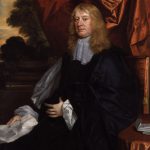
Abraham Cowley (1618 – 1667), the Royalist Poet.Poet and essayist Abraham Cowley was born in London, England, in 1618. He displayed early talent as a poet, publishing his first collection of poetry, Poetical Blossoms (1633), at the age of 15. Cowley studied at Cambridge University but was stripped of his Cambridge fellowship during the English Civil War and expelled for refusing to sign the Solemn League and Covenant of 1644. In turn, he accompanied Queen Henrietta Maria to France, where he spent 12 years in exile, serving as her secretary. During this time, Cowley completed The Mistress (1647). Arguably his most famous work, the collection exemplifies Cowley’s metaphysical style of love poetry. After the Restoration, Cowley returned to England, where he was reinstated as a Cambridge fellow and earned his MD before finally retiring to the English countryside. He is buried at Westminster Abbey alongside Geoffrey Chaucer and Edmund Spenser. Cowley is a wonderful poet and an outstanding representative of the English baroque.