
A poem by Alexander Pushkin – Pouchkine, Pooshkin (1799-1837), in English translation
Although her load is sometimes heavy,
The coach moves at an easy pace;
The dashing driver, gray-haired time
Drives on, secure upon his box.
At dawn we gaily climb aboard her
We’re ready for a crazy ride,
And scorning laziness and languor,
We shout: “Get on, there! Don’t delay!’
But midday finds our courage wane,
We’re shaken now: and at this hour
Both hills and dales inspire dread.
We shout: “Hold on, drive slower, fool!”
The coach drives on just as before;
By eve we are used to it,
And doze as we attain our inn.
While Time just drives the horses on.

A few random poems:
- The Settle An’ The Girt Wood Vire by William Barnes
- Sleep Spaces by Robert Desnos
- Idylls of the King: The Passing of Arthur (excerpt) poem – Lord Alfred Tennyson poems
- My Daughter at 14, Christmas Dance, 1981 by Maria Mazziotti Gillan
- Rose The Red And White Lily poem – Andrew Lang poems
- Morning-Glory by Siegfried Sassoon
- Sonnet 143: Lo, as a careful huswife runs to catch by William Shakespeare
- The Dance At Darmstadt poem – Alfred Austin
- Sitting atop the mountain hill by Swami Aaron Thomas
- Омар Хайям – Когда фиалки льют благоуханье
- Николай Заболоцкий – Бетховен
- Why Should Not Old Men Be Mad? by William Butler Yeats
- The Dragon and The Unicorn by Mary Etta Metcalf
- My Government Frustrates Me by Olaniyi Beloved Abimbola
- Владимир Высоцкий – Песня автомобилиста
External links
Bat’s Poetry Page – more poetry by Fledermaus
Talking Writing Monster’s Page –
Batty Writing – the bat’s idle chatter, thoughts, ideas and observations, all original, all fresh
Poems in English
- Sonnet 115: Those lines that I before have writ do lie by William Shakespeare
- Sonnet 114: Or whether doth my mind, being crowned with you by William Shakespeare
- Sonnet 113: Since I left you, mine eye is in my mind by William Shakespeare
- Sonnet 112: Your love and pity doth th’ impression fill by William Shakespeare
- Sonnet 111: O, for my sake do you with Fortune chide by William Shakespeare
- Sonnet 110: Alas, ’tis true, I have gone here and there by William Shakespeare
- Sonnet 10: For shame, deny that thou bear’st love to any by William Shakespeare
- Sonnet 109: O, never say that I was false of heart by William Shakespeare
- Sonnet 108: What’s in the brain that ink may character by William Shakespeare
- Sonnet 107: Not mine own fears, nor the prophetic soul by William Shakespeare
- Sonnet 106: When in the chronicle of wasted time by William Shakespeare
- Sonnet 105: Let not my love be called idolatry by William Shakespeare
- Sonnet 104: To me, fair friend, you never can be old by William Shakespeare
- Sonnet 103: Alack, what poverty my Muse brings forth by William Shakespeare
- Sonnet 102: My love is strengthened, though more weak in seeming by William Shakespeare
- Sonnet 101: O truant Muse, what shall be thy amends by William Shakespeare
- Sonnet 100: Where art thou, Muse, that thou forget’st so long by William Shakespeare
- Sonnet LIV by William Shakespeare
- Silvia by William Shakespeare
- Sigh No More by William Shakespeare
More external links (open in a new tab):
Doska or the Board – write anything
Search engines:
Yandex – the best search engine for searches in Russian (and the best overall image search engine, in any language, anywhere)
Qwant – the best search engine for searches in French, German as well as Romance and Germanic languages.
Ecosia – a search engine that supposedly… plants trees
Duckduckgo – the real alternative and a search engine that actually works. Without much censorship or partisan politics.
Yahoo– yes, it’s still around, amazingly, miraculously, incredibly, but now it seems to be powered by Bing.
Parallel Translations of Poetry
The Poetry Repository – an online library of poems, poetry, verse and poetic works
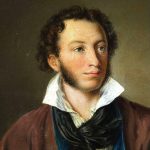
Alexander Pushkin (1799-1937) was a Russian poet, playwright and prose writer, founder of the realistic trend in Russian literature, literary critic and theorist of literature, historian, publicist, journalist; one of the most important cultural figures in Russia in the first third of the 19th century.