
I’LL on; for what should hinder me
From loving and enjoying thee?
Thou canst not those exceptions make,
Which vulgar, sordid mortals take-
That my fate’s too mean and low;
‘T were pity I should love thee so,
If that dull cause could hinder me
In loving and enjoying thee.
It does not me a whit displease,
That the rich all honours seize;
That you all titles make your own,
Are valiant, learned, wise, alone:
But, if you claim o’er women too
The power which over men ye do;
If you alone must lovers be;
For that, Sirs, you must pardon me.
Rather than lose what does so near
Concern my life and being here,
I’ll some such crooked ways invent,
As you, or your forefathers, went:
I’ll flatter or oppose the king,
Turn Puritan, or any thing;
I’ll force my mind to arts so new:
Grow rich, and love as well as you.
But rather thus let me remain,
As man in paradise did reign;
When perfect love did so agree
With innocence and poverty,
Adam did no jointure give;
Himself was jointure to his Eve:
Untouch’d with avarice yet, or pride,
The rib came freely back t’ his side.
A curse upon the man who taught
Women, that love was to be bought!
Rather dote only on your gold,
And that with greedy avarice hold;
For, if woman too submit
To that, and sell herself for it,
Fond lover! you a mistress have
Of her that’s but your fellow-slave.
What should those poets mean of old
That made their God to woo in gold?
Of all men, sure, they had no cause
To bind love to such costly laws;
And yet I scarcely blame them now;
For who, alas! would not allow,
That women should such gifts receive,
Could they, as he, be what they give?
If thou, my dear, thyself shouldst prize,
Alas! what value would suffice?
The Spaniard could not do’t, though he
Should to both Indies jointure thee.
Thy beauties therefore wrong will take,
If thou shouldst any bargain make;
To give all, will befit thee well;
But not at under-rates to sell.
Bestow thy beauty then on me,
Freely, as nature gave’t to thee;
‘T is an exploded popish thought
To think that heaven may be bought.
Prayers, hymns, and praises, are the way,
And those my thankful Muse shall pay:
Thy body, in my verse enshrin’d,
Shall grow immortal as thy mind.
I’ll fix thy title next in fame
To Sacharissa’s well-sung name.
So faithfully will I declare
What all thy wondrous beauties are,
That when, at the last great assize,
All women shall together rise,
Men straight shall cast their eyes on thee
And know at first that thou art she.

A few random poems:
- Merrow Down by Rudyard Kipling
- Flower by Rabindranath Tagore
- The Gardener LIX: O Woman by Rabindranath Tagore
- Sex – Hinduism Shows the Scientific Way!
- The Do’set Militia by William Barnes
- Rogue Elephant poem – A. R. Ammons poems | Poetry Monster
- 600 Kilos of Muscle and Bone by Rose Mary Boehm
- Change of Climate by Michael S Wilson
- Валерий Брюсов – Есть поразительная белость
- Степан Щипачев – Застольное слово
- A Christmas Carol, Sung to the King in the Presence at White-Hall by Robert Herrick
- Юргис Балтрушайтис – Осенняя песня
- Олег Бундур – Играю в школьном спектакле
- American Smooth by Rita Dove
- Иван Крылов – Ода, выбранная из псалма 14-го
External links
Bat’s Poetry Page – more poetry by Fledermaus
Talking Writing Monster’s Page –
Batty Writing – the bat’s idle chatter, thoughts, ideas and observations, all original, all fresh
Poems in English
- A Florida Ghost. by Sidney Lanier
- A Dedication. To Charlotte Cushman. by Sidney Lanier
- A Birthday Song. To S. G. by Sidney Lanier
- A Ballad Of The Trees And The Master by Sidney Lanier
- The Triumph by Siegfried Sassoon
- The Road To Ruin by Siegfried Sassoon
- The Portrait by Siegfried Sassoon
- Sporting Acquaintances by Siegfried Sassoon
- The Triumph by Siegfried Sassoon
- The Road To Ruin by Siegfried Sassoon
- Sassoon’s Public Statement Of Defiance by Siegfried Sassoon
- The Portrait by Siegfried Sassoon
- Sporting Acquaintances by Siegfried Sassoon
- The Road To Ruin by Siegfried Sassoon
- Solar Eclipse by Siegfried Sassoon
- Return Of The Heroes by Siegfried Sassoon
- Return Of The Heroes by Siegfried Sassoon
- Prelude: The Troops by Siegfried Sassoon
- The Road To Ruin by Siegfried Sassoon
- On Passing The New Menin Gate by Siegfried Sassoon
More external links (open in a new tab):
Doska or the Board – write anything
Search engines:
Yandex – the best search engine for searches in Russian (and the best overall image search engine, in any language, anywhere)
Qwant – the best search engine for searches in French, German as well as Romance and Germanic languages.
Ecosia – a search engine that supposedly… plants trees
Duckduckgo – the real alternative and a search engine that actually works. Without much censorship or partisan politics.
Yahoo– yes, it’s still around, amazingly, miraculously, incredibly, but now it seems to be powered by Bing.
Parallel Translations of Poetry
The Poetry Repository – an online library of poems, poetry, verse and poetic works
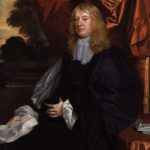
Abraham Cowley (1618 – 1667), the Royalist Poet.Poet and essayist Abraham Cowley was born in London, England, in 1618. He displayed early talent as a poet, publishing his first collection of poetry, Poetical Blossoms (1633), at the age of 15. Cowley studied at Cambridge University but was stripped of his Cambridge fellowship during the English Civil War and expelled for refusing to sign the Solemn League and Covenant of 1644. In turn, he accompanied Queen Henrietta Maria to France, where he spent 12 years in exile, serving as her secretary. During this time, Cowley completed The Mistress (1647). Arguably his most famous work, the collection exemplifies Cowley’s metaphysical style of love poetry. After the Restoration, Cowley returned to England, where he was reinstated as a Cambridge fellow and earned his MD before finally retiring to the English countryside. He is buried at Westminster Abbey alongside Geoffrey Chaucer and Edmund Spenser. Cowley is a wonderful poet and an outstanding representative of the English baroque.