
Happy insect, what can be
In happiness compared to thee?
Fed with nourishment divine,
The dewy morning’s gentle wine!
Nature waits upon thee still,
And thy verdant cup does fill;
‘Tis filled wherever thou dost tread,
Nature’s self’s thy Ganymede.
Thou dost drink, and dance, and sing,
Happier than the happiest king!
All the fields which thou dost see,
All the plants belong to thee;
All the summer hours produce,
Fertile made with early juice.
Man for thee does sow and plow,
Farmer he, and landlord thou!
Thou dost innocently enjoy;
Nor does thy luxury destroy.
The shepherd gladly heareth thee,
More harmonious than he.
Thee country hinds with gladness hear,
Prophet of the ripened year!
Thee Phoebus loves, and does inspire
Phoebus is himself thy sire.
To thee, of all things upon earth,
Life is no longer than thy mirth.
Happy insect! happy thou,
Dost neither age nor winter know;
But when thou’st drunk, and danced, and sung
Thy fill, the flowery leaves among,
(Voluptuous and wise withal,
Epicurean animal!)
Sated with thy summer feast,
Thou retir’st to endless rest.

A few random poems:
- The Watchman
- Death Of A Naturalist by Seamus Heaney
- When I heard at the Close of the Day. by Walt Whitman
- The Bird Has Vanished by Timothy Thomas Fortune
- A Man Young And Old: I. First Love by William Butler Yeats
- For The Anniversary Of My Death by W. S. Merwin
- Our Father’s Works by William Barnes
- Владимир Высоцкий – Песня о сумасшедшем доме
- Composition by Peter Cooley
- Ольга Седакова – Ни темной старины заветные преданья
- The Golden Year! poem – Alfred Austin
- The Monkey by Shel Silverstein
- Николай Языков – Тригорское
- Louisa: After Accompanying Her On A Mountain Excursion by William Wordsworth
- The Waradgery Tribe by Mary Gilmore
External links
Bat’s Poetry Page – more poetry by Fledermaus
Talking Writing Monster’s Page –
Batty Writing – the bat’s idle chatter, thoughts, ideas and observations, all original, all fresh
Poems in English
- Robert Burns: Sappho Redivivus: Fragment
- Robert Burns: Pegasus At Wanlockhead:
- Robert Burns: Ode, Sacred To The Memory Of Mrs. Oswald Of Auchencruive:
- Robert Burns: Robin Shure In Hairst:
- Robert Burns: Versicles On Sign-Posts :
- Robert Burns: The Henpecked Husband:
- Robert Burns: Elegy On The Year 1788:
- Robert Burns: The Poet’s Progress : A Poem In Embryo
- Robert Burns: Written In Friars Carse Hermitage: On Nithside
- Robert Burns: The Parting Kiss:
- Robert Burns: My Bonie Mary:
- Robert Burns: Auld Lang Syne:
- Robert Burns: It Is Na, Jean, Thy Bonie Face:
- Robert Burns: I Reign In Jeanie’s Bosom:
- Robert Burns: The Fall Of The Leaf:
- Robert Burns: A Mother’s Lament For the Death of Her Son.:
- Robert Burns: O, Were I On Parnassus Hill:
- Robert Burns: The Day Returns:
- Robert Burns: Epistle To Robert Graham, Esq., Of Fintry: Requesting a Favour
- Robert Burns: The Fete Champetre:
More external links (open in a new tab):
Doska or the Board – write anything
Search engines:
Yandex – the best search engine for searches in Russian (and the best overall image search engine, in any language, anywhere)
Qwant – the best search engine for searches in French, German as well as Romance and Germanic languages.
Ecosia – a search engine that supposedly… plants trees
Duckduckgo – the real alternative and a search engine that actually works. Without much censorship or partisan politics.
Yahoo– yes, it’s still around, amazingly, miraculously, incredibly, but now it seems to be powered by Bing.
Parallel Translations of Poetry
The Poetry Repository – an online library of poems, poetry, verse and poetic works
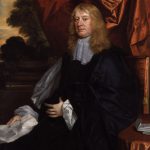
Abraham Cowley (1618 – 1667), the Royalist Poet.Poet and essayist Abraham Cowley was born in London, England, in 1618. He displayed early talent as a poet, publishing his first collection of poetry, Poetical Blossoms (1633), at the age of 15. Cowley studied at Cambridge University but was stripped of his Cambridge fellowship during the English Civil War and expelled for refusing to sign the Solemn League and Covenant of 1644. In turn, he accompanied Queen Henrietta Maria to France, where he spent 12 years in exile, serving as her secretary. During this time, Cowley completed The Mistress (1647). Arguably his most famous work, the collection exemplifies Cowley’s metaphysical style of love poetry. After the Restoration, Cowley returned to England, where he was reinstated as a Cambridge fellow and earned his MD before finally retiring to the English countryside. He is buried at Westminster Abbey alongside Geoffrey Chaucer and Edmund Spenser. Cowley is a wonderful poet and an outstanding representative of the English baroque.