
Happy insect, what can be
In happiness compared to thee?
Fed with nourishment divine,
The dewy morning’s gentle wine!
Nature waits upon thee still,
And thy verdant cup does fill;
‘Tis filled wherever thou dost tread,
Nature’s self’s thy Ganymede.
Thou dost drink, and dance, and sing,
Happier than the happiest king!
All the fields which thou dost see,
All the plants belong to thee;
All the summer hours produce,
Fertile made with early juice.
Man for thee does sow and plow,
Farmer he, and landlord thou!
Thou dost innocently enjoy;
Nor does thy luxury destroy.
The shepherd gladly heareth thee,
More harmonious than he.
Thee country hinds with gladness hear,
Prophet of the ripened year!
Thee Phoebus loves, and does inspire
Phoebus is himself thy sire.
To thee, of all things upon earth,
Life is no longer than thy mirth.
Happy insect! happy thou,
Dost neither age nor winter know;
But when thou’st drunk, and danced, and sung
Thy fill, the flowery leaves among,
(Voluptuous and wise withal,
Epicurean animal!)
Sated with thy summer feast,
Thou retir’st to endless rest.

A few random poems:
- Ode On A Grecian Urn poem – John Keats poems
- Вероника Тушнова – Кто-то в проруби тонет
- Never Sure Which You Are by Mary Etta Metcalf
- Anterotics by William Ernest Henley
- Sonnet 81: Or I shall live your epitaph to make by William Shakespeare
- The Encounter poem – Ezra Pound poems
- Foreign Missions in Battle Array by Vachel Lindsay
- Bones by Walter de la Mare
- Lucy Gray [or Solitude] by William Wordsworth
- Kite by Vattacharja Chandan
- Sonnet (X) : In the search of the physical immortality by Neelam Sinha
- Liebestod
- In the Valley of Cauteretz poem – Lord Alfred Tennyson poems
- Robert Burns: Lines Written In Friars’-Carse Hermitage:
- Let me be to Thee as the circling bird poem – Gerard Manley Hopkins poems
External links
Bat’s Poetry Page – more poetry by Fledermaus
Talking Writing Monster’s Page –
Batty Writing – the bat’s idle chatter, thoughts, ideas and observations, all original, all fresh
Poems in English
- Robert Burns: I Hae Been At Crookieden:
- Robert Burns: Ye Jacobites By Name:
- Robert Burns: Such A Parcel Of Rogues In A Nation:
- Robert Burns: Frae The Friends And Land I Love:
- Robert Burns: Nithsdale’s Welcome Hame:
- Robert Burns: Address To The Shade Of Thomson: On Crowning His Bust at Ednam, Roxburghshire, with a Wreath of Bays.
- Robert Burns: Sweet Afton :
- Robert Burns: My Bonie Bell:
- Robert Burns: Thou Fair Eliza:
- Robert Burns: O For Ane An’ Twenty, Tam :
- Robert Burns: My Tocher’s The Jewel:
- Robert Burns: Altho’ He Has Left Me:
- Robert Burns: My Eppie Macnab:
- Robert Burns: Johnie Lad, Cock Up Your Beaver:
- Robert Burns: Damon And Sylvia: Fragment
- Robert Burns: Lovely Polly Stewart:
- Robert Burns: You’re Welcome, Willie Stewart:
- Robert Burns: Epigram At Brownhill Inn:
- Robert Burns: The Gallant Weaver:
- Robert Burns: Verses On The Destruction Of The Woods Near Drumlanrig:
More external links (open in a new tab):
Doska or the Board – write anything
Search engines:
Yandex – the best search engine for searches in Russian (and the best overall image search engine, in any language, anywhere)
Qwant – the best search engine for searches in French, German as well as Romance and Germanic languages.
Ecosia – a search engine that supposedly… plants trees
Duckduckgo – the real alternative and a search engine that actually works. Without much censorship or partisan politics.
Yahoo– yes, it’s still around, amazingly, miraculously, incredibly, but now it seems to be powered by Bing.
Parallel Translations of Poetry
The Poetry Repository – an online library of poems, poetry, verse and poetic works
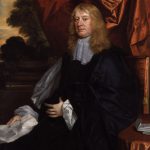
Abraham Cowley (1618 – 1667), the Royalist Poet.Poet and essayist Abraham Cowley was born in London, England, in 1618. He displayed early talent as a poet, publishing his first collection of poetry, Poetical Blossoms (1633), at the age of 15. Cowley studied at Cambridge University but was stripped of his Cambridge fellowship during the English Civil War and expelled for refusing to sign the Solemn League and Covenant of 1644. In turn, he accompanied Queen Henrietta Maria to France, where he spent 12 years in exile, serving as her secretary. During this time, Cowley completed The Mistress (1647). Arguably his most famous work, the collection exemplifies Cowley’s metaphysical style of love poetry. After the Restoration, Cowley returned to England, where he was reinstated as a Cambridge fellow and earned his MD before finally retiring to the English countryside. He is buried at Westminster Abbey alongside Geoffrey Chaucer and Edmund Spenser. Cowley is a wonderful poet and an outstanding representative of the English baroque.