
As Men in Greenland left beheld the sun
From their horizon run;
And thought upon the sad half-year
Of cold and darkness they must suffer there:
So on my parting mistress did I look;
With such swoln eyes my farewell took;
Ah, my fair star! said I;
Ah, those blest lands to which bright Thou dost fly!
In vain the men of learning comfort me,
And say I ‘m in a warm degree;
Say what they please, I say and swear
‘T is beyond eighty at least, if you’re not here.
It is, it is; I tremble with the frost,
And know that I the day have lost;
And those wild things which men they call,
I find to be but bears or foxes all.
Return, return, gay planet of mine East,
Of all that shines thou much the best!
And, as thou now descend’st to sea,
More fair and fresh rise up from thence to me!
Thou, who in many a propriety,
So truly art the sun to me,
Add one more likeness (which I’m sure you can)
And let me and my sun beget a man!

A few random poems:
- From Marinero en tierra by Rafael Alberti
- Robert Burns: On Elphinstone’s Translation Of Martial’s Epigrams:
- Robert Burns: Tam Samson’s Elegy: When this worthy old sportman went out, last muirfowl season, he supposed it was to be, in Ossian’s phrase, “the last of his fields,” and expressed an ardent wish to die and be buried in the muirs. On this hint the author composed his elegy and epitaph.-R.B., 1787.
- Джон Мильтон – По случаю своего двадцатитрехлетия
- Against All Streams by Walter William Safar
- English Poetry. Philip James Bailey. Festus – 29. Филип Джеймс Бэйли.
- The Scud by William Barnes
- 1914 V: The Soldier by Rupert Brooke
- Character Of Charles Brown poem – John Keats poems
- Requiem for Two by Vinko Kalinić
- Our Hands Have Met by William Morris
- Strange Fits of Passion Have I Known by William Wordsworth
- Doomes-Day: The Second Houre by William Alexander
- [Greek Title] by Thomas Hardy
- River poem – Yuyutsu Sharma poems | Poetry Monster
External links
Bat’s Poetry Page – more poetry by Fledermaus
Talking Writing Monster’s Page –
Batty Writing – the bat’s idle chatter, thoughts, ideas and observations, all original, all fresh
Poems in English
- Four Quartets 4: Little Gidding by T. S. Eliot
- Four Quartets 3: The Dry Salvages by T. S. Eliot
- Four Quartets 2: East Coker by T. S. Eliot
- Four Quartets 1: Burnt Norton by T. S. Eliot
- Dans le Restaurant by T. S. Eliot
- Cousin Nancy by T. S. Eliot
- Conversation Galante by T. S. Eliot
- Bustopher Jones: The Cat About Town by T. S. Eliot
- Burbank with a Baedeker: Bleistein with a Cigar by T. S. Eliot
- Aunt Helen by T. S. Eliot
- Ash Wednesday by T. S. Eliot
- A Cooking Egg by T. S. Eliot
- Woman by Tala Bar
- Walk with Me by Tammy L Ames
- Today’s News by Ted Berrigan
- The Woman Of His Dreams by Talha Jafri
- The Soundless Ocean by Tanmoy
- The Poet by Thom Douglas Carlisle
- The Narrative by Talha Jafri
- The Garden by Tammy L. Ames
More external links (open in a new tab):
Doska or the Board – write anything
Search engines:
Yandex – the best search engine for searches in Russian (and the best overall image search engine, in any language, anywhere)
Qwant – the best search engine for searches in French, German as well as Romance and Germanic languages.
Ecosia – a search engine that supposedly… plants trees
Duckduckgo – the real alternative and a search engine that actually works. Without much censorship or partisan politics.
Yahoo– yes, it’s still around, amazingly, miraculously, incredibly, but now it seems to be powered by Bing.
Parallel Translations of Poetry
The Poetry Repository – an online library of poems, poetry, verse and poetic works
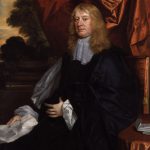
Abraham Cowley (1618 – 1667), the Royalist Poet.Poet and essayist Abraham Cowley was born in London, England, in 1618. He displayed early talent as a poet, publishing his first collection of poetry, Poetical Blossoms (1633), at the age of 15. Cowley studied at Cambridge University but was stripped of his Cambridge fellowship during the English Civil War and expelled for refusing to sign the Solemn League and Covenant of 1644. In turn, he accompanied Queen Henrietta Maria to France, where he spent 12 years in exile, serving as her secretary. During this time, Cowley completed The Mistress (1647). Arguably his most famous work, the collection exemplifies Cowley’s metaphysical style of love poetry. After the Restoration, Cowley returned to England, where he was reinstated as a Cambridge fellow and earned his MD before finally retiring to the English countryside. He is buried at Westminster Abbey alongside Geoffrey Chaucer and Edmund Spenser. Cowley is a wonderful poet and an outstanding representative of the English baroque.