
A poem by Alexander Pushkin – Pouchkine, Pooshkin (1799-1837), in English translation
Until he hears Apollo’s call
To make a hallowed sacrifice,
A Poet lives in feeble thrall
To people’s empty vanities;
And silent is his sacred lyre,
His soul partakes of chilly sleep,
And of the world’s unworthy sons
He is, perhaps, the very least.
But once Divinity’s command
Approaches his exquisite ear,
The poet’s soul awakens, poised,
Just like an eagle stirred from sleep.
All worldly pleasures leave him cold,
From common talk he stays aloof,
And will not lower his proud head
Before the nation’s sacred cow.
Untamed and brooding, he takes flight,
Seething with sound and agitation,
To reach a sea-swept, desert shore,
A woodland wide and murmuring…

A few random poems:
- Magdalen poem – Amy Levy poems | Poems and Poetry
- Владимир Высоцкий – Иноходец
- Beautiful Moroccan by Stanley Wilkin
- Eclogues by Thomas Chatterton
- A Commonplace Day by Thomas Hardy
- I have fallen into unconsciousness by Jalal ad-Din Muhammad Rumi
- A Photograph on the Desk by Mary Etta Metcalf
- The Sacrifice Of Iphigenia
- In The Train by Sara Teasdale
- The Pulling Away by Timothy Cole
- Sonnet To Satan by Sylvia Plath
- To the Lady Margaret Ley poem – John Milton poems
- A Tempest in a Teacup poem – A. Van Jordan poems | Poetry Monster
- What Hidden Sweetness Is There by Jalal ad-Din Muhammad Rumi
- Noe more unto my thoughts appeare by Sidney Godolphin
External links
Bat’s Poetry Page – more poetry by Fledermaus
Talking Writing Monster’s Page –
Batty Writing – the bat’s idle chatter, thoughts, ideas and observations, all original, all fresh
Poems in English
- Sonnet 20: A woman’s face with Nature’s own hand painted by William Shakespeare
- Sonnet 1: From fairest creatures we desire increase by William Shakespeare
- Sonnet 19: Devouring Time blunt thou the lion’s paws by William Shakespeare
- Sonnet 18: Shall I compare thee to a summer’s day? by William Shakespeare
- Sonnet 17: Who will believe my verse in time to come by William Shakespeare
- Sonnet 16: But wherefore do not you a mightier way by William Shakespeare
- Sonnet 15: When I consider every thing that grows by William Shakespeare
- Sonnet 154: The little Love-god lying once asleep by William Shakespeare
- Sonnet 153: Cupid laid by his brand and fell asleep by William Shakespeare
- Sonnet 152: In loving thee thou know’st I am forsworn by William Shakespeare
- Sonnet 151: Love is too young to know what conscience is by William Shakespeare
- Sonnet 150: O from what power hast thou this powerful might by William Shakespeare
- Sonnet 14: Not from the stars do I my judgement pluck by William Shakespeare
- Sonnet 54: O, how much more doth beauty beauteous seem by William Shakespeare
- Sonnet 53: What is your substance, whereof are you made by William Shakespeare
- Sonnet 52: So am I as the rich whose blessèd key by William Shakespeare
- Sonnet 51: Thus can my love excuse the slow offence by William Shakespeare
- Sonnet 50: How heavy do I journey on the way by William Shakespeare
- Sonnet 4: Unthrifty loveliness, why dost thou spend by William Shakespeare
- Sonnet 49: Against that time, if ever that time come by William Shakespeare
More external links (open in a new tab):
Doska or the Board – write anything
Search engines:
Yandex – the best search engine for searches in Russian (and the best overall image search engine, in any language, anywhere)
Qwant – the best search engine for searches in French, German as well as Romance and Germanic languages.
Ecosia – a search engine that supposedly… plants trees
Duckduckgo – the real alternative and a search engine that actually works. Without much censorship or partisan politics.
Yahoo– yes, it’s still around, amazingly, miraculously, incredibly, but now it seems to be powered by Bing.
Parallel Translations of Poetry
The Poetry Repository – an online library of poems, poetry, verse and poetic works
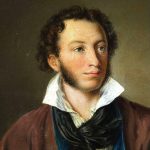
Alexander Pushkin (1799-1937) was a Russian poet, playwright and prose writer, founder of the realistic trend in Russian literature, literary critic and theorist of literature, historian, publicist, journalist; one of the most important cultural figures in Russia in the first third of the 19th century.