
A poem by Alexander Pushkin – Pouchkine, Pooshkin (1799-1837), in English translation
Kazak speeds ever toward the North,
Kazak has never heart for rest,
Not on the field, nor in the wood,
Nor when in face of danger pressed
His steed the raging stream must breast!
Kazak speeds ever toward the North,
With him a mighty power brings,
To win the honour of his land
Kazak his life unheeding flings-
Till fame of him eternal sings!
Kazak brought all Siberia
At foot of Russia’s throne to lie,
Kazak left glory in the Alps,
His name the Turk can terrify,
His flag he ever carries high!
Kazak speeds ever toward the North,
Kazak has never heart for rest,
Not on the field, nor in the wood,
Nor when in face of danger pressed
His steed the raging stream must breast!

A few random poems:
- flight_of_stairs.html
- Think Of It Not, Sweet One poem – John Keats poems
- The White Road Up Athirt The Hill by William Barnes
- Self-Portrait poem – Andrei Voznesensky poems
- A Mystic As Soldier by Siegfried Sassoon
- Forgetting Someone by Yehuda Amichai
- Song—O Tibbie, I hae seen the day by Robert Burns
- Владимир Корнилов – Муки свободы
- Nominalism Is A Liquid Kuhi
- A Poet039s Privilege
- Как не бывает утро без рассвета
- I Wake And Feel The Fell Of Dark, Not Day poem – Gerard Manley Hopkins poems
- Олег Бундур – Праздник встречи
- Ash Wednesday by T. S. Eliot
- The Gardener LXIX: I Hunt for the Golden Stag by Rabindranath Tagore
External links
Bat’s Poetry Page – more poetry by Fledermaus
Talking Writing Monster’s Page –
Batty Writing – the bat’s idle chatter, thoughts, ideas and observations, all original, all fresh
Poems in English
- Sonnet 115: Those lines that I before have writ do lie by William Shakespeare
- Sonnet 114: Or whether doth my mind, being crowned with you by William Shakespeare
- Sonnet 113: Since I left you, mine eye is in my mind by William Shakespeare
- Sonnet 112: Your love and pity doth th’ impression fill by William Shakespeare
- Sonnet 111: O, for my sake do you with Fortune chide by William Shakespeare
- Sonnet 110: Alas, ’tis true, I have gone here and there by William Shakespeare
- Sonnet 10: For shame, deny that thou bear’st love to any by William Shakespeare
- Sonnet 109: O, never say that I was false of heart by William Shakespeare
- Sonnet 108: What’s in the brain that ink may character by William Shakespeare
- Sonnet 107: Not mine own fears, nor the prophetic soul by William Shakespeare
- Sonnet 106: When in the chronicle of wasted time by William Shakespeare
- Sonnet 105: Let not my love be called idolatry by William Shakespeare
- Sonnet 104: To me, fair friend, you never can be old by William Shakespeare
- Sonnet 103: Alack, what poverty my Muse brings forth by William Shakespeare
- Sonnet 102: My love is strengthened, though more weak in seeming by William Shakespeare
- Sonnet 101: O truant Muse, what shall be thy amends by William Shakespeare
- Sonnet 100: Where art thou, Muse, that thou forget’st so long by William Shakespeare
- Sonnet LIV by William Shakespeare
- Silvia by William Shakespeare
- Sigh No More by William Shakespeare
More external links (open in a new tab):
Doska or the Board – write anything
Search engines:
Yandex – the best search engine for searches in Russian (and the best overall image search engine, in any language, anywhere)
Qwant – the best search engine for searches in French, German as well as Romance and Germanic languages.
Ecosia – a search engine that supposedly… plants trees
Duckduckgo – the real alternative and a search engine that actually works. Without much censorship or partisan politics.
Yahoo– yes, it’s still around, amazingly, miraculously, incredibly, but now it seems to be powered by Bing.
Parallel Translations of Poetry
The Poetry Repository – an online library of poems, poetry, verse and poetic works
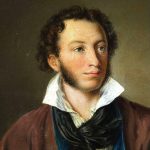
Alexander Pushkin (1799-1937) was a Russian poet, playwright and prose writer, founder of the realistic trend in Russian literature, literary critic and theorist of literature, historian, publicist, journalist; one of the most important cultural figures in Russia in the first third of the 19th century.