
A poem by Alexander Pushkin – Pouchkine, Pooshkin (1799-1837), in English translation
Kazak speeds ever toward the North,
Kazak has never heart for rest,
Not on the field, nor in the wood,
Nor when in face of danger pressed
His steed the raging stream must breast!
Kazak speeds ever toward the North,
With him a mighty power brings,
To win the honour of his land
Kazak his life unheeding flings-
Till fame of him eternal sings!
Kazak brought all Siberia
At foot of Russia’s throne to lie,
Kazak left glory in the Alps,
His name the Turk can terrify,
His flag he ever carries high!
Kazak speeds ever toward the North,
Kazak has never heart for rest,
Not on the field, nor in the wood,
Nor when in face of danger pressed
His steed the raging stream must breast!

A few random poems:
- Lord when the wise men came from farr by Sidney Godolphin
- Sweeney Erect by T. S. Eliot
- Epitaphs Translated From Chiabrera by William Wordsworth
- Paul’s Wife by Robert Frost
- Владимир Маяковский – Не вразброд, не случайно (Главполитпросвет)
- in praise of the moon by Raj Arumugam
- Insect039s Nest
- Barmaid by William Ernest Henley
- Learning to Study – Hindrances to Study
- An Hymn To Humanity by Phillis Wheatley
- Валерий Брюсов – Песня девушки в тайге
- Apostroph. by Walt Whitman
- Burning Oneself Out
- Владимир Орлов – Март
- Владимир Луговской – Спасибо
External links
Bat’s Poetry Page – more poetry by Fledermaus
Talking Writing Monster’s Page –
Batty Writing – the bat’s idle chatter, thoughts, ideas and observations, all original, all fresh
Poems in English
- Sonnet 94: They that have power to hurt and will do none by William Shakespeare
- Sonnet 93: So shall I live, supposing thou art true by William Shakespeare
- Sonnet 92: But do thy worst to steal thy self away by William Shakespeare
- Sonnet 91: Some glory in their birth, some in their skill by William Shakespeare
- Sonnet 90: Then hate me when thou wilt; if ever, now by William Shakespeare
- Sonnet 8: Music to hear, why hear’st thou music sadly? by William Shakespeare
- Sonnet 89: Say that thou didst forsake me for some fault by William Shakespeare
- Sonnet 88: When thou shalt be disposed to set me light by William Shakespeare
- Sonnet 87: Farewell! Thou art too dear for my possessing by William Shakespeare
- Sonnet 86: Was it the proud full sail of his great verse by William Shakespeare
- Sonnet 85: My tongue-tied Muse in manners holds her still by William Shakespeare
- Sonnet 84: Who is it that says most, which can say more by William Shakespeare
- Sonnet 83: I never saw that you did painting need by William Shakespeare
- Sonnet 82: I grant thou wert not married to my Muse by William Shakespeare
- Sonnet 81: Or I shall live your epitaph to make by William Shakespeare
- Sonnet 80: O, how I faint when I of you do write by William Shakespeare
- Sonnet 7: Lo, in the orient when the gracious light by William Shakespeare
- Sonnet 79: Whilst I alone did call upon thy aid by William Shakespeare
- Sonnet 78: So oft have I invoked thee for my Muse by William Shakespeare
- Sonnet 77: Thy glass will show thee how thy beauties wear by William Shakespeare
More external links (open in a new tab):
Doska or the Board – write anything
Search engines:
Yandex – the best search engine for searches in Russian (and the best overall image search engine, in any language, anywhere)
Qwant – the best search engine for searches in French, German as well as Romance and Germanic languages.
Ecosia – a search engine that supposedly… plants trees
Duckduckgo – the real alternative and a search engine that actually works. Without much censorship or partisan politics.
Yahoo– yes, it’s still around, amazingly, miraculously, incredibly, but now it seems to be powered by Bing.
Parallel Translations of Poetry
The Poetry Repository – an online library of poems, poetry, verse and poetic works
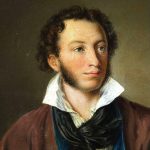
Alexander Pushkin (1799-1937) was a Russian poet, playwright and prose writer, founder of the realistic trend in Russian literature, literary critic and theorist of literature, historian, publicist, journalist; one of the most important cultural figures in Russia in the first third of the 19th century.