
THOUGH you be absent here, I needs must say
The Trees as beauteous are, and flowers as gay,
As ever they were wont to be ;
Nay the Birds rural musick too
Is as melodious and free,
As if they sung to pleasure you:
I saw a Rose-Bud ope this morn ; I’ll swear
The blushing Morning open’d not more fair.
How could it be so fair, and you away ?
How could the Trees be beauteous, Flowers so gay ?
Could they remember but last year,
How you did Them, They you delight,
The sprouting leaves which saw you here,
And call’d their Fellows to the sight,
Would, looking round for the same sight in vain,
Creep back into their silent Barks again.
Where e’er you walk’d trees were as reverend made,
As when of old Gods dwelt in every shade.
Is ‘t possible they should not know,
What loss of honor they sustain,
That thus they smile and flourish now,
And still their former pride retain ?
Dull Creatures! ’tis not without Cause that she,
Who fled the God of wit, was made a Tree.
In ancient times sure they much wiser were,
When they rejoyc’d the Thracian verse to hear ;
In vain did Nature bid them stay,
When Orpheus had his song begun,
They call’d their wondring roots away,
And bad them silent to him run.
How would those learned trees have followed you ?
You would have drawn Them, and their Poet too.
But who can blame them now ? for, since you’re gone,
They’re here the only Fair, and Shine alone.
You did their Natural Rights invade ;
Where ever you did walk or sit,
The thickest Boughs could make no shade,
Although the Sun had granted it :
The fairest Flowers could please no more, neer you,
Then Painted Flowers, set next to them, could do.
When e’er then you come hither, that shall be
The time, which this to others is, to Me.
The little joys which here are now,
The name of Punishments do bear ;
When by their sight they let us know
How we depriv’d of greater are.
‘Tis you the best of Seasons with you bring ;
This is for Beasts, and that for Men the Spring

A few random poems:
- Blow of an ax by Yosa Buson
- Let go of your worries by Jalal ad-Din Muhammad Rumi
- Михаил Кузмин – Все дни у Бога хороши
- Sonnet 54: O, how much more doth beauty beauteous seem by William Shakespeare
- The Shadow poem – Amy Lowell poems | Poems and Poetry
- To A Husband poem – Amy Lowell poems | Poems and Poetry
- Владимир Маяковский – Разговор с товарищем Лениным
- Sculptor by Sylvia Plath
- Rich Days by William Henry Davies
- Subject to Change by Marilyn L. Taylor
- A Ballad of Our Lady (Ave Maria, gracia plena)
- The Children’s Song by Rudyard Kipling
- dear_bhikkhu_a_eulogy.html
- Sonnet 23: As an unperfect actor on the stage by William Shakespeare
- Blue Period by Shaunna Harper
External links
Bat’s Poetry Page – more poetry by Fledermaus
Talking Writing Monster’s Page –
Batty Writing – the bat’s idle chatter, thoughts, ideas and observations, all original, all fresh
Poems in English
- La Nue
- Kyrenaikos
- Juvenilia An Ode To Natural Beauty
- I Loved
- I Have A Rendezvous With Death
- Fragments
- Eudaemon
- El Extraviado
- Do You Remember Once
- Coucy
- Champagne 1914 15
- Broceliande
- Bellinglise
- At The Tomb Of Napoleon
- Ariosto Orlando Furioso Canto X 91 99
- Antinous
- An Ode To Antares
- All Thats Not Love
- After An Epigram Of Clement Marot
- A Message To America
More external links (open in a new tab):
Doska or the Board – write anything
Search engines:
Yandex – the best search engine for searches in Russian (and the best overall image search engine, in any language, anywhere)
Qwant – the best search engine for searches in French, German as well as Romance and Germanic languages.
Ecosia – a search engine that supposedly… plants trees
Duckduckgo – the real alternative and a search engine that actually works. Without much censorship or partisan politics.
Yahoo– yes, it’s still around, amazingly, miraculously, incredibly, but now it seems to be powered by Bing.
Parallel Translations of Poetry
The Poetry Repository – an online library of poems, poetry, verse and poetic works
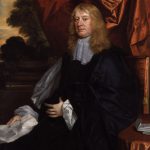
Abraham Cowley (1618 – 1667), the Royalist Poet.Poet and essayist Abraham Cowley was born in London, England, in 1618. He displayed early talent as a poet, publishing his first collection of poetry, Poetical Blossoms (1633), at the age of 15. Cowley studied at Cambridge University but was stripped of his Cambridge fellowship during the English Civil War and expelled for refusing to sign the Solemn League and Covenant of 1644. In turn, he accompanied Queen Henrietta Maria to France, where he spent 12 years in exile, serving as her secretary. During this time, Cowley completed The Mistress (1647). Arguably his most famous work, the collection exemplifies Cowley’s metaphysical style of love poetry. After the Restoration, Cowley returned to England, where he was reinstated as a Cambridge fellow and earned his MD before finally retiring to the English countryside. He is buried at Westminster Abbey alongside Geoffrey Chaucer and Edmund Spenser. Cowley is a wonderful poet and an outstanding representative of the English baroque.