
Thou robb’st my days of business and delights,
Of sleep thou robb’st my nights ;
Ah, lovely thief, what wilt thou do?
What? rob me of heaven too?
Even in my prayers thou hauntest me:
And I, with wild idolatry,
Begin to God, and end them all to thee.
Is it a sin to love, that it should thus
Like an ill conscience torture us?
Whate’er I do, where’er I go-
None guiltless e’er was haunted so!-
Still, still, methinks, thy face I view,
And still thy shape does me pursue,
As if, not you me, but I had murdered you.
From books I strive some remedy to take,
But thy name all the letters make;
Whate’er ’tis writ, I find thee there,
Like points and commas everywhere.
Me blessed for this let no man hold,
For I, as Midas did of old,
Perish by turning every thing to gold.
What do I seek, alas, or why do I
Attempt in vain from thee to fly?
For, making thee my deity,
I gave thee then ubiquity.
My pains resemble hell in this:
The divine presence there too is,
But to torment men, not to give them bliss.

A few random poems:
- Альфред Теннисон – Королева мая
- Владимир Набоков – Забудешь ты меня, как эту ночь забудешь
- On a Fan of the Author’s Design poem – Alexander Pope
- The Grey Rock by William Butler Yeats
- A Poem Upon The Death Of O.C. poem – Andrew Marvell poems
- Владимир Корнилов – Вязальщица
- Engagements by Satish Verma
- Song—O let me in this ae night by Robert Burns
- The Most Exquisite Creature Of My Dreams by Mac McGovern
- Moonrise by Sylvia Plath
- A Dialogue, Between the Resolved Soul, And Created Pleasure poem – Andrew Marvell poems
- Romulus and Remus by Rudyard Kipling
- Yew-Trees by William Wordsworth
- Untitled #12 by Nijole Miliauskaite
- Missing
External links
Bat’s Poetry Page – more poetry by Fledermaus
Talking Writing Monster’s Page –
Batty Writing – the bat’s idle chatter, thoughts, ideas and observations, all original, all fresh
Poems in English
- Николай Карамзин – Из письма к И. И. Дмитриеву (Что ж может быть любви и счастия быстрее)
- Николай Карамзин – Из мелодрамы Петр Великий (Жил был в свете добрый царь)
- Николай Карамзин – Истина
- Николай Карамзин – Impromptu графине Р, которой в одной святошной игре досталось быть королевою
- Николай Карамзин – Илья Муромец
- Николай Карамзин – Граф Гваринос
- Николай Карамзин – Господину Дмитриеву на болезнь его (Болезнь есть часть живущих в мире)
- Николай Карамзин – Гимн слепых
- Николай Карамзин – Гимн
- Николай Карамзин – Филлиде
- Николай Карамзин – Эпитафия (Он жил в сем мире для того)
- Николай Карамзин – Эпитафия Джону Гею
- Николай Карамзин – Эпиграмма (Я знаю, для чего Крадон)
- Николай Карамзин – Две песни
- Николай Карамзин – Дурной вкус
- Николай Карамзин – Делиины слова
- Николай Карамзин – Часто здесь в юдоли мрачной
- Николай Карамзин – Берег
- Николай Карамзин – Анакреонтические стихи А. А. Петрову
- Николай Карамзин – Алина
More external links (open in a new tab):
Doska or the Board – write anything
Search engines:
Yandex – the best search engine for searches in Russian (and the best overall image search engine, in any language, anywhere)
Qwant – the best search engine for searches in French, German as well as Romance and Germanic languages.
Ecosia – a search engine that supposedly… plants trees
Duckduckgo – the real alternative and a search engine that actually works. Without much censorship or partisan politics.
Yahoo– yes, it’s still around, amazingly, miraculously, incredibly, but now it seems to be powered by Bing.
Parallel Translations of Poetry
The Poetry Repository – an online library of poems, poetry, verse and poetic works
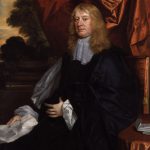
Abraham Cowley (1618 – 1667), the Royalist Poet.Poet and essayist Abraham Cowley was born in London, England, in 1618. He displayed early talent as a poet, publishing his first collection of poetry, Poetical Blossoms (1633), at the age of 15. Cowley studied at Cambridge University but was stripped of his Cambridge fellowship during the English Civil War and expelled for refusing to sign the Solemn League and Covenant of 1644. In turn, he accompanied Queen Henrietta Maria to France, where he spent 12 years in exile, serving as her secretary. During this time, Cowley completed The Mistress (1647). Arguably his most famous work, the collection exemplifies Cowley’s metaphysical style of love poetry. After the Restoration, Cowley returned to England, where he was reinstated as a Cambridge fellow and earned his MD before finally retiring to the English countryside. He is buried at Westminster Abbey alongside Geoffrey Chaucer and Edmund Spenser. Cowley is a wonderful poet and an outstanding representative of the English baroque.