
A poem by Alexander Pope (1688-1744) , the greatest English poet of “Augustan” or Georgian period
I.
In beauty, or wit,
No mortal as yet
To question your empire has dared:
But men of discerning
Have thought that in learning
To yield to a lady was hard.
II.
Impertinent schools,
With musty dull rules,
Have reading to females denied;
So Papists refuse
The Bible to use,
Lest flocks should be wise as their guide.
III.
‘Twas a woman at first
(Indeed she was curst)
In knowledge that tasted delight,
And sages agree
The laws should decree
To the first possessor the right.
IV.
Then bravely, fair dame,
Resume the old claim,
Which to your whole sex does belong;
And let men receive,
From a second bright Eve,
The knowledge of right and of wrong.
V.
But if the first Eve
Hard doom did receive,
When only one apple had she,
What a punishment new
Shall be found out for you,
Who tasting, have robb’d the whole tree?

A few random poems:
- Василий Жуковский – К князю Вяземскому
- Once Upon A Wandering Mind poem – Ysabelle Moriarty poems | Poetry Monster
- Apollo And The Graces poem – John Keats poems
- How cruel are the parents by Robert Burns
- Юнна Мориц – Мой подвал
- The First Part: Sonnet 14 – Nor Arne, nor Mincius, nor stately Tiber, by William Drummond
- Sweet Briars of the Stairways by Vachel Lindsay
- Reply to a Trimming Epistle, received from a Tailor by Robert Burns
- Яков Полонский – Блажен озлобленный поэт
- A Petition poem – Amy Lowell poems | Poems and Poetry
- Владимир Маяковский – Ненавистью древней… (РОСТА № 198)
- The Imperfect Lover by Siegfried Sassoon
- Music’s Empire poem – Andrew Marvell poems
- It Is No Spirit Who From Heaven Hath Flown by William Wordsworth
- The Rape of the Lock: Canto 3 poem – Alexander Pope
External links
Bat’s Poetry Page – more poetry by Fledermaus
Talking Writing Monster’s Page –
Batty Writing – the bat’s idle chatter, thoughts, ideas and observations, all original, all fresh
Poems in English
- Spenserian Stanzas On Charles Armitage Brown poem – John Keats poems
- Spenserian Stanza. Written At The Close Of Canto II, Book V, Of “The Faerie Queene” poem – John Keats poems
- Specimen Of An Induction To A Poem poem – John Keats poems
- Sonnet XVII. Happy Is England poem – John Keats poems
- Sonnet XVI. To Kosciusko poem – John Keats poems
- Sonnet XV. On The Grasshopper And Cricket poem – John Keats poems
- Sonnet XIV. Addressed To The Same (Haydon) poem – John Keats poems
- Sonnet X. To One Who Has Been Long In City Pent poem – John Keats poems
- Sonnet XIII. Addressed To Haydon poem – John Keats poems
- Sonnet XII. On Leaving Some Friends At An Early Hour poem – John Keats poems
- Sonnet XI. On First Looking Into Chapman’s Homer poem – John Keats poems
- Sonnet. Written Upon The Top Of Ben Nevis poem – John Keats poems
- Sonnet. Written On A Blank Space At The End Of Chaucer’s Tale Of ‘The Floure And The Lefe’ poem – John Keats poems
- Sonnet. Written On A Blank Page In Shakespeare’s Poems, Facing ‘A Lover’s Complaint’ poem – John Keats poems
- Sonnet. Written In Disgust Of Vulgar Superstition poem – John Keats poems
- Sonnet. Written In Answer To A Sonnet By J. H. Reynolds poem – John Keats poems
- Sonnet. Written Before Re-Read King Lear poem – John Keats poems
- Sonnet. Why Did I Laugh Tonight? poem – John Keats poems
- Sonnet: When I Have Fears That I May Cease To Be poem – John Keats poems
- Sonnet VIII. To My Brothers poem – John Keats poems
More external links (open in a new tab):
Doska or the Board – write anything
Search engines:
Yandex – the best search engine for searches in Russian (and the best overall image search engine, in any language, anywhere)
Qwant – the best search engine for searches in French, German as well as Romance and Germanic languages.
Ecosia – a search engine that supposedly… plants trees
Duckduckgo – the real alternative and a search engine that actually works. Without much censorship or partisan politics.
Yahoo– yes, it’s still around, amazingly, miraculously, incredibly, but now it seems to be powered by Bing.
Parallel Translations of Poetry
The Poetry Repository – an online library of poems, poetry, verse and poetic works
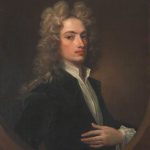
Alexander Pope (1688 – 1744) was a a post-Restoration English poet and satirist. He is a poet of the (British) Augustan period and one of its greatest artistic exponents.