
THAT THERE IS NO KNOWLEDGE.
Against the Dogmatists.
THE sacred tree ‘midst the fair orchard grew;
The Phoenix truth did on it rest,
And built his perfum’d nest;
That right Porphyrian tree which did true Logick shew,
Each leaf did learned notions give,
And th’ apples were demonstrative;
So clear their colour and divine,
The very shade they cast did other lights out-shine.
“Taste not,” said God; ” ‘t is mine and angels’ meat;
” A certain death doth sit,
” Like an ill worm, i’ th’ core of it.
“Ye cannot know and live, nor live or know and eat.”
Thus spoke God, yet man did go
Ignorantly on to know;
Grew so more blind, and she
Who tempted him to this, grew yet more blind than he.
The only science man by this did get,
Was but to know he nothing knew:
He strait his nakedness did view,
His ignorant poor estate, and was asham’d of it.
Yet searches probabilities,
And rhetorick, and fallacies,
And seeks by useless pride,
With slight and withering leaves that nakedness to hide.
“Henceforth,” said God, “the wretched sons of earth
” Shall sweat for food in vain,
” That will not long sustain;
“And bring with labour forth each fond abortive birth.
” That serpent too, their pride,
” Which aims at things deny’d;
” That learn’d and eloquent lust;
“Instead of mounting high, shall creep upon the dust.”.

A few random poems:
- Dialogue Song—Philly and Willy by Robert Burns
- Love by Robert Creeley
- 致老鼠的铅笔
- Федор Сологуб – Собака седого короля
- A Charm by Rudyard Kipling
- Muse poem – Alexander Pushkin
- Robert Burns: The Winter Of Life:
- Омар Хайям – Когда от жизненных освобожусь я пут
- Владимир Маяковский – Два опиума
- Sonet 52 by William Alexander
- Владимир Британишский – Иона
- Владимир Высоцкий – Не могу ни выпить, ни забыться
- Further Instructions poem – Ezra Pound poems
- Николай Заболоцкий – Офорт
- Омар Хайям – Долго ль будешь скорбеть и печалиться, друг
External links
Bat’s Poetry Page – more poetry by Fledermaus
Talking Writing Monster’s Page –
Batty Writing – the bat’s idle chatter, thoughts, ideas and observations, all original, all fresh
Poems in English
- Muhammad by Mahmoud Darwish
- Lulu by Manolo Arriola
- Khanaa’s Song by Mallika Sengupta
- In Jerusalem by Mahmoud Darwish
- If Old Men Fought by Mac McGovern
- Identity Card by Mahmoud Darwish
- I Didn’t Apologize to the Well by Mahmoud Darwish
- I Come From There by Mahmoud Darwish
- I Belong There by Mahmoud Darwish
- I Am There by Mahmoud Darwish
- I Want To Write by Margaret Walker
- Hora Cero by Manolo Arriola
- Heaven, an envious home by Mahak Raithatha S
- He Is Calm, and I Am Too by Mahmoud Darwish
- Hate Survives by Mac McGovern
- Halloween by Mac Hammond
- Frijolita by Manolo Arriola
- FREEDOM by Mac McGovern
- For Life and Death of a Poet by Marcin Malek
- FLORECER by Manolo Arriola
More external links (open in a new tab):
Doska or the Board – write anything
Search engines:
Yandex – the best search engine for searches in Russian (and the best overall image search engine, in any language, anywhere)
Qwant – the best search engine for searches in French, German as well as Romance and Germanic languages.
Ecosia – a search engine that supposedly… plants trees
Duckduckgo – the real alternative and a search engine that actually works. Without much censorship or partisan politics.
Yahoo– yes, it’s still around, amazingly, miraculously, incredibly, but now it seems to be powered by Bing.
Parallel Translations of Poetry
The Poetry Repository – an online library of poems, poetry, verse and poetic works
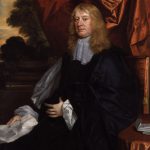
Abraham Cowley (1618 – 1667), the Royalist Poet.Poet and essayist Abraham Cowley was born in London, England, in 1618. He displayed early talent as a poet, publishing his first collection of poetry, Poetical Blossoms (1633), at the age of 15. Cowley studied at Cambridge University but was stripped of his Cambridge fellowship during the English Civil War and expelled for refusing to sign the Solemn League and Covenant of 1644. In turn, he accompanied Queen Henrietta Maria to France, where he spent 12 years in exile, serving as her secretary. During this time, Cowley completed The Mistress (1647). Arguably his most famous work, the collection exemplifies Cowley’s metaphysical style of love poetry. After the Restoration, Cowley returned to England, where he was reinstated as a Cambridge fellow and earned his MD before finally retiring to the English countryside. He is buried at Westminster Abbey alongside Geoffrey Chaucer and Edmund Spenser. Cowley is a wonderful poet and an outstanding representative of the English baroque.