
A poem by Alexander Pope (1688-1744) , the greatest English poet of “Augustan” or Georgian period
The fair Pomona flourish’d in his reign;
Of all the Virgins of the sylvan train,
None taught the trees a nobler race to bear,
Or more improv’d the vegetable care.
To her the shady grove, the flow’ry field,
The streams and fountains, no delights could yield;
‘Twas all her joy the ripening fruits to tend,
And see the boughs with happy burthens bend.
The hook she bore instead of Cynthia’s spear,
To lop the growth of the luxuriant year,
To decent form the lawless shoots to bring,
And teach th’ obedient branches where to spring.
Now the cleft rind inserted graffs receives,
And yields an offspring more than nature gives;
Now sliding streams the thirsty plants renew,
And feed their fibres with reviving dew.
These cares alone her virgin breast employ,
Averse from Venus and the nuptial joy.
Her private orchards, wall’d on ev’ry side,
To lawless sylvans all access deny’d.
How oft the Satyrs and the wanton Fawns,
Who haunt the forests, or frequent the lawns,
The God whose ensign scares the birds of prey,
And old Silenus, youthful in decay,
Employ’d their wiles, and unavailing care,
To pass the fences, and surprise the fair.
Like these, Vertumnus own’d his faithful flame,
Like these, rejected by the scornful dame.
To gain her sight a thousand forms he wears,
And first a reaper from the field appears,
Sweating he walks, while loads of golden grain
O’ercharge the shoulders of the seeming swain.
Oft o’er his back a crooked scythe is laid,
And wreathes of hay his sun-burnt temples shade:
Oft in his harden’d hand a goad he bears,
Like one who late unyok’d the sweating steers.
Sometimes his pruning-hook corrects the vines,
And the loose stragglers to their ranks confines.
Now gath’ring what the bounteous year allows,
He pulls ripe apples from the bending boughs.
A soldier now, he with his sword appears;
A fisher next, his trembling angle bears;
Each shape he varies, and each art he tries,
On her bright charms to feast his longing eyes.
A female form at last Vertumnus wears,
With all the marks of rev’rend age appears,
His temples thinly spread with silver hairs;
Propp’d on his staff, and stooping as he goes,
A painted mitre shades his furrow’d brows.
The God in this decrepit form array’d,
The gardens enter’d, and the fruit survey’d,
And “Happy you!” (he thus address’d the maid)
“Whose charms as far all other nymphs out-shine,
“As other gardens are excell’d by thine!”
Then kiss’d the fair; (his kisses warmer grow
Than such as women on their sex bestow.)
Then plac’d beside her on the flow’ry ground,
Beheld the trees with autumn’s bounty crown’d.
An Elm was near, to whose embraces led,
The curling vine her swelling clusters spread:
He view’d her twining branches with delight,
And prais’d the beauty of the pleasing sight.
“Yet this tall elm, but for his vine” (he said)
“Had stood neglected, and a barren shade;
And this fair vine, but that her arms surround
Her marry’d elm, had crept along the ground.
Ah beauteous maid, let this example move
Your mind, averse from all the joys of love.
Deign to be lov’d, and ev’ry heart subdue!
What nymph could e’er attract such crowds as you?
Not she whose beauty urg’d the Centaurs’ arms,
Ulysses’ Queen, nor Helen’s fatal charms.
Ev’n now, when silent scorn is all they gain,
A thousand court you, tho’ they court in vain,
A thousand sylvans, demigods, and gods,
That haunt our mountains and our Alban woods.
But if you’ll prosper, mark what I advise,
Whom age, and long experience render wise,
And one whose tender care is far above
All that these lovers ever felt of love,
(Far more than e’er can by yourself be guess’d)
Fix on Vertumnus, and reject the rest.
For his firm faith I dare engage my own;
Scarce to himself, himself is better known.
To distant lands Vertumnus never roves;
Like you contented with his native groves;
Nor at first sight, like most, admires the fair;
For you he lives; and you alone shall share
His last affection, as his early care.
Besides, he’s lovely far above the rest,
With youth immortal, and with beauty blest.
Add, that he varies ev’ry shape with ease,
And tries all forms that may Pomona please.
But what should most excite a mutual flame,
Your rural cares, and pleasures are the same:
To him your orchard’s early fruits are due,
(A pleasing off’ring when ’tis made by you)
He values these; but yet (alas) complains,
That still the best and dearest gift remains.
Not the fair fruit that on yon’ branches glows
With that ripe red th’ autumnal sun bestows;
Nor tasteful herbs that in these gardens rise,
Which the kind soil with milky sap supplies;
You, only you, can move the God’s desire:
Oh crown so constant and so pure a fire!
Let soft compassion touch your gentle mind;
Think, ’tis Vertumnus begs you to be kind!
So may no frost, when early buds appear,
Destroy the promise of the youthful year;
Nor winds, when first your florid orchard blows,
Shake the light blossoms from their blasted boughs!”
This when the various God had urg’d in vain,
He straight assum’d his native form again;
Such, and so bright an aspect now he bears,
As when thro’ clouds th’ emerging sun appears,
And thence exerting his refulgent ray,
Dispels the darkness, and reveals the day.
Force he prepar’d, but check’d the rash design;
For when, appearing in a form divine,
The Nymph surveys him, and beholds the grace
Of charming features, and a youthful face,
In her soft breast consenting passions move,
And the warm maid confess’d a mutual love.

A few random poems:
- Николай Заболоцкий – Как мыши с котом воевали
- At The San Francisco Airport by Yvor Winters
- Аля Кудряшева – Все не то чтобы исчезло
- Anacreontics Drinking
- On Envy (From The Greek) by William Cowper
- Sad-Eyed and Soft and Grey by William Morris
- Better Not Ask Me by Shel Silverstein
- Sonnet 23: As an unperfect actor on the stage by William Shakespeare
- Tumi Sandhyar Meghamala – You Are A Cluster Of Clouds – Translation by Rabindranath Tagore
- Drowned in Illusion by Rixa White
- How Soon Hath Time poem – John Milton poems
- It was an April morning: fresh and clear by William Wordsworth
- An Indian Love Song by Sarojini Naidu
- Roads poem – Amy Lowell poems | Poems and Poetry
- Fire and Ice by Robert Frost
External links
Bat’s Poetry Page – more poetry by Fledermaus
Talking Writing Monster’s Page –
Batty Writing – the bat’s idle chatter, thoughts, ideas and observations, all original, all fresh
Poems in English
- Fallen Majesty by William Butler Yeats
- Ephemera by William Butler Yeats
- Ego Dominus Tuus by William Butler Yeats
- Easter, 1916 by William Butler Yeats
- Down By The Salley Gardens by William Butler Yeats
- Demon And Beast by William Butler Yeats
- Dedication To A Book Of Stories Selected From The Irish Novelists by William Butler Yeats
- Death by William Butler Yeats
- Cuchulan’s Fight With The Sea by William Butler Yeats
- Cuchulain Comforted by William Butler Yeats
- Crazy Jane Talks With The Bishop by William Butler Yeats
- Crazy Jane Reproved by William Butler Yeats
- Crazy Jane On The Mountain by William Butler Yeats
- Crazy Jane On The Day Of Judgment by William Butler Yeats
- Crazy Jane On God by William Butler Yeats
- Crazy Jane Grown Old Looks At The Dancers by William Butler Yeats
- Crazy Jane And Jack The Journeyman by William Butler Yeats
- Coole Park, 1929 by William Butler Yeats
- Consolation by William Butler Yeats
- Come Gather Round Me, Parnellites by William Butler Yeats
More external links (open in a new tab):
Doska or the Board – write anything
Search engines:
Yandex – the best search engine for searches in Russian (and the best overall image search engine, in any language, anywhere)
Qwant – the best search engine for searches in French, German as well as Romance and Germanic languages.
Ecosia – a search engine that supposedly… plants trees
Duckduckgo – the real alternative and a search engine that actually works. Without much censorship or partisan politics.
Yahoo– yes, it’s still around, amazingly, miraculously, incredibly, but now it seems to be powered by Bing.
Parallel Translations of Poetry
The Poetry Repository – an online library of poems, poetry, verse and poetic works
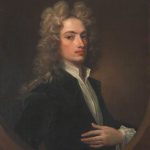
Alexander Pope (1688 – 1744) was a a post-Restoration English poet and satirist. He is a poet of the (British) Augustan period and one of its greatest artistic exponents.