
………
This only grant me : that my means may lie
Too low for envy, for contempt too high.
Some honour I would have,
Not from great deeds, but good alone ;
Th’ ignote are better than ill-known,
Rumor can ope the grave.
Acquaintance I would hug, but when ‘t depends
Not from the number, but the choice of friends.
Books should, not business, entertain the light,
And sleep, as undisturbed as death, the night.
My house a cottage more
Than palace, and should fitting be
For all my use, no luxury.
My garden painted o’er
With nature’s hand, not art’s, and pleasures yield
Horace might envy in his Sabine field.
Thus would I double my life’s fading space,
For he that runs it well twice runs his race.
And in this true delight,
These unbought sports and happy state
I would not fear, nor wish my fate,
But boldly say each night,
To-morrow let my sun his beams display,
Or in clouds hide them ; I have lived to-day.

A few random poems:
- The Burnt-Out Spa by Sylvia Plath
- From the Mountain by Wang Wei
- The Day Is Gone, And All Its Sweets Are Gone poem – John Keats poems
- Sonet 50 by William Alexander
- Jerusalem by Yehuda Amichai
- Swimming Pool by Piera Chen
- The Sea-Wife by Rudyard Kipling
- The Veairy Veet That I Do Meet by William Barnes
- A Question by Robert Frost
- Robert Burns: Inscription: Written on the blank leaf of a copy of the last edition of my poems, presented to the Lady whom, in so many fictitious reveries of passion, but with the most ardent sentiments of real friendship, I have so often sung under the name of-“Chloris.”
- Post coitum omne animal triste est sive gallus et mulier by T. Wignesan.
- To The Small Celandine by William Wordsworth
- On Observing Some Names Of Little Note Recorded In The Biographia Britannica by William Cowper
- Ольга Ермолаева – Герасим Грачевник
- Braga by Walid Saba
External links
Bat’s Poetry Page – more poetry by Fledermaus
Talking Writing Monster’s Page –
Batty Writing – the bat’s idle chatter, thoughts, ideas and observations, all original, all fresh
Poems in English
- The First Sam Hazo at the Last by Samuel Hazo
- The Cleaving by Samuel Hazo
- Carol of a Father by Samuel Hazo
- To A Young Lady. On Her Recovery From A Fever by Samuel Taylor Coleridge
- Written In Early Youth. The Time,–An Autumnal Evening by Samuel Taylor Coleridge
- The Lime-tree Bower my Prison by Samuel Coleridge
- Psyche by Samuel Coleridge
- Brockley Coomb by Samuel Coleridge
- As some vast Tropic tree, itself a wood (fragment) by Samuel Coleridge
- Constancy To An Ideal Object by Samuel Coleridge
- A Tombless Epitaph by Samuel Coleridge
- Cologne by Samuel Coleridge
- Duty Surviving Self-Love by Samuel Coleridge
- Epitaph by Samuel Coleridge
- Dejection: An Ode by Samuel Coleridge
- About The Nightingale by Samuel Coleridge
- Fears In Solitude by Samuel Coleridge
- Christabel by Samuel Coleridge
- Epigram by Samuel Coleridge
- Phantom by Samuel Coleridge
More external links (open in a new tab):
Doska or the Board – write anything
Search engines:
Yandex – the best search engine for searches in Russian (and the best overall image search engine, in any language, anywhere)
Qwant – the best search engine for searches in French, German as well as Romance and Germanic languages.
Ecosia – a search engine that supposedly… plants trees
Duckduckgo – the real alternative and a search engine that actually works. Without much censorship or partisan politics.
Yahoo– yes, it’s still around, amazingly, miraculously, incredibly, but now it seems to be powered by Bing.
Parallel Translations of Poetry
The Poetry Repository – an online library of poems, poetry, verse and poetic works
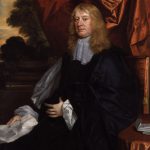
Abraham Cowley (1618 – 1667), the Royalist Poet.Poet and essayist Abraham Cowley was born in London, England, in 1618. He displayed early talent as a poet, publishing his first collection of poetry, Poetical Blossoms (1633), at the age of 15. Cowley studied at Cambridge University but was stripped of his Cambridge fellowship during the English Civil War and expelled for refusing to sign the Solemn League and Covenant of 1644. In turn, he accompanied Queen Henrietta Maria to France, where he spent 12 years in exile, serving as her secretary. During this time, Cowley completed The Mistress (1647). Arguably his most famous work, the collection exemplifies Cowley’s metaphysical style of love poetry. After the Restoration, Cowley returned to England, where he was reinstated as a Cambridge fellow and earned his MD before finally retiring to the English countryside. He is buried at Westminster Abbey alongside Geoffrey Chaucer and Edmund Spenser. Cowley is a wonderful poet and an outstanding representative of the English baroque.