
Awake, awake, my Lyre!
And tell thy silent master’s humble tale
In sounds that may prevail;
Sounds that gentle thoughts inspire:
Though so exalted she
And I so lowly be
Tell her, such different notes make all thy harmony.
Hark, how the strings awake!
And, though the moving hand approach not near,
Themselves with awful fear
A kind of numerous trembling make.
Now all thy forces try;
Now all thy charms apply;
Revenge upon her ear the conquests of her eye.
Weak Lyre! thy virtue sure
Is useless here, since thou art only found
To cure, but not to wound,
And she to wound, but not to cure,
Too weak too wilt thou prove
My passion to remove;
Physic to other ills, thou’rt nourishment to love.
Sleep, sleep again, my Lyre!
For thou canst never tell my humble tale
In sounds that will prevail,
Nor gentle thoughts in her inspire;
All thy vain mirth lay by,
Bid thy strings silent lie,
Sleep, sleep again, my Lyre, and let thy master die.

A few random poems:
- Robert Burns: Written By Somebody On The Window Of an Inn at Stirling, on seeing the Royal Palace in ruin.: Of an Inn at Stirling, on seeing the Royal Palace in ruin.
- Mirage
- Sonnet 95: How sweet and lovely dost thou make the shame by William Shakespeare
- Think No More, Lad poem – A. E. Housman
- On Calais Sands poem – Andrew Lang poems
- Best Society by Philip Larkin
- Николай Гумилев – Новорожденному
- Four Quartets 3: The Dry Salvages by T. S. Eliot
- Wibble Wobble poem – Alexander E Musset poems | Poetry Monster
- An Invitation
- The Child Is Father To The Man poem – Gerard Manley Hopkins poems
- Calypso by W H Auden
- Woman by Tala Bar
- Шекспир – Мой глаз гравером стал – Сонет 24
- The Nearness That Is All by Samuel Hazo
External links
Bat’s Poetry Page – more poetry by Fledermaus
Talking Writing Monster’s Page –
Batty Writing – the bat’s idle chatter, thoughts, ideas and observations, all original, all fresh
Poems in English
- Why England Is Conservative poem – Alfred Austin
- Who Would Not Die For England! poem – Alfred Austin
- “When the reaper lays the sickle by ” poem – Alfred Austin
- When Runnels Began To Leap And Sing poem – Alfred Austin
- ” When in the long–drawn avenues of Thought” poem – Alfred Austin
- “What ails you, Ocean, that nor near nor far” poem – Alfred Austin
- “`Were I a Poet, I would dwell” poem – Alfred Austin
- Since We Must Die poem – Alfred Austin
- Wardens Of The Wave poem – Alfred Austin
- To The Autumn Wind poem – Alfred Austin
- To Robert Louis Stevenson poem – Alfred Austin
- To Ireland poem – Alfred Austin
- To England poem – Alfred Austin
- To Ellen Terry poem – Alfred Austin
- To Beatrice Stuart–Wortley Ætat poem – Alfred Austin
- To Arms! poem – Alfred Austin
- To Arms! (II) poem – Alfred Austin
- To Alfred Tennyson poem – Alfred Austin
- “‘Tis because, though in dusky bower” poem – Alfred Austin
- Time’s Weariness poem – Alfred Austin
More external links (open in a new tab):
Doska or the Board – write anything
Search engines:
Yandex – the best search engine for searches in Russian (and the best overall image search engine, in any language, anywhere)
Qwant – the best search engine for searches in French, German as well as Romance and Germanic languages.
Ecosia – a search engine that supposedly… plants trees
Duckduckgo – the real alternative and a search engine that actually works. Without much censorship or partisan politics.
Yahoo– yes, it’s still around, amazingly, miraculously, incredibly, but now it seems to be powered by Bing.
Parallel Translations of Poetry
The Poetry Repository – an online library of poems, poetry, verse and poetic works
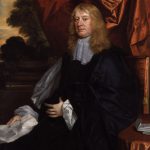
Abraham Cowley (1618 – 1667), the Royalist Poet.Poet and essayist Abraham Cowley was born in London, England, in 1618. He displayed early talent as a poet, publishing his first collection of poetry, Poetical Blossoms (1633), at the age of 15. Cowley studied at Cambridge University but was stripped of his Cambridge fellowship during the English Civil War and expelled for refusing to sign the Solemn League and Covenant of 1644. In turn, he accompanied Queen Henrietta Maria to France, where he spent 12 years in exile, serving as her secretary. During this time, Cowley completed The Mistress (1647). Arguably his most famous work, the collection exemplifies Cowley’s metaphysical style of love poetry. After the Restoration, Cowley returned to England, where he was reinstated as a Cambridge fellow and earned his MD before finally retiring to the English countryside. He is buried at Westminster Abbey alongside Geoffrey Chaucer and Edmund Spenser. Cowley is a wonderful poet and an outstanding representative of the English baroque.