
The poet asks, and Phillis can’t refuse
To show th’ obedience of the Infant muse.
She knows the Quail of most inviting taste
Fed Israel’s army in the dreary waste;
And what’s on Britain’s royal standard borne,
But the tall, graceful, rampant Unicorn?
The Emerald with a vivid verdure glows
Among the gems which regal crowns compose;
Boston’s a town, polite and debonair,
To which the beaux and beauteous nymphs repair,
Each Helen strikes the mind with sweet surprise,
While living lightning flashes from her eyes,
See young Euphorbus of the Dardan line
By Manelaus’ hand to death resign:
The well known peer of popular applause
Is C——m zealous to support our laws.
Quebec now vanquish’d must obey,
She too much annual tribute pay
To Britain of immortal fame.
And add new glory to her name.
End of the poem
15 random poems
- Галина Гампер – Я повторяю, сердце остужая
- The Captured Goddess poem – Amy Lowell poems | Poems and Poetry
- Faces. by Walt Whitman
- Nature And the Book poem – Alfred Austin
- English Poetry. Thomas Moore. From “Irish Melodies”. 99. ’Twas One of Those Dreams. Томас Мур.
- From Far, From Eve and Morning poem – A. E. Housman
- The Half-way House poem – Gerard Manley Hopkins poems
- Юнна Мориц – Ёжик резиновый
- My Mouth Hovers Across Your Breasts
- Fields and Gardens by the River Qi by Wang Wei
- Ольга Берггольц – Покуда небо сумрачное меркнет
- Farewell To Spring poem – Alfred Austin
- I Dream of my Grandmother and Great-Grandmother by Maria Mazziotti Gillan
- A Patch of Old Snow by Robert Frost
- Ольга Берггольц – Подбирают фомки и отмычки
Some external links:
Duckduckgo.com – the alternative in the US
Quant.com – a search engine from France, and also an alternative, at least for Europe
Yandex – the Russian search engine (it’s probably the best search engine for image searches).
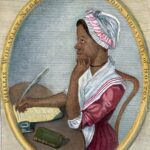
Phillis Wheatley (1753-84), a negro poetess, also an American poet or Afro-American poet, and an English Colonial poet, . She was born in Africa (in Gambia or Senegal) and was aptured by slave traders at the age of eight, she was sold to a family living in Boston, Mass., whose name she bears. While serving as a maid-servant to her proprietor’s wife, she showed an unusual facility with languages. She began writing poetry at the age of thirteen, using as models British poets of the time, especially Alexander Pope and Thomas Gray). In 1773 she accompanied a member of the Wheatley family to England, where she gained widespread attention in literary circles. She subsequently returned to Boston. Her best-known poems are “To the University of Cambridge in New England” (1767), In all honestly Phillis Wheatley should rather be considered English than an Afro-American poet but the exact classification of who she was would depend on the political and cultural views, and biases, of the “classifier.