
Let amicitia in her ample reign
Extend her notes to a Celestial strain
Benevolent far more divinely Bright
Amor like me doth triumph at the sight
When my thoughts in gratitude imploy
Mental Imaginations give me Joy
Now let my thoughts in Contemplation steer
The Footsteps of the Superlative fair
Boston July 15 1769
End of the poem
15 random poems
- Robert Burns: The Fete Champetre:
- Олег Григорьев – Пьет оса кисель из чашки
- The Jewel Stairs’ Grievance poem – Ezra Pound poems
- Eclogue:–The Best Man In The Vield by William Barnes
- No, Love Is Not Dead by Robert Desnos
- Какая мама молодец
- Vows
- In The Stone I Rooted
- Poem by Murali Sivaramakrishnan
- Astrophel and Stella: III by Sir Philip Sidney
- Not Waving But Drowning by Stevie Smith
- The River Of Bees by W. S. Merwin
- Жан де Лафонтен – Дровосек и Меркурий
- Владимир Маяковский – Ты знаешь это вот… (Главполитпросвет №267)
- In The Depths Of Solitude by Tupac Shakur
Some external links:
Duckduckgo.com – the alternative in the US
Quant.com – a search engine from France, and also an alternative, at least for Europe
Yandex – the Russian search engine (it’s probably the best search engine for image searches).
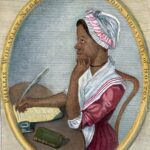
Phillis Wheatley (1753-84), a negro poetess, also an American poet or Afro-American poet, and an English Colonial poet, . She was born in Africa (in Gambia or Senegal) and was aptured by slave traders at the age of eight, she was sold to a family living in Boston, Mass., whose name she bears. While serving as a maid-servant to her proprietor’s wife, she showed an unusual facility with languages. She began writing poetry at the age of thirteen, using as models British poets of the time, especially Alexander Pope and Thomas Gray). In 1773 she accompanied a member of the Wheatley family to England, where she gained widespread attention in literary circles. She subsequently returned to Boston. Her best-known poems are “To the University of Cambridge in New England” (1767), In all honestly Phillis Wheatley should rather be considered English than an Afro-American poet but the exact classification of who she was would depend on the political and cultural views, and biases, of the “classifier.