
A poem by Alexander Pushkin – Pouchkine, Pooshkin (1799-1837), in English translation
O if it’s true that in the night,
When rest the living in their havens
And liquid rays of lunar light
Glide down on tombstones from the heavens,
O if it’s true that still and bare
Are then the graves until aurora —
I call the shade, I wait for Laura:
To me, my friend, appear, appear!
Beloved shadow, come to me
As at our parting — wintry, ashen
In your last minutes’ agony;
Emerge in any form or fashion:
A distant star across the sphere,
A gentle sound, a puff of air or
The most appalling wraith of terror,
I care not how: appear, appear!..
I call you — not to speak my scorn
Of people whose ill-fated malice
Has killed my friend, and not to learn
The secrets of the nether-palace,
And not because a doubt may tear
My heart at times… but as I suffer,
I want to say that still I love her,
That still I’m yours: appear, appear!

A few random poems:
- june_sick_room.html
- four legs good, two legs badOwl Hoots and Grasshopper Sings by Raj Arumugam
- Иван Варавва – На окраине села
- Aunt’s Tantrums by William Barnes
- How Many Bards Gild The Lapses Of Time! poem – John Keats poems
- A Rhyme About an Electrical Advertising Sign by Vachel Lindsay
- Last Turn Of The Morning Carousel/Forever Turn The Midnight Carousel by Matthew Abuelo
- Teignmouth: “Some Doggerel,” Sent In A Letter To B. R. Haydon poem – John Keats poems
- On the late Captain Grose’s Peregrinations by Robert Burns
- Sketch—New Year’s Day, 1790 by Robert Burns
- Potions poem – Yusef Komunyakaa poems | Poetry Monster
- Владимир Маяковский – Сказка про купцову нацию, мужика и кооперацию
- Crouchin’ On The Outside by Shel Silverstein
- Василий Жуковский – Торжество победителей
External links
Bat’s Poetry Page – more poetry by Fledermaus
Talking Writing Monster’s Page –
Batty Writing – the bat’s idle chatter, thoughts, ideas and observations, all original, all fresh
Poems in English
- You Say You Love poem – John Keats poems
- Written In The Cottage Where Burns Was Born poem – John Keats poems
- Woman! When I Behold Thee Flippant, Vain poem – John Keats poems
- What The Thrush Said. Lines From A Letter To John Hamilton Reynolds poem – John Keats poems
- Two Sonnets. To Haydon, With A Sonnet Written On Seeing The Elgin Marbles poem – John Keats poems
- Two Sonnets On Fame poem – John Keats poems
- Two Or Three poem – John Keats poems
- Translated From A Sonnet Of Ronsard poem – John Keats poems
- To The Ladies Who Saw Me Crowned poem – John Keats poems
- To Some Ladies poem – John Keats poems
- To George Felton Mathew poem – John Keats poems
- To Charles Cowden Clarke poem – John Keats poems
- The Gadfly poem – John Keats poems
- The Eve Of Saint Mark. A Fragment poem – John Keats poems
- The Devon Maid: Stanzas Sent In A Letter To B. R. Haydon poem – John Keats poems
- The Cap And Bells; Or, The Jealousies: A Faery Tale — Unfinished poem – John Keats poems
- Teignmouth: “Some Doggerel,” Sent In A Letter To B. R. Haydon poem – John Keats poems
- Stanzas To Miss Wylie poem – John Keats poems
- Stanzas. In A Drear-Nighted December poem – John Keats poems
- Staffa poem – John Keats poems
More external links (open in a new tab):
Doska or the Board – write anything
Search engines:
Yandex – the best search engine for searches in Russian (and the best overall image search engine, in any language, anywhere)
Qwant – the best search engine for searches in French, German as well as Romance and Germanic languages.
Ecosia – a search engine that supposedly… plants trees
Duckduckgo – the real alternative and a search engine that actually works. Without much censorship or partisan politics.
Yahoo– yes, it’s still around, amazingly, miraculously, incredibly, but now it seems to be powered by Bing.
Parallel Translations of Poetry
The Poetry Repository – an online library of poems, poetry, verse and poetic works
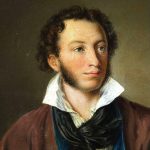
Alexander Pushkin (1799-1937) was a Russian poet, playwright and prose writer, founder of the realistic trend in Russian literature, literary critic and theorist of literature, historian, publicist, journalist; one of the most important cultural figures in Russia in the first third of the 19th century.