
Life’s a name
That nothing here can truly claim;
This wretched inn, where we scarce stay to bait,
We call our dwelling-place!
And mighty voyages we take,
And mighty journeys seem to make,
O’er sea and land, the little point that has no space.
Because we fight and battles gain,
Some captives call, and say, “the rest are slain”;
Because we heap up yellow earth, and so
Rich, valiant, wise, and virtuous seem to grow;
Because we draw a long nobility
From hieroglyphic proofs of heraldry-
We grow at last by Custom to believe,
That really we Live;
Whilst all these Shadows, that for Things we take,
Are but the empty Dreams which in Death’s sleep we make.

A few random poems:
- Владимир Высоцкий – Вот, главный вход
- Николай Заболоцкий – Свадьба
- Robert Burns: Lines Written Under The Picture Of The Celebrated Miss Burns:
- Владимир Маяковский – Товарищи, близятся ужасы зимы… (РОСТА №270)
- Robert Burns: Contented Wi’ Little And Cantie Wi’ Mair:
- A Day Dream by Samuel Taylor Coleridge
- Snow & Ice by Quincy Troupe
- Abba Thule’s Lament For His Son Prince Le Boo by William Lisle Bowles
- Sonnet 03
- Vaudracour And Julia by William Wordsworth
- Verses
- Владимир Маяковский – Земля наша обильна
- That Light by Paul Hostovsky
- The Singer
- Jewels by Sara Teasdale
External links
Bat’s Poetry Page – more poetry by Fledermaus
Talking Writing Monster’s Page –
Batty Writing – the bat’s idle chatter, thoughts, ideas and observations, all original, all fresh
Poems in English
- Post coitum omne animal triste est sive gallus et mulier by T. Wignesan.
- Plaidoirie for a “Prince” of Jaffna by T. Wignesan
- Petrarchan Sonnet: If no one else breathed in this wide, wide world by T. Wignesan
- Paris, Translation of Paul Verlaine’s poem: Paris by T. Wignesan.
- Nevermore, Translation of Paul Verlaine’s sonnet: Nevermore by T. Wignesan
- Master Valluvan, the long-misunderstood Tamil Mentor by T. Wignesan
- Limerick: Once a Great Leader with empty pockets by T. Wignesan
- Criss-Cross Acrostic*: Ai My Eye ! by T. Wignesan
- Copla Suelta: The One and the Same Dream by T. Wignesan
- Ballade: In favour of those called Decadents and Symbolists, Translation of Paul Verlaine’s Ballade: En faveur des dénommés Déca by T Wignesan
- Am I the Assassin or the Undertaker by T. Wignesan
- Whispers of Immortality by T. S. Eliot
- The Song Of The Jellicles by T. S. Eliot
- The Rum Tum Tugger by T. S. Eliot
- The Old Gumbie Cat by T. S. Eliot
- The Naming Of Cats by T. S. Eliot
- The Hollow Men by T. S. Eliot
- The Boston Evening Transcript by T. S. Eliot
- The Ad-Dressing Of Cats by T. S. Eliot
- Sweeney Erect by T. S. Eliot
More external links (open in a new tab):
Doska or the Board – write anything
Search engines:
Yandex – the best search engine for searches in Russian (and the best overall image search engine, in any language, anywhere)
Qwant – the best search engine for searches in French, German as well as Romance and Germanic languages.
Ecosia – a search engine that supposedly… plants trees
Duckduckgo – the real alternative and a search engine that actually works. Without much censorship or partisan politics.
Yahoo– yes, it’s still around, amazingly, miraculously, incredibly, but now it seems to be powered by Bing.
Parallel Translations of Poetry
The Poetry Repository – an online library of poems, poetry, verse and poetic works
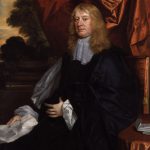
Abraham Cowley (1618 – 1667), the Royalist Poet.Poet and essayist Abraham Cowley was born in London, England, in 1618. He displayed early talent as a poet, publishing his first collection of poetry, Poetical Blossoms (1633), at the age of 15. Cowley studied at Cambridge University but was stripped of his Cambridge fellowship during the English Civil War and expelled for refusing to sign the Solemn League and Covenant of 1644. In turn, he accompanied Queen Henrietta Maria to France, where he spent 12 years in exile, serving as her secretary. During this time, Cowley completed The Mistress (1647). Arguably his most famous work, the collection exemplifies Cowley’s metaphysical style of love poetry. After the Restoration, Cowley returned to England, where he was reinstated as a Cambridge fellow and earned his MD before finally retiring to the English countryside. He is buried at Westminster Abbey alongside Geoffrey Chaucer and Edmund Spenser. Cowley is a wonderful poet and an outstanding representative of the English baroque.