
Life’s a name
That nothing here can truly claim;
This wretched inn, where we scarce stay to bait,
We call our dwelling-place!
And mighty voyages we take,
And mighty journeys seem to make,
O’er sea and land, the little point that has no space.
Because we fight and battles gain,
Some captives call, and say, “the rest are slain”;
Because we heap up yellow earth, and so
Rich, valiant, wise, and virtuous seem to grow;
Because we draw a long nobility
From hieroglyphic proofs of heraldry-
We grow at last by Custom to believe,
That really we Live;
Whilst all these Shadows, that for Things we take,
Are but the empty Dreams which in Death’s sleep we make.

A few random poems:
- Complaint Of A Poet Manqué poem – Aldous Huxley poems | Poetry Monster
- Михаил Кузмин – Зимнее солнце
- In The Month When Sings The Cuckoo poem – Alfred Austin
- To Sir William Davenant
- Two Kopjes by Rudyard Kipling
- The Bistro Styx by Rita Dove
- I Didn’t Apologize to the Well by Mahmoud Darwish
- Василий Тредиаковский – К почтению, льзя объявить любовь
- Paragraphs from a Day-Book by Marilyn Hacker
- The Happy Days When I Wer Young by William Barnes
- Оливер Голдсмит – Опровержение логики
- Владимир Бенедиктов – Напоминание
- Late Light by Philip Levine
- Pensive and Faltering. by Walt Whitman
- Captivity poem – Amy Levy poems | Poems and Poetry
External links
Bat’s Poetry Page – more poetry by Fledermaus
Talking Writing Monster’s Page –
Batty Writing – the bat’s idle chatter, thoughts, ideas and observations, all original, all fresh
Poems in English
- Halo by Tanisha Avarsekar
- Grey eyed Goddess by Tanisha Avarsekar
- Everything ends by Tanisha Avarsekar
- Damned by Tanisha Avarsekar
- Compromising my ego by Tanisha Avarsekar
- Both ways I lose by Tanisha Avarsekar
- Blue flower by Tanisha Avarsekar
- Blue eyes by Tanisha Avarsekar
- Be there for me by Tanisha Avarsekar
- An ode to you by Tanisha Avarsekar
- What time are we living in by T. Wignesan
- Villanelle: Oscar Victorius by T. Wignesan
- To the author(s) of Manimekalai by T. Wignesan
- To Don Quixote, Translation of Paul Verlaine’s A Don Quichotte by T. Wignesan.
- To a woman, Translation of Paul Verlaine’s sonnet: A une femme by T. Wignesan.
- To a person, they say, frigid, Translation of Paul Verlaine’s poem: A celle que l’on fit froide by T. Wignesan
- The Virgin Maid of Orleans, Translation of Paul Verlaine’s sonnet: La Pucelle by T. Wignesan.
- The Evening Soup, Translation of Paul Verlaine’s poem: La Soupe du soir by T. Wignesan
- Prison Souvenirs, Translation of Paul Verlaine’s poem: Prière by T. Wignesan.
- Prayer, Translation of Paul Verlaine’s poem: Prière by T. Wignesan.
More external links (open in a new tab):
Doska or the Board – write anything
Search engines:
Yandex – the best search engine for searches in Russian (and the best overall image search engine, in any language, anywhere)
Qwant – the best search engine for searches in French, German as well as Romance and Germanic languages.
Ecosia – a search engine that supposedly… plants trees
Duckduckgo – the real alternative and a search engine that actually works. Without much censorship or partisan politics.
Yahoo– yes, it’s still around, amazingly, miraculously, incredibly, but now it seems to be powered by Bing.
Parallel Translations of Poetry
The Poetry Repository – an online library of poems, poetry, verse and poetic works
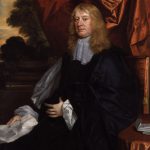
Abraham Cowley (1618 – 1667), the Royalist Poet.Poet and essayist Abraham Cowley was born in London, England, in 1618. He displayed early talent as a poet, publishing his first collection of poetry, Poetical Blossoms (1633), at the age of 15. Cowley studied at Cambridge University but was stripped of his Cambridge fellowship during the English Civil War and expelled for refusing to sign the Solemn League and Covenant of 1644. In turn, he accompanied Queen Henrietta Maria to France, where he spent 12 years in exile, serving as her secretary. During this time, Cowley completed The Mistress (1647). Arguably his most famous work, the collection exemplifies Cowley’s metaphysical style of love poetry. After the Restoration, Cowley returned to England, where he was reinstated as a Cambridge fellow and earned his MD before finally retiring to the English countryside. He is buried at Westminster Abbey alongside Geoffrey Chaucer and Edmund Spenser. Cowley is a wonderful poet and an outstanding representative of the English baroque.