
In heavens eternal court it was decreed
How the first martyr for the cause should bleed
To clear the country of the hated brood
He whet his courage for the common good
Long hid before, a vile infernal here
Prevents Achilles in his mid career
Where’er this fury darts his Pois’nous breath
All are endanger’d to the shafts of death
The generous Sires beheld the fatal wound
Saw their young champion gasping on the ground
They rais’d him up. but to each present ear
What martial glories did his tongue declare
The wretch appal’d no longer can despise
But from the Striking victim turns his eyes –
When this young martial genius did appear
The Tory cheifs no longer could forbear.
Ripe for destruction, see the wretches doom
He waits the curses of the age to come
In vain he flies, by Justice Swiftly chaced
With unexpected infamy disgraced
Be Richardson for ever banish’d here
The grand Usurpers bravely vaunted Heir.
We bring the body from the watry bower
To lodge it where it shall remove no more.
Snider behold with what Majestic Love
The Illustrious retinue begins to move
With Secret rage fair freedoms foes beneath
See in thy corse ev’n Majesty in Death.
End of the poem
15 random poems
- Inversnaid poem – Gerard Manley Hopkins poems
- Ode To A Harmonica
- Владимир Вишневский – Хотел я искупаться в знак протеста
- The Voice of Woman by Shahida Latif
- Владимир Бенедиктов – Не надо
- The Winged Mariners
- Ольга Седакова – Хильдегарда
- Today by Satish Verma
- Adela poem – Aleister Crowley poems | Poetry Monster
- Владислав Ходасевич – Новый год
- Hoffer by William Wordsworth
- last_word_to_childhood.html
- The Happy Days When I Wer Young by William Barnes
- Олег Бундур – Ближе к снегу
- Алексей Толстой – Ты почто, злая кручинушка
Some external links:
Duckduckgo.com – the alternative in the US
Quant.com – a search engine from France, and also an alternative, at least for Europe
Yandex – the Russian search engine (it’s probably the best search engine for image searches).
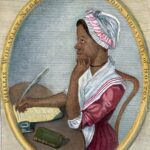
Phillis Wheatley (1753-84), a negro poetess, also an American poet or Afro-American poet, and an English Colonial poet, . She was born in Africa (in Gambia or Senegal) and was aptured by slave traders at the age of eight, she was sold to a family living in Boston, Mass., whose name she bears. While serving as a maid-servant to her proprietor’s wife, she showed an unusual facility with languages. She began writing poetry at the age of thirteen, using as models British poets of the time, especially Alexander Pope and Thomas Gray). In 1773 she accompanied a member of the Wheatley family to England, where she gained widespread attention in literary circles. She subsequently returned to Boston. Her best-known poems are “To the University of Cambridge in New England” (1767), In all honestly Phillis Wheatley should rather be considered English than an Afro-American poet but the exact classification of who she was would depend on the political and cultural views, and biases, of the “classifier.