
A poem by Alexander Pushkin – Pouchkine, Pooshkin (1799-1837), in English translation
When the loud day for men who sow and reap
Grows still, and on the silence of the town
The unsubstantial veils of night and sleep,
The meed of the day’s labour, settle down,
Then for me in the stillness of the night
The wasting, watchful hours drag on their course,
And in the idle darkness comes the bite
Of all the burning serpents of remorse;
Dreams seethe; and fretful infelicities
Are swarming in my over-burdened soul,
And Memory before my wakeful eyes
With noiseless hand unwinds her lengthy scroll.
Then, as with loathing I peruse the years,
I tremble, and I curse my natal day,
Wail bitterly, and bitterly shed tears,
But cannot wash the woeful script away.

A few random poems:
- Iowa City: Early April by Robert Hass
- Song by Margaret Widdemer
- Full Moon and Little Frieda by Ted Hughes
- Poems.html 0
- Михаил Лермонтов – Всевышний произнес свой приговор
- One Day You Will Miss Me.. by Rahul S
- Staffa poem – John Keats poems
- A Dialogue Between The Soul And Body poem – Andrew Marvell poems
- Borrowed Verses by Subhash Misra
- I Wake And Feel The Fell Of Dark, Not Day poem – Gerard Manley Hopkins poems
- Winter Seascape poem – John Betjeman poems
- To his Majestie by William Alexander
- Forbidden Silence by Preeth Nambiar
- Валерий Брюсов – После сенокоса
- Youth And Beauty by William Carlos Williams
External links
Bat’s Poetry Page – more poetry by Fledermaus
Talking Writing Monster’s Page –
Batty Writing – the bat’s idle chatter, thoughts, ideas and observations, all original, all fresh
Poems in English
- Sonnet 133: Beshrew that heart that makes my heart to groan by William Shakespeare
- Sonnet 132: Thine eyes I love, and they, as pitying me by William Shakespeare
- Sonnet 131: Thou art as tyrannous, so as thou art by William Shakespeare
- Sonnet 130: My mistress’ eyes are nothing like the sun by William Shakespeare
- Sonnet 12: When I do count the clock that tells the time by William Shakespeare
- Sonnet 129: Th’ expense of spirit in a waste of shame by William Shakespeare
- The Eolian Harp by Samuel Taylor Coleridge
- Sonnet 32: If thou survive my well-contented day by William Shakespeare
- Sonnet 31: Thy bosom is endearèd with all hearts by William Shakespeare
- Sonnet 30: When to the sessions of sweet silent thought by William Shakespeare
- Sonnet 2: When forty winters shall besiege thy brow by William Shakespeare
- Sonnet 29: When in disgrace with Fortune and men’s eyes by William Shakespeare
- Sonnet 28: How can I then return in happy plight by William Shakespeare
- Sonnet 27: Weary with toil, I haste me to my bed by William Shakespeare
- Sonnet 26: Lord of my love, to whom in vassalage by William Shakespeare
- Sonnet 25: Let those who are in favour with their stars by William Shakespeare
- Sonnet 24: Mine eye hath played the painter and hath stelled by William Shakespeare
- Sonnet 23: As an unperfect actor on the stage by William Shakespeare
- Sonnet 22: My glass shall not persuade me I am old by William Shakespeare
- Sonnet 21: So is it not with me as with that muse by William Shakespeare
More external links (open in a new tab):
Doska or the Board – write anything
Search engines:
Yandex – the best search engine for searches in Russian (and the best overall image search engine, in any language, anywhere)
Qwant – the best search engine for searches in French, German as well as Romance and Germanic languages.
Ecosia – a search engine that supposedly… plants trees
Duckduckgo – the real alternative and a search engine that actually works. Without much censorship or partisan politics.
Yahoo– yes, it’s still around, amazingly, miraculously, incredibly, but now it seems to be powered by Bing.
Parallel Translations of Poetry
The Poetry Repository – an online library of poems, poetry, verse and poetic works
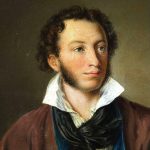
Alexander Pushkin (1799-1937) was a Russian poet, playwright and prose writer, founder of the realistic trend in Russian literature, literary critic and theorist of literature, historian, publicist, journalist; one of the most important cultural figures in Russia in the first third of the 19th century.