
Sonnet III: With how sad steps
by Sir Philip Sidney
With how sad steps, O moon, thou climb’st the skies!
How silently, and with how wan a face!
What! may it be that even in heavenly place
That busy archer his sharp arrows tries?
Sure, if that long-with-love-acquainted eyes
Can judge of love, thou feel’st a lover’s case:
I read it in thy looks; thy languished grace
To me, that feel the like, thy state descries.
Then, even of fellowship, O Moon, tell me,
Is constant love deemed there but want of wit?
Are beauties there as proud as here they be?
Do they above love to be loved, and yet
Those lovers scorn whoom that love doth possess?
Do they call ‘virtue’ there; ungratefulness?
End of the poem
15 random poems
- An Abandoned Factory, Detroit by Philip Levine
- Gerontion by T. S. Eliot
- Winter’s End by Mac McGovern
- My Government Frustrates Me by Olaniyi Beloved Abimbola
- The Raft by Vachel Lindsay
- The islands of happiness
- Владимир Набоков – Простая песня, грусть простая
- Hark! Hark! The Lark by William Shakespeare
- The Countess Cathleen In Paradise by William Butler Yeats
- Leaving Albania by Morelle Smith
- Владимир Степанов – Что мы Родиной зовём
- A Parænesis To Prince Henry by William Alexander
- Игорь Северянин – Шутливая рондель
- Aeolian Harp by William Allingham
- Attack by Siegfried Sassoon
Some external links:
Duckduckgo.com – the alternative in the US
Quant.com – a search engine from France, and also an alternative, at least for Europe
Yandex – the Russian search engine (it’s probably the best search engine for image searches).
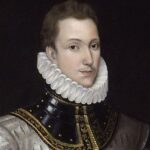
Sir Philip Sidney (1554-1586) was an English courtier, statesman, soldier, diplomat, writer, and patron of scholars and poets. He was a godson of Philip II of Spain. Sir Philip Sidney was considered the ideal gentleman of his day. He is also one of the most important poets of the Elizabethan Era.