
A poem by Aeschylus (c. 525 – c. 456 Before Christ )
The night was passing, and the Grecian host
By no means sought to issue forth unseen.
But when indeed the day with her white steeds
Held all the earth, resplendent to behold,
First from the Greeks the loud-resounding din
Of song triumphant came; and shrill at once
Echo responded from the island rock.
Then upon all barbarians terror fell,
Thus disappointed; for not as for flight
The Hellenes sang the holy pæan then,
But setting forth to battle valiantly.
The bugle with its note inflamed them all;
And straightway with the dip of plashing oars
They smote the deep sea water at command,
And quickly all were plainly to be seen.
Their right wing first in orderly array
Led on, and second all the armament
Followed them forth; and meanwhile there was heard
A mighty shout: “Come, O ye sons of Greeks,
Make free your country, make your children free,
Your wives, and fanes of your ancestral gods,
And your sires’ tombs! For all we now contend!”
And from our side the rush of Persian speech
Replied. No longer might the crisis wait.
At once ship smote on ship with brazen beak;
A vessel of the Greeks began the attack,
Crushing the stem of a Phoenician ship.
Each on a different vessel turned its prow.
At first the current of the Persian host
Withstood; but when within the strait the throng
Of ships was gathered, and they could not aid
Each other, but by their own brazen bows
Were struck, they shattered all our naval host.
The Grecian vessels not unskillfully
Were smiting round about; the hulls of ships
Were overset; the sea was hid from sight,
Covered with wreckage and the death of men;
The reefs and headlands were with corpses filled,
And in disordered flight each ship was rowed,
As many as were of the Persian host.
But they, like tunnies or some shoal of fish,
With broken oars and fragments of the wrecks
Struck us and clove us; and at once a cry
Of lamentation filled the briny sea,
Till the black darkness’ eye did rescue us.
The number of our griefs, not though ten days
I talked together, could I fully tell;
But this know well, that never in one day
Perished so great a multitude of men.

A few random poems:
- The Heart Chirps by Ramesh Anand
- INTO THE LAIR by Satish Verma
- Idylls Of The King: Song From The Marriage Of Geraint poem – Lord Alfred Tennyson poems
- The Gardener X: Let Your Work Be, Bride by Rabindranath Tagore
- Николай Заболоцкий – Ходоки
- Church And State by William Butler Yeats
- Джон Мильтон – По случаю своего двадцатитрехлетия
- Владимир Маяковский – Стихотворение о проданной телятине
- The Ballad Of Lucy Jordan by Shel Silverstein
- Владимир Высоцкий – Переворот в мозгах из края в край
- Invern poem – Ezra Pound poems
- George and Sarah Green by William Wordsworth
- Identity of Images by Robert Desnos
- Яков Полонский – Цветок
- Владимир Маяковский – Права кооперации расширены декретом… (Главполитпросвет №154)
External links
Bat’s Poetry Page – more poetry by Fledermaus
Talking Writing Monster’s Page –
Batty Writing – the bat’s idle chatter, thoughts, ideas and observations, all original, all fresh
Poems in English
- Commemoration of Rodney’s Victory by Robert Burns
- Coming Through The Rye by Robert Burns
- Caledonia: A Ballad by Robert Burns
- Burlesque Lament fo Wm. Creech’s Absence by Robert Burns
- Bonnie Lesley by Robert Burns
- Bonie Jean: A Ballad by Robert Burns
- Boat Song—Hey, Ca’ Thro’ by Robert Burns
- Birthday Ode for 31st December, 1787 by Robert Burns
- Ballad on the American War by Robert Burns
- Ballad on Mr. Heron’s Election—No. 4 by Robert Burns
- Ballad on Mr. Heron’s Election—No. 3 by Robert Burns
- Ballad on Mr. Heron’s Election—No. 2 by Robert Burns
- Ballad on Mr. Heron’s Election—No. 1 by Robert Burns
- Auld Lang Syne by Robert Burns
- Apology to Mr. Syme for not dining with him by Robert Burns
- Another on the said Occasion by Robert Burns
- Ah, woe is me, my Mother dear by Robert Burns
- Ae Fond Kiss, And Then We Sever by Robert Burns
- Address to Wm. Tytler, Esq., of Woodhouselee by Robert Burns
- Address to the Unco Guid by Robert Burns
More external links (open in a new tab):
Doska or the Board – write anything
Search engines:
Yandex – the best search engine for searches in Russian (and the best overall image search engine, in any language, anywhere)
Qwant – the best search engine for searches in French, German as well as Romance and Germanic languages.
Ecosia – a search engine that supposedly… plants trees
Duckduckgo – the real alternative and a search engine that actually works. Without much censorship or partisan politics.
Yahoo– yes, it’s still around, amazingly, miraculously, incredibly, but now it seems to be powered by Bing.
Parallel Translations of Poetry
The Poetry Repository – an online library of poems, poetry, verse and poetic works
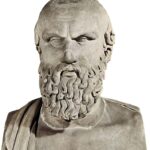
Aeschylus (525 Before Christ to 456 B.C.) was an ancient Greek author of Greek tragedy, and is often described as the father of tragedy. Academics’ knowledge of the genre begins with his work, and understanding of earlier Greek tragedy is largely based on inferences made from reading his surviving plays. According to Aristotle, he expanded the number of characters in the theatre and allowed conflict among them.