
I’LL on; for what should hinder me
From loving and enjoying thee?
Thou canst not those exceptions make,
Which vulgar, sordid mortals take-
That my fate’s too mean and low;
‘T were pity I should love thee so,
If that dull cause could hinder me
In loving and enjoying thee.
It does not me a whit displease,
That the rich all honours seize;
That you all titles make your own,
Are valiant, learned, wise, alone:
But, if you claim o’er women too
The power which over men ye do;
If you alone must lovers be;
For that, Sirs, you must pardon me.
Rather than lose what does so near
Concern my life and being here,
I’ll some such crooked ways invent,
As you, or your forefathers, went:
I’ll flatter or oppose the king,
Turn Puritan, or any thing;
I’ll force my mind to arts so new:
Grow rich, and love as well as you.
But rather thus let me remain,
As man in paradise did reign;
When perfect love did so agree
With innocence and poverty,
Adam did no jointure give;
Himself was jointure to his Eve:
Untouch’d with avarice yet, or pride,
The rib came freely back t’ his side.
A curse upon the man who taught
Women, that love was to be bought!
Rather dote only on your gold,
And that with greedy avarice hold;
For, if woman too submit
To that, and sell herself for it,
Fond lover! you a mistress have
Of her that’s but your fellow-slave.
What should those poets mean of old
That made their God to woo in gold?
Of all men, sure, they had no cause
To bind love to such costly laws;
And yet I scarcely blame them now;
For who, alas! would not allow,
That women should such gifts receive,
Could they, as he, be what they give?
If thou, my dear, thyself shouldst prize,
Alas! what value would suffice?
The Spaniard could not do’t, though he
Should to both Indies jointure thee.
Thy beauties therefore wrong will take,
If thou shouldst any bargain make;
To give all, will befit thee well;
But not at under-rates to sell.
Bestow thy beauty then on me,
Freely, as nature gave’t to thee;
‘T is an exploded popish thought
To think that heaven may be bought.
Prayers, hymns, and praises, are the way,
And those my thankful Muse shall pay:
Thy body, in my verse enshrin’d,
Shall grow immortal as thy mind.
I’ll fix thy title next in fame
To Sacharissa’s well-sung name.
So faithfully will I declare
What all thy wondrous beauties are,
That when, at the last great assize,
All women shall together rise,
Men straight shall cast their eyes on thee
And know at first that thou art she.

A few random poems:
- The True Use of the Looking-Glass by William Somervile
- By The Fire poem – Aldous Huxley poems | Poetry Monster
- Where We Live Now by Philip Levine
- Kraj Majales (King Of May) poem – Allen Ginsberg
- Antaeus: [A Fragment] by Wilfred Owen
- Chronicles by Mark Olynyk
- Джон Китс – Что ж, по горам и по долам
- Владимир Корнилов – Спортлото
- Once Upon A Wandering Mind poem – Ysabelle Moriarty poems | Poetry Monster
- Sakal Bun poem – Amir Khusro poems | Poems and Poetry
- In Memoriam A. H. H.: 22. The path by which we twain did go poem – Lord Alfred Tennyson poems
- Without You by Miraj Patel
- English Poetry. Philip James Bailey. Festus – 42. Филип Джеймс Бэйли.
- Sonnet 2: When forty winters shall besiege thy brow by William Shakespeare
- Анатолий Жигулин – Цветы сажают в торф
External links
Bat’s Poetry Page – more poetry by Fledermaus
Talking Writing Monster’s Page –
Batty Writing – the bat’s idle chatter, thoughts, ideas and observations, all original, all fresh
Poems in English
- Sonnet 71: No longer mourn for me when I am dead by William Shakespeare
- Sonnet 70: That thou art blamed shall not be thy defect by William Shakespeare
- Sonnet 6: Then let not winter’s ragged hand deface by William Shakespeare
- Sonnet 69: Those parts of thee that the world’s eye doth view by William Shakespeare
- Sonnet 68: Thus is his cheek the map of days outworn by William Shakespeare
- Sonnet 67: Ah, wherefore with infection should he live by William Shakespeare
- Sonnet 66: Tired with all these, for restful death I cry by William Shakespeare
- Sonnet 65: Since brass, nor stone, nor earth, nor boundless sea by William Shakespeare
- Sonnet 64: When I have seen by Time’s fell hand defaced by William Shakespeare
- Sonnet 63: Against my love shall be, as I am now by William Shakespeare
- Sonnet 62: Sin of self-love possesseth all mine eye by William Shakespeare
- Sonnet 61: Is it thy will thy image should keep open by William Shakespeare
- Sonnet 60: Like as the waves make towards the pebbled shore by William Shakespeare
- Sonnet 5: Those hours, that with gentle work did frame by William Shakespeare
- Sonnet 59: If there be nothing new, but that which is by William Shakespeare
- Sonnet 58: That god forbid, that made me first your slave by William Shakespeare
- Sonnet 57: Being your slave, what should I do but tend by William Shakespeare
- Sonnet 56: Sweet love, renew thy force, be it not said by William Shakespeare
- Sonnet 55: Not marble, nor the gilded monuments by William Shakespeare
- Sonnet 95: How sweet and lovely dost thou make the shame by William Shakespeare
More external links (open in a new tab):
Doska or the Board – write anything
Search engines:
Yandex – the best search engine for searches in Russian (and the best overall image search engine, in any language, anywhere)
Qwant – the best search engine for searches in French, German as well as Romance and Germanic languages.
Ecosia – a search engine that supposedly… plants trees
Duckduckgo – the real alternative and a search engine that actually works. Without much censorship or partisan politics.
Yahoo– yes, it’s still around, amazingly, miraculously, incredibly, but now it seems to be powered by Bing.
Parallel Translations of Poetry
The Poetry Repository – an online library of poems, poetry, verse and poetic works
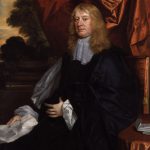
Abraham Cowley (1618 – 1667), the Royalist Poet.Poet and essayist Abraham Cowley was born in London, England, in 1618. He displayed early talent as a poet, publishing his first collection of poetry, Poetical Blossoms (1633), at the age of 15. Cowley studied at Cambridge University but was stripped of his Cambridge fellowship during the English Civil War and expelled for refusing to sign the Solemn League and Covenant of 1644. In turn, he accompanied Queen Henrietta Maria to France, where he spent 12 years in exile, serving as her secretary. During this time, Cowley completed The Mistress (1647). Arguably his most famous work, the collection exemplifies Cowley’s metaphysical style of love poetry. After the Restoration, Cowley returned to England, where he was reinstated as a Cambridge fellow and earned his MD before finally retiring to the English countryside. He is buried at Westminster Abbey alongside Geoffrey Chaucer and Edmund Spenser. Cowley is a wonderful poet and an outstanding representative of the English baroque.