
A poem by Alexander Pushkin – Pouchkine, Pooshkin (1799-1837), in English translation
Until he hears Apollo’s call
To make a hallowed sacrifice,
A Poet lives in feeble thrall
To people’s empty vanities;
And silent is his sacred lyre,
His soul partakes of chilly sleep,
And of the world’s unworthy sons
He is, perhaps, the very least.
But once Divinity’s command
Approaches his exquisite ear,
The poet’s soul awakens, poised,
Just like an eagle stirred from sleep.
All worldly pleasures leave him cold,
From common talk he stays aloof,
And will not lower his proud head
Before the nation’s sacred cow.
Untamed and brooding, he takes flight,
Seething with sound and agitation,
To reach a sea-swept, desert shore,
A woodland wide and murmuring…

A few random poems:
- Zermatt To The Matterhorn. by Thomas Hardy
- On Female Inconstancy (From The Greek) by William Cowper
- Song—A Man’s a Man for a’ that by Robert Burns
- Looks A-Know’d Avore by William Barnes
- No quise detenerte by Luz del Alba Nicola
- The Tears In Cupid’s Eyes by Tupac Shakur
- The Columbian Exchange Beginning With Spanish Colonization
- The Portrait — English Translation by Rabindranath Tagore
- The Reply Of Q. Horatius Flaccus To A Roman “Round-Robin” poem – Alfred Austin
- Sonnet CXXIV by William Shakespeare
- Had I a cave by Robert Burns
- Love Of Life poem – Alfred Austin
- Making Light Of It by Philip Levine
- There Can Never Be Another You by Miraj Patel
- Loon Point poem – Amy Lowell poems | Poems and Poetry
External links
Bat’s Poetry Page – more poetry by Fledermaus
Talking Writing Monster’s Page –
Batty Writing – the bat’s idle chatter, thoughts, ideas and observations, all original, all fresh
Poems in English
- Sonnet 94: They that have power to hurt and will do none by William Shakespeare
- Sonnet 93: So shall I live, supposing thou art true by William Shakespeare
- Sonnet 92: But do thy worst to steal thy self away by William Shakespeare
- Sonnet 91: Some glory in their birth, some in their skill by William Shakespeare
- Sonnet 90: Then hate me when thou wilt; if ever, now by William Shakespeare
- Sonnet 8: Music to hear, why hear’st thou music sadly? by William Shakespeare
- Sonnet 89: Say that thou didst forsake me for some fault by William Shakespeare
- Sonnet 88: When thou shalt be disposed to set me light by William Shakespeare
- Sonnet 87: Farewell! Thou art too dear for my possessing by William Shakespeare
- Sonnet 86: Was it the proud full sail of his great verse by William Shakespeare
- Sonnet 85: My tongue-tied Muse in manners holds her still by William Shakespeare
- Sonnet 84: Who is it that says most, which can say more by William Shakespeare
- Sonnet 83: I never saw that you did painting need by William Shakespeare
- Sonnet 82: I grant thou wert not married to my Muse by William Shakespeare
- Sonnet 81: Or I shall live your epitaph to make by William Shakespeare
- Sonnet 80: O, how I faint when I of you do write by William Shakespeare
- Sonnet 7: Lo, in the orient when the gracious light by William Shakespeare
- Sonnet 79: Whilst I alone did call upon thy aid by William Shakespeare
- Sonnet 78: So oft have I invoked thee for my Muse by William Shakespeare
- Sonnet 77: Thy glass will show thee how thy beauties wear by William Shakespeare
More external links (open in a new tab):
Doska or the Board – write anything
Search engines:
Yandex – the best search engine for searches in Russian (and the best overall image search engine, in any language, anywhere)
Qwant – the best search engine for searches in French, German as well as Romance and Germanic languages.
Ecosia – a search engine that supposedly… plants trees
Duckduckgo – the real alternative and a search engine that actually works. Without much censorship or partisan politics.
Yahoo– yes, it’s still around, amazingly, miraculously, incredibly, but now it seems to be powered by Bing.
Parallel Translations of Poetry
The Poetry Repository – an online library of poems, poetry, verse and poetic works
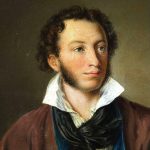
Alexander Pushkin (1799-1937) was a Russian poet, playwright and prose writer, founder of the realistic trend in Russian literature, literary critic and theorist of literature, historian, publicist, journalist; one of the most important cultural figures in Russia in the first third of the 19th century.