
I’AVE often wish’d to love; what shall I do?
Me still the cruel boy does spare;
And I a double task must bear,
First to woo him, and then a mistress too.
Come at last and strike, for shame,
If thou art any thing besides a name;
I’ll think thee else no God to be,
But poets rather Gods, who first created thee.
I ask not one in whom all beauties grow;
Let me but love, whate’er she be,
She cannot seem deform’d to me;
And I would have her seem to others so.
Desire takes wings and straight does fly,
It stays not dully to inquire the Why.
That happy thing, a lover, grown,
I shall not see with others’ eyes, scarce with mine own.
If she be coy, and scorn my noble fire;
If her chill heart I cannot move;
Why I’ll enjoy the very love,
And make a mistress of my own desire.
Flames their most vigorous heat do hold,
And purest light, if compass’d round with cold:
So, when sharp winter means most harm,
The springing plants are by the snow itself kept warm.
But do not touch my heart, and so be gone;
Strike deep thy burning arrows in!
Lukewarmness I account a sin,
As great in love as in religion.
Come arm’d with flames; for I would prove
All the extremities of mighty Love.
Th’ excess of heat is but a fable;
We know the torrid zone is now found habitable.
Among the woods and forests thou art found,
There boars and lions thou dost tame;
Is not my heart a nobler game?
Let Venus, men; and beasts, Diana, wound!
Thou dost the birds thy subjects make;
Thy nimble feathers do their wings o’ertake:
Thou all the spring their songs dost hear;
Make me love too, I’ll sing to’ thee all the year!
What service can mute fishes do to thee?
Yet against them thy dart prevails,
Piercing the armour of their scales;
And still thy sea-born mother lives i’th’ sea.
Dost thou deny only to me
The no-great privilege of captivity?
I beg or challenge here thy bow;
Either thy pity to me, or else thine anger, show.
Come! or I ‘ll teach the world to scorn that bow:
I’ll teach them thousand wholesome arts
Both to resist and cure thy darts,
More than thy skilful Ovid e’er did know.
Musick of sighs thou shalt not hear,
Nor drink one wretched lover’s tasteful tear:
Nay, unless soon thou woundest me,
My verses shall not only wound, but murder, thee.

A few random poems:
- English Poetry. Philip James Bailey. Festus – 9. Филип Джеймс Бэйли.
- Robert Burns: Whistle, And I’ll Come To You, My Lad:
- Her Anxiety by William Butler Yeats
- Robert Burns: Raving Winds Around Her Blowing: I composed these verses on Miss Isabella M’Leod of Raza, alluding to her feelings on the death of her sister, and the still more melancholy death of her sister’s husband, the late Earl of Loudoun, who shot himself out of sheer heart-break at some mortifications he suffered, owing to the deranged state of his finances.-R.B., 1971.
- Омар Хайям – Чем пустыми мечтами себя донимать
- Give Me Back My Rags #12 by Vasko Popa
- Disdain Returned by Thomas Carew
- We are Africa by Timileyin Gabriel Olajuwon
- Владимир Бенедиктов – Обвинение
- Robert Burns: On The Death Of Robert Dundas, Esq., Of Arniston,: Late Lord President of the Court of Session.
- Николай Заболоцкий – Офорт
- 10 Things I Do Every Day by Ted Berrigan
- Termites by Piera Chen
- Владимир Высоцкий – Давно, в эпоху мрачного язычества
- In the Old Age of the Soul poem – Ezra Pound poems
External links
Bat’s Poetry Page – more poetry by Fledermaus
Talking Writing Monster’s Page –
Batty Writing – the bat’s idle chatter, thoughts, ideas and observations, all original, all fresh
Poems in English
- The Princess And The Goblins by Sylvia Plath
- The Other by Sylvia Plath
- The Other Two by Sylvia Plath
- The Night Dances by Sylvia Plath
- The Net-Menders by Sylvia Plath
- The Munich Mannequins by Sylvia Plath
- The Moon And The Yew Tree by Sylvia Plath
- The Manor Garden by Sylvia Plath
- The Lady And The Earthenware Head by Sylvia Plath
- The Jailer by Sylvia Plath
- The Hermit At Outermost House by Sylvia Plath
- The Hanging Man by Sylvia Plath
- The Great Carbuncle by Sylvia Plath
- The Goring by Sylvia Plath
- The Glutton by Sylvia Plath
- The Ghost’s Leavetaking by Sylvia Plath
- The Fearful by Sylvia Plath
- The Eye-Mote by Sylvia Plath
- The Everlasting Monday by Sylvia Plath
- The Dream by Sylvia Plath
More external links (open in a new tab):
Doska or the Board – write anything
Search engines:
Yandex – the best search engine for searches in Russian (and the best overall image search engine, in any language, anywhere)
Qwant – the best search engine for searches in French, German as well as Romance and Germanic languages.
Ecosia – a search engine that supposedly… plants trees
Duckduckgo – the real alternative and a search engine that actually works. Without much censorship or partisan politics.
Yahoo– yes, it’s still around, amazingly, miraculously, incredibly, but now it seems to be powered by Bing.
Parallel Translations of Poetry
The Poetry Repository – an online library of poems, poetry, verse and poetic works
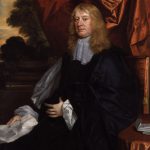
Abraham Cowley (1618 – 1667), the Royalist Poet.Poet and essayist Abraham Cowley was born in London, England, in 1618. He displayed early talent as a poet, publishing his first collection of poetry, Poetical Blossoms (1633), at the age of 15. Cowley studied at Cambridge University but was stripped of his Cambridge fellowship during the English Civil War and expelled for refusing to sign the Solemn League and Covenant of 1644. In turn, he accompanied Queen Henrietta Maria to France, where he spent 12 years in exile, serving as her secretary. During this time, Cowley completed The Mistress (1647). Arguably his most famous work, the collection exemplifies Cowley’s metaphysical style of love poetry. After the Restoration, Cowley returned to England, where he was reinstated as a Cambridge fellow and earned his MD before finally retiring to the English countryside. He is buried at Westminster Abbey alongside Geoffrey Chaucer and Edmund Spenser. Cowley is a wonderful poet and an outstanding representative of the English baroque.