
Thou robb’st my days of business and delights,
Of sleep thou robb’st my nights ;
Ah, lovely thief, what wilt thou do?
What? rob me of heaven too?
Even in my prayers thou hauntest me:
And I, with wild idolatry,
Begin to God, and end them all to thee.
Is it a sin to love, that it should thus
Like an ill conscience torture us?
Whate’er I do, where’er I go-
None guiltless e’er was haunted so!-
Still, still, methinks, thy face I view,
And still thy shape does me pursue,
As if, not you me, but I had murdered you.
From books I strive some remedy to take,
But thy name all the letters make;
Whate’er ’tis writ, I find thee there,
Like points and commas everywhere.
Me blessed for this let no man hold,
For I, as Midas did of old,
Perish by turning every thing to gold.
What do I seek, alas, or why do I
Attempt in vain from thee to fly?
For, making thee my deity,
I gave thee then ubiquity.
My pains resemble hell in this:
The divine presence there too is,
But to torment men, not to give them bliss.

A few random poems:
- Robert Burns: Ode On The Departed Regency Bill:
- Ольга Седакова – Ветер прощанья
- In Memory Of The Late John Thornton, Esq. by William Cowper
- Shattered Dreams. Broken Promises. by Russell James
- Lament Of Mary Queen Of Scots by William Wordsworth
- Teacher
- Beans Taste Fine by Shel Silverstein
- Rememberance of that Power by sylvan lightbourne
- Iva’s Pantoum by Marilyn Hacker
- Владимир Луговской – Ты руку на голову мне положила
- Conscience by Walter William Safar
- Delight in Disorder by Robert Herrick
- A Melody By Scarlatti
- Robert Bruce’s March to Bannockburn (Song) by Robert Burns
- Sonnet 17 poem – John Milton poems
External links
Bat’s Poetry Page – more poetry by Fledermaus
Talking Writing Monster’s Page –
Batty Writing – the bat’s idle chatter, thoughts, ideas and observations, all original, all fresh
Poems in English
- Warm are the Still and Lucky Miles by W H Auden
- Voltaire At Ferney by W H Auden
- Underneath an Abject Willow by W H Auden
- This Lunar Beauty by W H Auden
- They Wondered Why the Fruit had Been Forbidden by W H Auden
- The Waters by W H Auden
- The Wanderer by W H Auden
- The Two by W H Auden
- The Riddle by W H Auden
- The Quest by W H Auden
- The Quest XII (Vocation) by W H Auden
- The Novelist by W H Auden
- The Labyrinth by W H Auden
- The Hidden Law by W H Auden
- The Geography of the House by W H Auden
- The Dream by W H Auden
- The Common Life by W H Auden
- Thanksgiving for a Habitat by W H Auden
- Taller To-day by W H Auden
- Song Of The Master And Boatswain by W H Auden
More external links (open in a new tab):
Doska or the Board – write anything
Search engines:
Yandex – the best search engine for searches in Russian (and the best overall image search engine, in any language, anywhere)
Qwant – the best search engine for searches in French, German as well as Romance and Germanic languages.
Ecosia – a search engine that supposedly… plants trees
Duckduckgo – the real alternative and a search engine that actually works. Without much censorship or partisan politics.
Yahoo– yes, it’s still around, amazingly, miraculously, incredibly, but now it seems to be powered by Bing.
Parallel Translations of Poetry
The Poetry Repository – an online library of poems, poetry, verse and poetic works
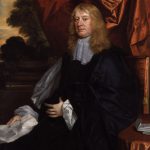
Abraham Cowley (1618 – 1667), the Royalist Poet.Poet and essayist Abraham Cowley was born in London, England, in 1618. He displayed early talent as a poet, publishing his first collection of poetry, Poetical Blossoms (1633), at the age of 15. Cowley studied at Cambridge University but was stripped of his Cambridge fellowship during the English Civil War and expelled for refusing to sign the Solemn League and Covenant of 1644. In turn, he accompanied Queen Henrietta Maria to France, where he spent 12 years in exile, serving as her secretary. During this time, Cowley completed The Mistress (1647). Arguably his most famous work, the collection exemplifies Cowley’s metaphysical style of love poetry. After the Restoration, Cowley returned to England, where he was reinstated as a Cambridge fellow and earned his MD before finally retiring to the English countryside. He is buried at Westminster Abbey alongside Geoffrey Chaucer and Edmund Spenser. Cowley is a wonderful poet and an outstanding representative of the English baroque.