
A poem by Alexander Pushkin – Pouchkine, Pooshkin (1799-1837), in English translation
A flower; shrivelled, bare of fragrance,
Forgotten on a page; I see,
And instantly my soul awakens,
Filled with an aimless reverie:
When did it bloom? the last spring? earlier?
How long? Where was it plucked? By whom?
By foreign hands? or by familiar?
And why put here, as in a tomb?
To mark a tender meeting by it?
A parting with a precious one?
Or just a walk, alone and quiet,
In forests’ shade? in meadows’ sun?
Is she alive? Is he still with her?
Where is their haven at this hour?
Or did they both already wither,
Like this unfathomable flower?
translated by: Genia Gurarie
email: egurarie@princeton.edu

Copyright ©:
Genia Gurarie
A few random poems:
- Владимир Британишский – Никитенко
- Олег Григорьев – Вперед не рвись
- Robert Burns: To Miss Cruickshank, a very Young Lady : Written on the Blank Leaf of a Book, presented to her by the Author.
- Владимир Бенедиктов – Молитва
- Al calor de una guitarra by Mara Romero Torres
- Hughley Steeple poem – A. E. Housman
- cell-mate.html
- Mother, I Cannot Mind My Wheel by Sappho
- In A Wood by Thomas Hardy
- Владимир Маяковский – Богомольное
- Ольга Седакова – Последний читатель
- Ode to H.H. The Nizam Of Hyderabad by Sarojini Naidu
- Robert Burns: Compliments Of John Syme Of Ryedale: Lines sent with a Present of a Dozen of Porter.
- To Hope poem – John Keats poems
- Oh fair enough are sky and plain poem – A. E. Housman
External links
Bat’s Poetry Page – more poetry by Fledermaus
Talking Writing Monster’s Page –
Batty Writing – the bat’s idle chatter, thoughts, ideas and observations, all original, all fresh
Poems in English
- England! The Time Is Come When Thou Should’st Wean by William Wordsworth
- Emperors And Kings, How Oft Have Temples Rung by William Wordsworth
- Ellen Irwin Or The Braes Of Kirtle by William Wordsworth
- Elegiac Stanzas Suggested By A Picture Of Peele Castle by William Wordsworth
- Dion [See Plutarch] by William Wordsworth
- Crusaders by William Wordsworth
- Composed While The Author Was Engaged In Writing A Tract Occasioned By The Convention Of Cintra by William Wordsworth
- Composed Upon Westminster Bridge, September 3, 1802 by William Wordsworth
- Composed on The Eve Of The Marriage Of A Friend In The Vale Of Grasmere by William Wordsworth
- Composed Near Calais, On The Road Leading To Ardres, August 7, 1802 by William Wordsworth
- Composed In The Valley Near Dover, On The Day Of Landing by William Wordsworth
- Composed During A Storm by William Wordsworth
- Composed By The Side Of Grasmere Lake 1806 by William Wordsworth
- Composed By The Sea-Side, Near Calais, August 1802 by William Wordsworth
- Composed At The Same Time And On The Same Occasion by William Wordsworth
- Composed After A Journey Across The Hambleton Hills, Yorkshire by William Wordsworth
- Characteristics Of A Child Three Years Old by William Wordsworth
- Character Of The Happy Warrior by William Wordsworth
- Calm is all Nature as a Resting Wheel. by William Wordsworth
- “Call Not The Royal Swede Unfortunate” by William Wordsworth
More external links (open in a new tab):
Doska or the Board – write anything
Search engines:
Yandex – the best search engine for searches in Russian (and the best overall image search engine, in any language, anywhere)
Qwant – the best search engine for searches in French, German as well as Romance and Germanic languages.
Ecosia – a search engine that supposedly… plants trees
Duckduckgo – the real alternative and a search engine that actually works. Without much censorship or partisan politics.
Yahoo– yes, it’s still around, amazingly, miraculously, incredibly, but now it seems to be powered by Bing.
Parallel Translations of Poetry
The Poetry Repository – an online library of poems, poetry, verse and poetic works
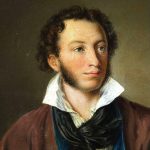
Alexander Pushkin (1799-1937) was a Russian poet, playwright and prose writer, founder of the realistic trend in Russian literature, literary critic and theorist of literature, historian, publicist, journalist; one of the most important cultural figures in Russia in the first third of the 19th century.