
Say, muse divine, can hostile scenes delight
The warrior’s bosom in the fields of fight?
Lo! here the christian and the hero join
With mutual grace to form the man divine.
In H—–D see with pleasure and surprise,
Where valour kindles, and where virtue lies:
Go, hero brave, still grace the post of fame,
And add new glories to thine honour’d name,
Still to the field, and still to virtue true:
Britannia glories in no son like you.
End of the poem
15 random poems
- A Song of Pitcairn’s Island by William Cullen Bryant
- Михаил Кузмин – Утешение
- Supply=Demand by Ricardo Sternberg
- The Titanic poem – Aleister Crowley poems | Poetry Monster
- The Thin People by Sylvia Plath
- WARMING UP by Satish Verma
- A Dream, After Reading Dante’s Episode Of Paolo And Francesca poem – John Keats poems
- Владимир Британишский – Смешанный брак
- Hope by Swaraj Prasad
- Epigram on Dr. Babington’s looks by Robert Burns
- Private Property poem – Aldous Huxley poems | Poetry Monster
- A Song Of Eternity In Time by Sidney Lanier
- Legacy by Vinko Kalinić
- Sonnet CXXXI by William Shakespeare
- Иннокентий Анненский – Еврипид. Орест (перевод)
Some external links:
Duckduckgo.com – the alternative in the US
Quant.com – a search engine from France, and also an alternative, at least for Europe
Yandex – the Russian search engine (it’s probably the best search engine for image searches).
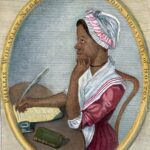
Phillis Wheatley (1753-84), a negro poetess, also an American poet or Afro-American poet, and an English Colonial poet, . She was born in Africa (in Gambia or Senegal) and was aptured by slave traders at the age of eight, she was sold to a family living in Boston, Mass., whose name she bears. While serving as a maid-servant to her proprietor’s wife, she showed an unusual facility with languages. She began writing poetry at the age of thirteen, using as models British poets of the time, especially Alexander Pope and Thomas Gray). In 1773 she accompanied a member of the Wheatley family to England, where she gained widespread attention in literary circles. She subsequently returned to Boston. Her best-known poems are “To the University of Cambridge in New England” (1767), In all honestly Phillis Wheatley should rather be considered English than an Afro-American poet but the exact classification of who she was would depend on the political and cultural views, and biases, of the “classifier.