
On Mrs. W—–‘s Voyage to England.
I.
WHILE raging tempests shake the shore,
While AElus’ thunders round us roar,
And sweep impetuous o’er the plain
Be still, O tyrant of the main;
Nor let thy brow contracted frowns betray,
While my Susanna skims the wat’ry way.
II.
The Pow’r propitious hears the lay,
The blue-ey’d daughters of the sea
With sweeter cadence glide along,
And Thames responsive joins the song.
Pleas’d with their notes Sol sheds benign his ray,
And double radiance decks the face of day.
III.
To court thee to Britannia’s arms
Serene the climes and mild the sky,
Her region boasts unnumber’d charms,
Thy welcome smiles in ev’ry eye.
Thy promise, Neptune keep, record my pray’r,
Not give my wishes to the empty air.
End of the poem
15 random poems
- Persuasions to Joy, a Song by Thomas Carew
- A Gravestone Upon The Floor In The Cloisters Of Worcester Cathedral by William Wordsworth
- The Bird Has Vanished by Timothy Thomas Fortune
- A Dream by William Allingham
- Robert Burns: A Lass Wi’ A Tocher:
- “When I Have Borne In Memory” by William Wordsworth
- Олег Бундур – Кто идет?
- Федор Сологуб – Лежу и дышу осторожно
- A Reminiscence poem – Amy Levy poems | Poems and Poetry
- To his Majestie by William Alexander
- Наум Коржавин – Как ты мне изменяла
- I Am Just Saying! by Luis Estable
- That Nature Is A Heraclitean Fire And Of The Comfort Of The Resurrection poem – Gerard Manley Hopkins poems
- Revenge of the Ghost of the Betrayed Husband by Raj Arumugam
- In A Letter To C. P. Esq. In Imitation Of Shakspeare by William Cowper
Some external links:
Duckduckgo.com – the alternative in the US
Quant.com – a search engine from France, and also an alternative, at least for Europe
Yandex – the Russian search engine (it’s probably the best search engine for image searches).
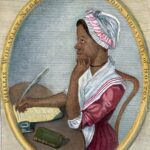
Phillis Wheatley (1753-84), a negro poetess, also an American poet or Afro-American poet, and an English Colonial poet, . She was born in Africa (in Gambia or Senegal) and was aptured by slave traders at the age of eight, she was sold to a family living in Boston, Mass., whose name she bears. While serving as a maid-servant to her proprietor’s wife, she showed an unusual facility with languages. She began writing poetry at the age of thirteen, using as models British poets of the time, especially Alexander Pope and Thomas Gray). In 1773 she accompanied a member of the Wheatley family to England, where she gained widespread attention in literary circles. She subsequently returned to Boston. Her best-known poems are “To the University of Cambridge in New England” (1767), In all honestly Phillis Wheatley should rather be considered English than an Afro-American poet but the exact classification of who she was would depend on the political and cultural views, and biases, of the “classifier.