
Let amicitia in her ample reign
Extend her notes to a Celestial strain
Benevolent far more divinely Bright
Amor like me doth triumph at the sight
When my thoughts in gratitude imploy
Mental Imaginations give me Joy
Now let my thoughts in Contemplation steer
The Footsteps of the Superlative fair
Boston July 15 1769
End of the poem
15 random poems
- The Old Revolutionary’s Room by Nijole Miliauskaite
- Василий Лебедев-Кумач – Закаляйся
- SCULPTURING by Satish Verma
- Anacreontics The Epicure
- Владимир Костров – Поток ушедших лет
- Liberty, and Love; or, the Two Sparrows by William Somervile
- Polly Be-en Upzides Wi’ Tom by William Barnes
- On Colley Cibber poem – Alexander Pope poems | Poetry Monster
- Mother by Sachin Yadav (Pen Name: Rahul Nachhiketa)
- Владимир Маяковский – Проч руки от Китая
- When I Watch the Living Meet poem – Alfred Edward Housman
- To the Evening Star by Thomas Campbell
- The Details Are poem – Zhivka Baltadzhieva poems | Poetry Monster
- Song. I Had A Dove poem – John Keats poems
- For To Admire by Rudyard Kipling
Some external links:
Duckduckgo.com – the alternative in the US
Quant.com – a search engine from France, and also an alternative, at least for Europe
Yandex – the Russian search engine (it’s probably the best search engine for image searches).
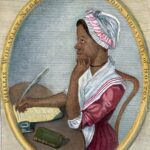
Phillis Wheatley (1753-84), a negro poetess, also an American poet or Afro-American poet, and an English Colonial poet, . She was born in Africa (in Gambia or Senegal) and was aptured by slave traders at the age of eight, she was sold to a family living in Boston, Mass., whose name she bears. While serving as a maid-servant to her proprietor’s wife, she showed an unusual facility with languages. She began writing poetry at the age of thirteen, using as models British poets of the time, especially Alexander Pope and Thomas Gray). In 1773 she accompanied a member of the Wheatley family to England, where she gained widespread attention in literary circles. She subsequently returned to Boston. Her best-known poems are “To the University of Cambridge in New England” (1767), In all honestly Phillis Wheatley should rather be considered English than an Afro-American poet but the exact classification of who she was would depend on the political and cultural views, and biases, of the “classifier.