
A poem by Alexander Pushkin – Pouchkine, Pooshkin (1799-1837), in English translation
A flower; shrivelled, bare of fragrance,
Forgotten on a page; I see,
And instantly my soul awakens,
Filled with an aimless reverie:
When did it bloom? the last spring? earlier?
How long? Where was it plucked? By whom?
By foreign hands? or by familiar?
And why put here, as in a tomb?
To mark a tender meeting by it?
A parting with a precious one?
Or just a walk, alone and quiet,
In forests’ shade? in meadows’ sun?
Is she alive? Is he still with her?
Where is their haven at this hour?
Or did they both already wither,
Like this unfathomable flower?
translated by: Genia Gurarie
email: egurarie@princeton.edu

Copyright ©:
Genia Gurarie
A few random poems:
- Lover’s Gifts XLIII: Dying, You Have Left Behind by Rabindranath Tagore
- SCARY DANCE by Satish Verma
- Winter Violets poem – Alfred Austin
- Михаил Ломоносов – Надпись на день восшествия на престол Ее Величества 1753 года
- I Come Home Wanting To Touch Everyone by Stephen Dunn
- Outside the Window, Snow
- From One Who Stays poem – Amy Lowell poems | Poems and Poetry
- The New World by Philip Levine
- Владимир Британишский – Март солнечный
- Валерий Брюсов – К Пасифае. Сонет
- “Avaunt All Specious Pliancy Of Mind” by William Wordsworth
- Владимир Маяковский – В Советской России не может быть никакого царя… (Главполитпросвет №361)
- Unspoken by Satish Verma
- The Sea And The Skylark poem – Gerard Manley Hopkins poems
- Requiem For A Bartender’s Dream poem – Ysabelle Moriarty poems | Poetry Monster
External links
Bat’s Poetry Page – more poetry by Fledermaus
Talking Writing Monster’s Page –
Batty Writing – the bat’s idle chatter, thoughts, ideas and observations, all original, all fresh
Poems in English
- Sonnet 20: A woman’s face with Nature’s own hand painted by William Shakespeare
- Sonnet 1: From fairest creatures we desire increase by William Shakespeare
- Sonnet 19: Devouring Time blunt thou the lion’s paws by William Shakespeare
- Sonnet 18: Shall I compare thee to a summer’s day? by William Shakespeare
- Sonnet 17: Who will believe my verse in time to come by William Shakespeare
- Sonnet 16: But wherefore do not you a mightier way by William Shakespeare
- Sonnet 15: When I consider every thing that grows by William Shakespeare
- Sonnet 154: The little Love-god lying once asleep by William Shakespeare
- Sonnet 153: Cupid laid by his brand and fell asleep by William Shakespeare
- Sonnet 152: In loving thee thou know’st I am forsworn by William Shakespeare
- Sonnet 151: Love is too young to know what conscience is by William Shakespeare
- Sonnet 150: O from what power hast thou this powerful might by William Shakespeare
- Sonnet 14: Not from the stars do I my judgement pluck by William Shakespeare
- Sonnet 54: O, how much more doth beauty beauteous seem by William Shakespeare
- Sonnet 53: What is your substance, whereof are you made by William Shakespeare
- Sonnet 52: So am I as the rich whose blessèd key by William Shakespeare
- Sonnet 51: Thus can my love excuse the slow offence by William Shakespeare
- Sonnet 50: How heavy do I journey on the way by William Shakespeare
- Sonnet 4: Unthrifty loveliness, why dost thou spend by William Shakespeare
- Sonnet 49: Against that time, if ever that time come by William Shakespeare
More external links (open in a new tab):
Doska or the Board – write anything
Search engines:
Yandex – the best search engine for searches in Russian (and the best overall image search engine, in any language, anywhere)
Qwant – the best search engine for searches in French, German as well as Romance and Germanic languages.
Ecosia – a search engine that supposedly… plants trees
Duckduckgo – the real alternative and a search engine that actually works. Without much censorship or partisan politics.
Yahoo– yes, it’s still around, amazingly, miraculously, incredibly, but now it seems to be powered by Bing.
Parallel Translations of Poetry
The Poetry Repository – an online library of poems, poetry, verse and poetic works
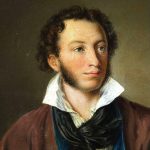
Alexander Pushkin (1799-1937) was a Russian poet, playwright and prose writer, founder of the realistic trend in Russian literature, literary critic and theorist of literature, historian, publicist, journalist; one of the most important cultural figures in Russia in the first third of the 19th century.